



The Pan-African Paradigm of Legislative Legitimacy and Militarised Patronage
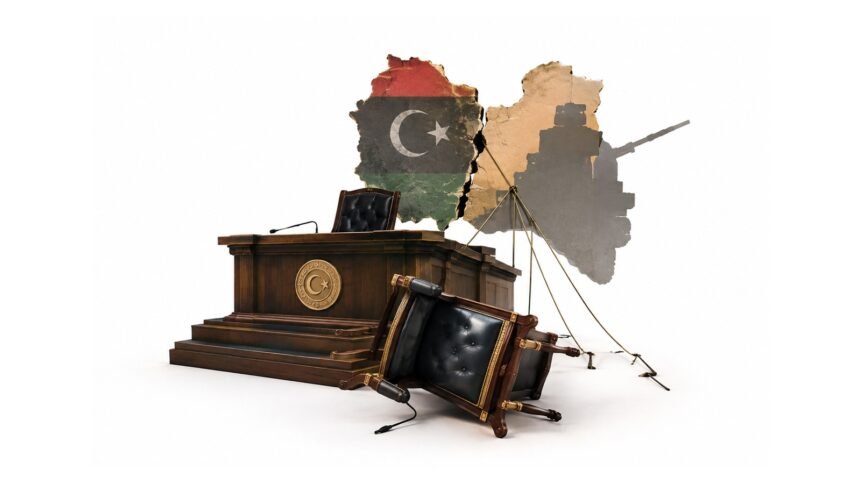
In 2014, Libyans elected a House of Representatives that was meant to carry the country out of the turmoil that followed the overthrow of Muammar Gaddafi in 2011. That same year, Reuters notes, the country split between rival administrations in the east and the west; the chamber settled in the east, while the internationally recognized government sits in Tripoli. Through all of that, one figure stayed in the speaker’s chair: Aguila Saleh. On Tuesday 6 October, nearly 12 years later, his colleagues replaced him.
The vote matters well beyond parliamentary procedure. In a country where institutions are divided, and armed power is concentrated, changing who controls a legislative chamber also changes who can speak for a whole political camp in negotiations over the country’s future.
A Procedural Revolt or a Parliamentary Correction?
The sequence was quick. Reuters reported that a day before the election, 98 members of the House approved a new system limiting the speaker and his deputies to a single 12-month term. That ended an arrangement in place since the chamber’s first leadership was elected in 2014. Africanews put the size of the House at 170 members, which means the reform passed with a clear majority of the full chamber. The next day, lawmakers elected Al-Salhin Abdulnabi al-Obeidi as speaker, with Tarek al-Ashtar and Mesbah Douma as first and second deputy speakers.
Lawmakers who backed the change presented it as a correction. Jebreel Oheida told Reuters that there had been significant discontent among MPs over numerous errors by the previous leadership, including decisions made without consulting members. Saleh contested the process. He called the vote on term limits unofficial and without legal effect, announced the cancellation of the session he had called for that Tuesday, and said Douma oversaw the vote. So the legitimacy of the new leadership is disputed from day one: one side sees overdue institutional renewal, while the removed speaker sees a session without legal standing.
Continuity Inside Change
The new speaker’s profile points as much to continuity as to change. Abdulnabi comes from the same tribe as Saleh, represents the eastern city of Tobruk, has chaired parliament’s Libyan-Turkish friendship committee, and holds a master’s degree in civil engineering. That mix is telling. The tribal and regional balance within the eastern camp is preserved, and the new speaker brings an existing channel to Ankara. No reports of any policy statement from the new speaker, so his agenda remains unclear.
The term-limit reform itself may matter more than the person. A one-year mandate makes the speakership contestable and revocable in theory, which strengthens ordinary members against the chair. In practice, it could also make the post more vulnerable to whoever controls the coalitions inside the chamber.
The Haftar Succession Shadow
That question leads straight to the Haftar family. Saleh has long been an ally of eastern military commander Khalifa Haftar and has played a central role in diplomacy aimed at resolving Libya’s conflict; Saleh appeared weakened as Haftar’s sons, particularly Saddam Haftar, consolidated their positions. Emadeddin Badi, an analyst at Chatham House, described Saleh as the latest casualty of Saddam Haftar’s drive to centralize decision-making in eastern Libya and move into a political role.
This is the analytical core of the story. Haftar’s camp relies in particular on the parliament, which sits under its control. If the chamber’s leadership is being reshaped to fit a generational transfer of power within the family that dominates the east, then the vote is less about legislative autonomy than about reorganizing a patronage system. Power runs one way here: the military command shapes the chamber far more than the chamber constrains the command.
Two Chambers, Two Capitals, Many Mediators
Libya’s institutional map is crowded. Reuters noted that the country has two legislative chambers: the House of Representatives, elected in 2014 and based in the east, and the High State Council, set up under a 2015 political agreement from a parliament elected in 2012 and based in Tripoli alongside the Government of National Unity. Some reports identified the head of that government as Prime Minister Abdul Hamid Dbeibah.
Mediation is crowded too; representatives of the rival camps signed an agreement in Tripoli in August, mediated by the UN Support Mission in Libya through the so-called 4+4 committee, which could see presidential and legislative elections within two years. According to Al Jazeera, the United States is pursuing a separate reunification plan, which Al Jazeera said is led by Massad Boulos, President Donald Trump’s senior adviser for Arab and African affairs. A new speaker therefore arrives at a moment when external actors are drafting the terms of Libya’s political future, and the eastern chamber’s consent is likely to be needed for any settlement.
Oil, Leverage and the Stakes of Recognition
Reuters described Libya as a major oil and gas producer. That is why its institutional disputes are never only domestic. Whoever controls the chambers that must ratify budgets, electoral laws and unification frameworks gains leverage over the allocation of hydrocarbon revenue and over the foreign partners who depend on it. Leadership changes in the east are therefore watched as signals of how negotiable that camp has become.
Toward Structural Sovereignty in Libyan Institutions
Libya will not reach structural sovereignty by swapping one speaker for another, or by layering one foreign-sponsored roadmap on top of another. It needs institutions whose rules are settled, whose mandates come from voters rather than from armed patrons, and whose decisions bind every faction equally. The term-limit reform could be an early step in that direction if it is applied consistently and accepted by those it disadvantages. If it simply clears the way for a new center of command in the east, Libya’s trajectory will stay the same: a state with parliaments but without a parliament that can decide. How the new leadership handles the elections framework will be the first real test.