






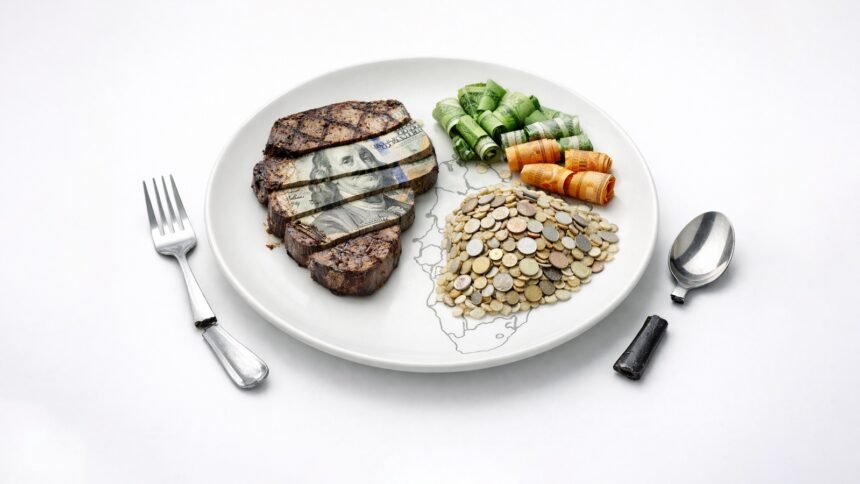
Africa’s cost-of-living landscape is becoming increasingly complex, shaped not only by headline prices but also by income disparities, structural economic factors, and import dependence. According to Numbeo’s 2026 Cost of Living Index, several African economies stand out as the most expensive places to live on the continent, reflecting deep contrasts between prices and purchasing power.
Although the platform provides data for only 27 African countries this year, the rankings reveal clear structural patterns. Island nations heavily reliant on imports, countries facing infrastructure constraints, and urban centres grappling with rising food and service costs dominate the upper end of the index.
Seychelles ranks as Africa’s most expensive country to live in, with a Cost of Living Index of 64.5. The island nation’s dependence on imported goods significantly drives up consumer prices. Groceries are particularly costly at 74.8, while restaurant prices stand at 66.2. Despite a tourism-driven economy, local purchasing power remains modest at 34.3, making daily expenses burdensome for many residents.
The Democratic Republic of the Congo follows with an index of 50.2. Although rich in mineral resources, limited infrastructure and reliance on imports in major cities contribute to elevated costs. Restaurant prices reach 66.1, and rent stands at 32.8. With purchasing power at just 26.3, affordability remains a persistent challenge.
Senegal ranks third at 48.5, reflecting rising urban living costs, particularly in Dakar. Groceries are priced at 45.0, and restaurant costs at 42.9. While rent remains relatively moderate at 19.3, purchasing power is low at 22.2, intensifying pressure on households.
Cape Verde, another island economy, ranks fourth with an index of 46.3. Imported goods push grocery prices to 57.2, even though rent is comparatively low at 8.8. Purchasing power stands at 21.3, limiting residents’ ability to offset high consumer prices.
Ivory Coast places fifth at 44.8. As one of West Africa’s largest economies and the world’s leading cocoa producer, the country continues to grow, yet consumer costs remain elevated. Restaurant prices stand at 39.1, rent at 21.8, and purchasing power is just 12.7, widening the affordability gap.
Angola ranks sixth with a cost-of-living index of 42.3. Unlike many others on the list, Angola records an exceptionally high purchasing power index of 200.8, the strongest among the top ten. Higher income levels in oil-related sectors allow certain segments of the population to afford more relative to prices, though this does not necessarily reflect conditions across the broader population.
Ethiopia follows at 41.8, where inflationary pressures in a fast-growing economy have contributed to higher costs. Groceries are priced at 44.5, while restaurant costs remain relatively lower at 22.9. However, the purchasing power is 12.5, making everyday living expenses challenging for many households.
Cameroon ranks eighth with an index of 40.7. Its diversified economy, spanning agriculture, oil, and manufacturing, faces affordability constraints, with grocery prices at 37.8 and restaurant prices at 45.5. Purchasing power is among the lowest in the top ten at 10.5.
Mauritius takes ninth place at 38.3. The island economy presents a more balanced picture, with relatively stronger purchasing power (55.1) and low rent (10.9). Its diversified economic base, supported by tourism and financial services, helps sustain income levels.
South Africa rounds out the top ten with an index of 37.1. As the continent’s most industrialised economy, it combines moderate living costs with a strong purchasing power of 109.2, second only to Angola among the group. This balance positions it as comparatively more affordable relative to income levels.
Overall, Numbeo’s 2026 data underscores that Africa’s cost-of-living challenges are not defined by prices alone. Import reliance, income distribution, infrastructure capacity, and economic structure play decisive roles in shaping affordability. The result is a continent marked by sharp contrasts, in which high prices, low purchasing power, or both combine to determine how expensive daily life feels for residents.


