







Participation in the 12th PRME Middle East Regional Forum was both an inspiring experience and a powerful reminder of how education, sustainability, and technology can come together to shape a more resilient future for Africa. Hosted at the SEE Institute in Dubai’s Sustainable City on 8 December 2025, the forum provided a unique space for academics, policymakers, private-sector leaders, and youth advocates to meet, debate, and co-create ideas for responsible management education in the Middle East.
A Forum in the Heart of Sustainability
The choice of SEE Institute and The Sustainable City as the venue was more than symbolic. The campus itself embodies the forum’s advocacy: low-carbon design, clean energy, sustainable buildings, and a living laboratory for climate-positive innovation. Holding discussions on climate, ESG, and responsible leadership in such a setting gave real substance to the conference theme, “Education for Sustainable Business Models in the Middle East: Connecting Academia, Business, and Society.”
Throughout the day, the presence and leadership of Dr. Miroslav Mateev, PRME Chapter Middle East Chair and Vice President and Provost of SEE Institute, added depth to the conversations. His opening remarks and active engagement across sessions underlined PRME’s mission: to make responsible management education a driver of systemic change, not just an academic concept. SEE Institute’s role in co-organizing and hosting the forum demonstrated how institutions in the UAE are stepping up to support regional sustainability agendas through research, education, and convening power.
Responsible Management in Practice
The program was rich and intense, starting with the keynote on “Responsible Leadership for a Net‑zero, Climate‑Resilient Middle East” and continuing with sessions on governance, climate action, campus decarbonization, teaching innovation, net‑zero finance, and responsible management trends. Panels brought together senior executives from industry, sustainability practitioners, academics, and youth voices, reflecting the cross-sectoral nature of the challenges ahead.
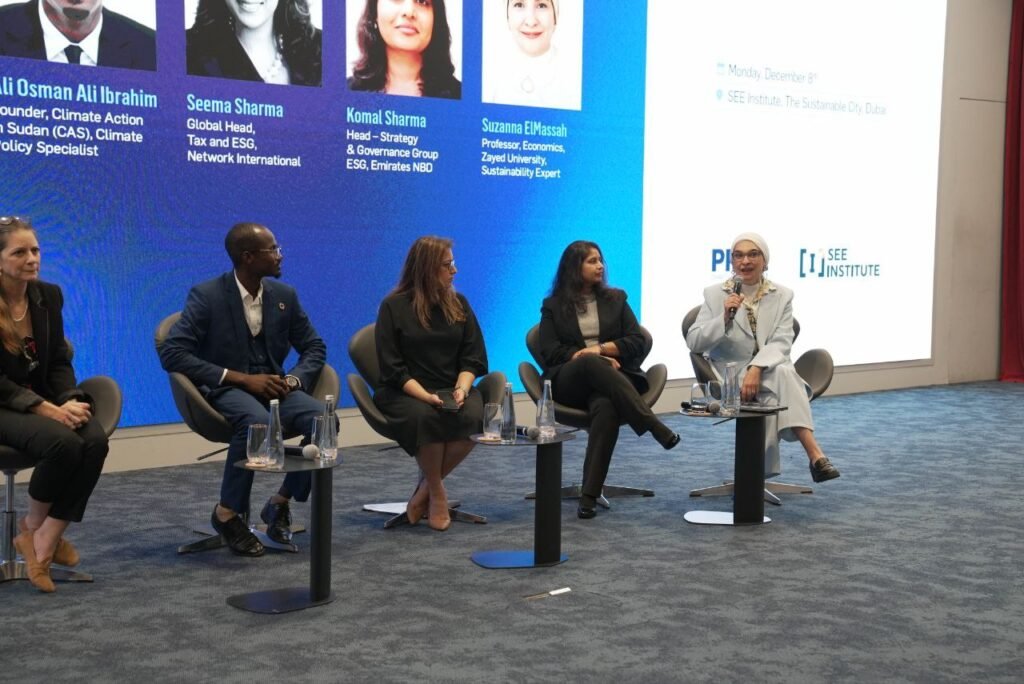
I was honored to serve as a panelist in Session 2, “Climate Change Actions – From Policy to Implementation,” moderated by Zayed University. The session explored how to move from commitments and strategies to tangible on-the-ground climate projects, with contributions from experts in ESG, sustainable finance, and development economics. My intervention focused on the role of civil society, youth, and universities in advancing climate action in fragile and developing contexts, with Sudan as a central case.
Youth, Academia, and ESG Leadership
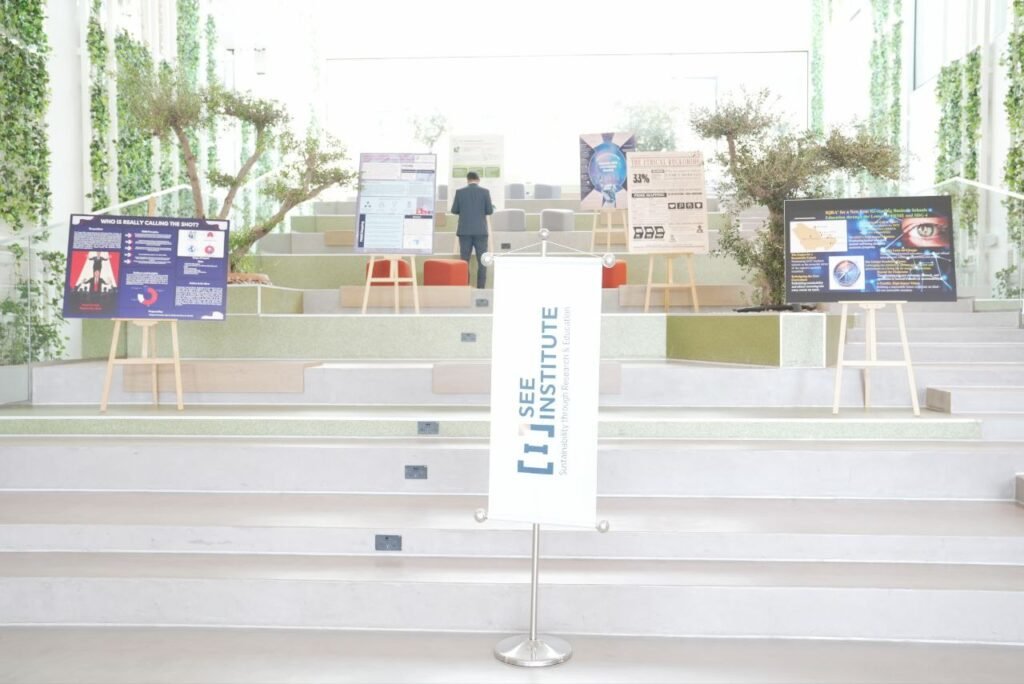
The forum placed strong emphasis on youth leadership and educational innovation. Student-led showcases highlighted how young people are designing impact projects on campuses and in communities, while sessions on simulations and immersive learning demonstrated new tools for teaching sustainability management. The final sessions on responsible management education and the book special issue on teaching anti-corruption in the MENA region demonstrated that ethical governance and integrity are integral to the ESG agenda, not optional add-ons.
Here, the role of champions inside universities truly stood out. Associate Professor of, co‑lead of Session 8 on “Education for Sustainable Leadership,” has been a consistent advocate for youth empowerment and responsible management thinking. Her support has opened doors for young leaders, including student representatives such as Abdulla Mohamed Ahmad, Team Leader of the Sustainability Society at ADU, who credits her with helping him become a sustainability leader. These academic mentors are critical to translating abstract sustainability principles into lived practice for students.
Bringing Sudan’s Reality to the Table
Coming from Sudan, a country on the front line of climate vulnerability, conflict, and institutional fragility, my contribution focused on connecting regional debates to the realities of communities facing compounded crises. Sudan has already been experiencing more frequent and intense droughts, highly variable rainfall, heatwaves, and destructive floods that directly threaten rain‑fed agriculture, pastoralism, and water security. Climate shocks translate into higher food prices, loss of livelihoods, and increased pressure on natural resources such as land, forests, and grazing areas, especially in regions like Darfur and Kordofan.
Climate Finance and Project Disruptions
One of the themes I emphasized in the panel is the gap between ambitious climate plans and on-the-ground implementation, especially in fragile states. Sudan has benefited from initiatives such as the National Adaptation Programme of Action (NAPA) and a Green Climate Fund project signed in 2020 with UNDP, valued at around $25–26 million, designed to support millions of people through climate‑resilient agriculture and water security. However, conflict has disrupted or delayed many of these interventions, undermining resilience efforts at precisely the moment when climate risks are escalating.
This is where climate finance architecture and ESG investment become critical. Global analyses indicate that trillions of dollars are needed annually to meet climate goals, with most expected to come from private capital mobilized through public policy and de‑risking instruments.
Governments in countries like Sudan often lack the fiscal space and institutional capacity to finance adaptation and low‑carbon transitions fully. At the same time, private investors face high risks and uncertain returns in fragile environments. Well-designed guarantees, concessional finance, blended structures, and clear policy frameworks are essential to make climate projects bankable and attractive to investors without sacrificing social safeguards.

ESG, NDCs, and the Role of Business
Another key point raised during the forum, and in my broader work, is the alignment between corporate ESG frameworks and national climate commitments such as NDCs. NDCs under the Paris Agreement outline country‑level mitigation and adaptation pathways, while ESG criteria shape how companies manage environmental, social, and governance risks and opportunities. When ESG strategies are aligned with NDC targets, companies can ensure their decarbonization plans, social investments, and governance reforms actively contribute to national climate goals rather than operate in parallel.
In practice, this means businesses investing in clean energy, climate‑smart agriculture, resilient infrastructure, and inclusive value chains that support vulnerable communities, while transparently disclosing climate risks and impacts. It also implies closer public–private collaboration through public‑private partnerships, green finance mechanisms, and joint monitoring systems that use both national data and community‑generated information. In fragile contexts, NGOs and youth‑led initiatives can help verify ESG and climate claims, ensuring that reported impacts translate into tangible benefits for people on the ground.
Climate Action in Sudan: Keeping Momentum in War
It was vital for me to share the story of Climate Action in Sudan (CAS), a youth‑led initiative established to sustain climate work amid the war and the disruption of many traditional development programs. CAS focuses on building the capacities of young Sudanese to engage in climate policy, diplomacy, and practical community projects, through training, fellowships, and working groups that connect them to local and global networks. Although this is a relatively new initiative, it is aligned with broader efforts by UNDP’s Climate Promise and other partners to support youth engagement and NDC implementation.
In displacement settings and conflict‑affected communities, CAS and similar organizations seek to maintain climate literacy, support small‑scale adaptation activities such as tree‑planting, water management, and awareness campaigns, and ensure that young people are not left behind in global discussions on the SDGs and climate justice. This kind of work shows why forums like PRME ME are needed: they bridge academic research, corporate ESG strategies, and the lived realities of young climate leaders from regions often underrepresented in regional debates.

What PRME and Partners Can Do
The forum also highlighted how international networks like PRME can support climate‑vulnerable countries and youth‑led groups. Participants repeatedly stressed the value of: co‑developing curricula and training programs on climate and responsible management; building institutional partnerships between universities; and recognizing youth initiatives as legitimate actors in the sustainability ecosystem. For Sudan, this could include twinning arrangements between Sudanese universities and PRME signatory schools, joint online courses, and flexible funding for youth‑driven climate projects that account for conflict-related constraints.
Such support should be conflict‑sensitive and adaptable, enabling learning and collaboration even when physical mobility is limited. It can also feed into global reporting processes—such as SDG reviews and climate stocktakes—by bringing evidence and on-the-ground stories. Ultimately, the message from the forum was clear: youth and NGOs must move from being perceived as beneficiaries to being treated as co‑creators of climate solutions and responsible management practices.
Reflections and Looking Ahead
Participating in the 12th PRME Chapter Middle East Regional Forum confirmed that responsible management education is no longer a niche topic—it sits at the intersection of climate policy, finance, governance, and social justice. The diversity of speakers and sessions demonstrated that the region is committed to integrating sustainability into business schools, corporate strategies, and public policy, even as significant gaps remain in implementation and climate finance.
For Sudan and other fragile countries, the road ahead is especially challenging. Yet the forum offered a glimpse of what is possible when universities, companies, NGOs, and youth come together with a shared purpose. If the momentum from this 12th edition is sustained—through new partnerships, follow‑up projects, and continuous learning—the PRME Middle East platform can become a catalyst for climate‑positive, inclusive development across the region.
Looking forward, there is a strong hope to participate in future editions and to see concrete progress in implementing the commitments, collaborations, and ideas that were seeded in Dubai’s Sustainable City.


