





By: Ali Osman
As the seventh session of the United Nations Environment Assembly (UNEA-7) concluded in Nairobi with declarations on sustainable solutions and packages of resolutions addressing global environmental challenges, African voices remained conspicuously absent from key negotiations.
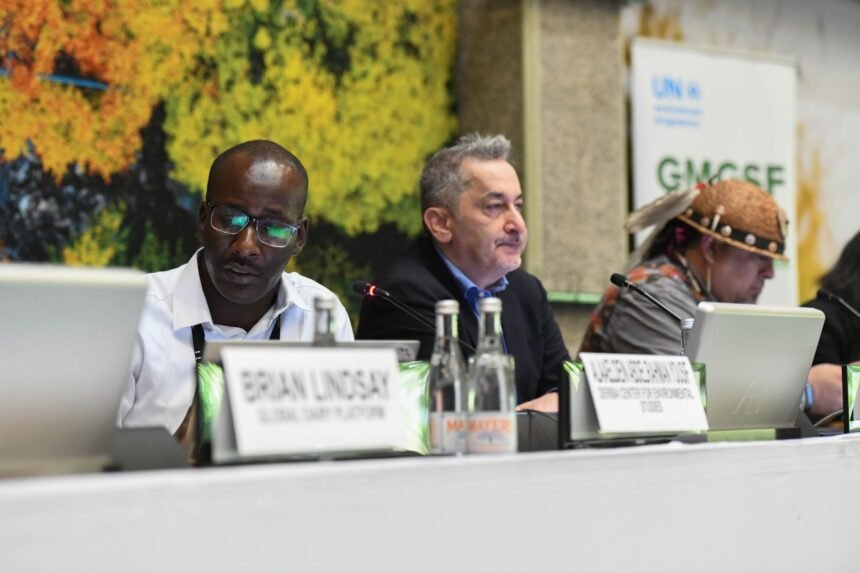
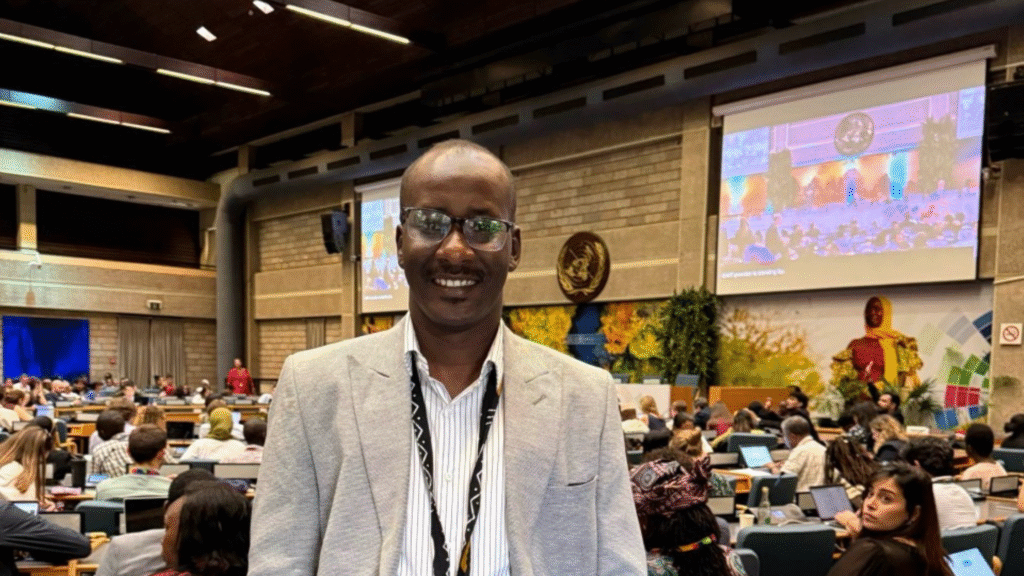
Dr. Alaaeldein Abdelrahman Yousif, a Sudanese environmental researcher and CEO of the Deriba Center for Environmental Studies, attended UNEA-7, bringing the realities of a nation in conflict and facing climate stress. In this exclusive interview with Africalix, he reflects on what the Assembly achieved, where Africa’s leadership faltered, and how global commitments can translate into concrete action for Sudan and the continent.
Building Environmental Leadership from Conflict Zones
Dr. Alaaeldein’s journey into environmental leadership began over a decade ago as a civil servant with the Ministry of Agriculture and Forestry in Central Darfur State in 2014. His on-the-ground experience, witnessing forests under pressure and communities facing climate shocks, catalyzed his commitment to climate action. In 2016, he co-founded the Sudan Youth Organization on Climate Change, which was recognized as Sudan’s first youth-led climate organization.
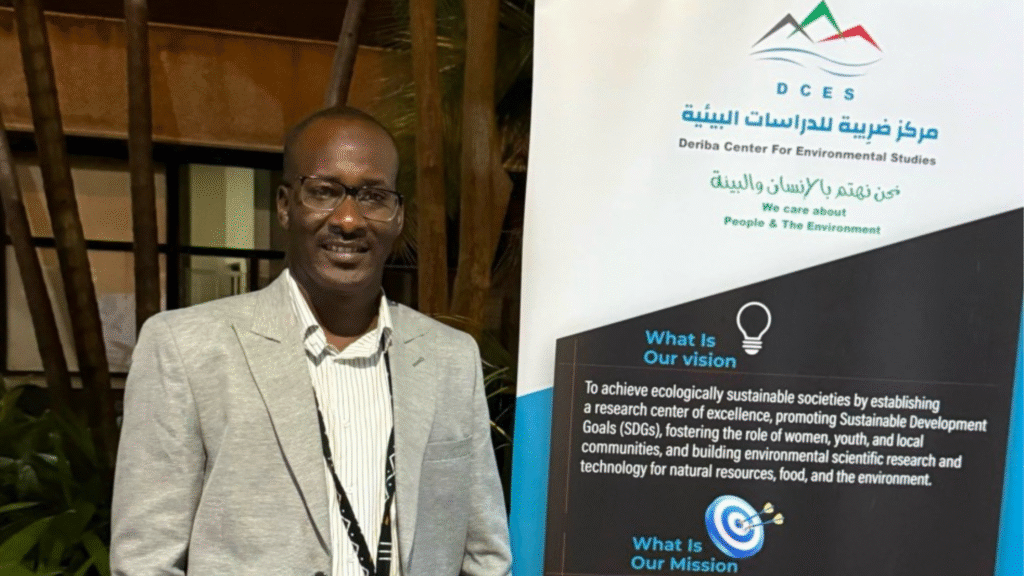
By late 2018, recognizing the scale of the challenge, he established the Deriba Center for Environmental Studies, a Sudanese civil society organization bridging research production and development projects.
Holding a Ph.D. in Environmental Science from the University of Khartoum (2024), Dr. Alaaeldein has worked across governmental institutions, civil society organizations, and academic institutions for over ten years. Attending UNEA-7 in person carried particular weight for someone representing a fragile, conflict-affected context.
“Being present in Nairobi was not just about representation; it meant personal empowerment, representing the Deriba Center for Environmental Studies at global environmental conferences,” he explains. “It reminded me that despite the challenges in Sudan, the voices of the Sudanese people are still represented in global environmental governance.”
For Dr. Alaaeldein, standing among ministers, scientists, and civil society leaders reinforced a crucial message: environmental leadership from fragile contexts is not peripheral but essential. The conversations around resilience, nature restoration, and equity directly reflected the work he has witnessed in Sudan, strengthening his resolve to bridge global policy and local action.
UNEA-7 Outcomes: Youth Participation and Chemicals Management
UNEA-7 adopted a ministerial declaration titled “Advancing Sustainable Solutions for a Resilient Planet,” along with 11 resolutions and three decisions. Dr. Alaaeldein highlights two resolutions as particularly significant.
The first, submitted by Sri Lanka, focuses on enhancing meaningful participation of children and youth in environmental decision-making, policy development, and implementation at all levels. He views this as critical for Africa, which has the world’s youngest population, and for Sudan specifically, where young people must be involved in all processes of environmental governance.
The second addresses strengthening chemicals and waste management, calling for improved implementation of global frameworks, enhanced capacity-building, and support for sound management of hazardous substances to protect human health and the environment.
“This resolution is one of the great outcomes of UNEA-7 as the issue of chemicals and waste are among the biggest challenges faced by the world today,” Dr. Alaaeldein observes.
He also identifies resolutions to enhance coherence among environmental agreements, the energy transition, artificial intelligence for sustainability, and the promotion of sustainable solutions through sport as highly relevant to African nations seeking pathways to a better future.
Africa’s Missing Voice
Despite UNEA sessions consistently taking place on African soil, Dr. Alaaeldein delivers a sobering assessment of continental leadership at UNEA-7. African nations and their leaders failed to use this opportunity to clearly articulate and address the continent’s most significant environmental challenges, including climate vulnerability, conflict-driven ecological degradation, and pollution.
“Unfortunately, the African voices were completely missed during UNEA-7,” he states. “The biggest challenges and gaps of the African leaders during the UNEAs were the lack of coordination, and the geo-political issues of their leaders, as well as the competition over leadership.”
He argues that African leaders urgently need unity to address their challenges and develop their own solutions. This coordination deficit undermines the continent’s ability to shape global environmental governance in ways that reflect African realities.
Sudan’s Environmental Agenda in Crisis
For Sudan specifically, Dr. Alaaeldein notes that UNEA-7 outcomes fell short of expectations relative to UNEA-6, which adopted Resolution 6/12, which directly addressed Sudan’s environmental crisis. While that resolution needed improvements to meet post-conflict recovery needs better, it represented more targeted attention than UNEA-7 delivered.
Nevertheless, Sudan can benefit from the adopted resolutions on chemicals and waste management, as well as on youth participation, as these address current challenges in which young people can play vital roles in tackling environmental problems.
Dr. Alaaeldein emphasizes that civil society organizations and research institutions can play pivotal roles in translating adopted policies into action by producing rigorous research that links policies to projects and supports post-conflict recovery efforts.
The Deriba Center, like many CSOs, can support climate change efforts by facilitating, fostering, and addressing priorities in adaptation projects, conducting studies, especially in conflict-affected areas, with clear aims to bridge the gap between research production and project implementation.
Youth Participation: Beyond Symbolic Inclusion
Despite efforts by UNEA’s presidency and UNEP’s Executive Director to engage children and youth in formal and informal processes, Dr. Alaaeldein argues that young people remain largely absent from substantive engagement in environmental policy and decision-making.
“Meaningful participation does not mean conducting Youth Environment Assemblies and gathering youth in halls or adopting resolutions related to children and youth,” he emphasizes. “It clearly means engagement of children and youth in the preparation of environmental issues at all levels, mapping their present and preparing for the future.”
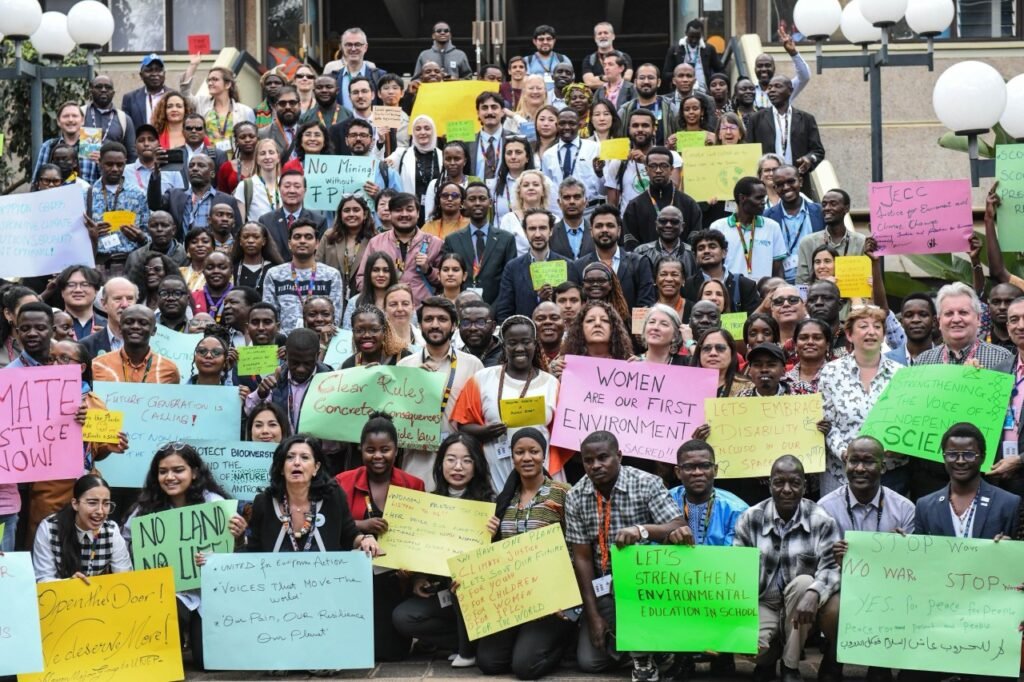
His message to African and Sudanese youth who feel excluded from high-level spaces is direct: African countries face significant environmental challenges from climate change, biodiversity loss, and plastic pollution, where youth can play key roles. Young people should be part of the solution, contributing innovation and submitting draft resolutions that reflect their present and shape their future, with UNEA as the best platform for building that future.
Implementation Barriers: Leadership, Not Financing
When asked about the most significant barriers African countries face in implementing multilateral environmental agreements, Dr. Alaaeldein offers a provocative answer that challenges conventional narratives about constraints on African development.
“Africa is the richest continent in terms of resources; the financial issue isn’t the biggest challenge toward implementation of Multilateral Environmental Agreements, but the biggest problem in African countries is good leadership, independence, and lack of trust,” he argues.
To overcome these challenges, he calls on African leaders to build trust, shed colonial ideas, and embrace their own solutions. This represents a pathway for Africa to advance the implementation of environmental agreements through self-determination rather than external dependence.
Whole-of-Society Approaches for Fragile Contexts
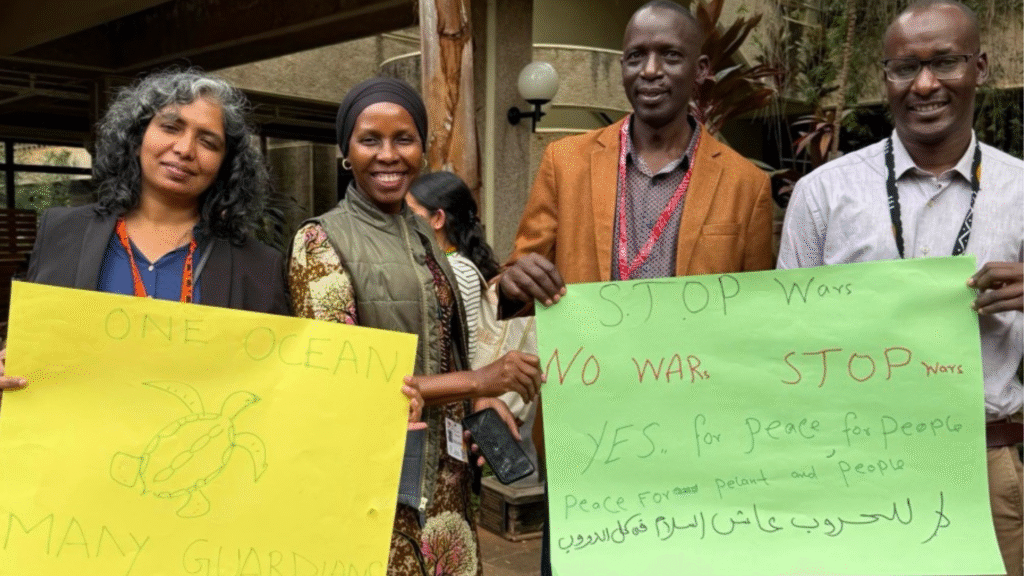
UNEA-7 featured multiple platforms beyond formal plenaries: the Youth Environment Assembly, MEA Day, Indigenous Peoples’ dialogue, and the Cities and Regions Summit. Dr. Alaaeldein views these whole-of-society approaches as particularly important for countries such as Sudan, where local communities and youth bear the heaviest burdens of environmental degradation.
These platforms provide policymakers and decision-makers with opportunities to hear voices from the bottom of communities affected by environmental degradation, helping them understand local needs. For Sudan, this approach allows international forums to hear from Sudanese who have been greatly affected by environmental degradation for decades.
From Promises to Protection
In UNEP’s mid-term strategy for 2027-2029, Dr. Alaaeldein prioritizes the implementation of multilateral environmental agreements as the backbone for tackling environmental degradation globally and in Africa, notably. Every step toward implementing UNEA resolutions will support fragile situations in Sudan and play a key role in addressing accumulated ecological problems.
His final message carries particular weight given his experience working at the intersection of conflict, climate, and governance collapse:
“Promises only matter if they are translated into protection, opportunity, and justice on the ground. UNEA-7 can be a turning point for Sudan, Africa, and the next generation—but only if each group acts with clarity and courage.”
To policymakers, he urges moving from declarations to delivery by embedding environmental commitments into national budgets, laws, and recovery plans, especially in conflict-affected and climate-vulnerable countries. Natural resources must be protected as foundations for peace, food security, and public health, with young people and local communities included not as formalities but as decision-makers and implementers.
International partners must match ambition with solidarity through predictable, long-term financing, support for locally led solutions, and reduced barriers preventing vulnerable countries from accessing climate and environmental funds. Better coordination, deeper listening, and measuring success by fundamental improvements in people’s lives, rather than by reports and pledges, are essential.
To young people, his message is that their voices should translate to action, not symbolism. He calls on youth to organize, learn, hold leaders accountable, and lead innovative solutions in schools, communities, and beyond, recognizing that environmental justice, peace, and development are inseparable.
“If UNEA-7 is remembered, it should be because we chose action over delay, inclusion over exclusion, and long-term stewardship over short-term gain,” Dr. Alaaeldein concludes. “For Sudan, for Africa, and for those who will inherit the planet after us.”
• • •
Dr. Alaaeldein Abdelrahman Yousif is a Sudanese environmental researcher and climate change activist with over 10 years of experience across governmental institutions, civil society organizations, and academic institutions.
He holds a Ph.D. in Environmental Science from the University of Khartoum (2024). He serves as CEO of the Deriba Center for Environmental Studies, a Sudanese CSO engaged in research, production, and development projects. He co-founded the Sudan Youth Organization on Climate Change in 2016, the first youth-led climate action organization in Sudan.


