





Africa is now widely recognized as a key player in international efforts to address climate change, even as it remains among the regions most affected by global warming, biodiversity loss, pollution, and the disruptive impacts of technological change. Over the past two decades, African states and institutions have elevated climate and environmental issues on the global agenda, including through stronger engagement in UN climate negotiations and regional initiatives on energy, adaptation, and just transitions.
Recent milestones include robust African participation at successive UN climate conferences, new continental initiatives to expand access to clean energy, and the decision to host COP32 in Africa, underscoring that the continent is no longer seen solely as a victim of crises but as a central actor in climate and environmental diplomacy.
The central question arising from the seventh session of the UN Environment Assembly (UNEA‑7) is whether this recognition is finally translating into concrete resources, finance, technology, and capacity commensurate with Africa’s needs and ambitions.
UNEA‑7: Context and Core Outcomes
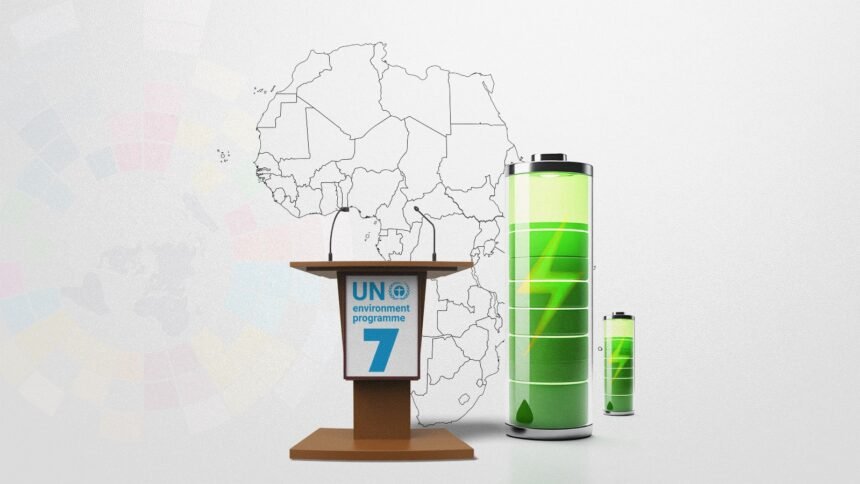
The seventh United Nations Environment Assembly (UNEA‑7) convened at the UN Environment Programme (UNEP) headquarters in Nairobi, Kenya, from 8 to 12 December 2025, under the theme “Advancing sustainable solutions for a resilient planet.” More than 6,000 participants representing 186 countries attended the week‑long meeting, which is the world’s highest‑level decision‑making body on the environment. UNEA‑7 concluded with Member States adopting 11 resolutions, three decisions, and a ministerial declaration aimed at advancing multilateral solutions to the “triple planetary crisis” of climate change, nature and biodiversity loss (including land degradation), and pollution and waste.
In the run‑up to UNEA‑7, the Open‑Ended Committee of Permanent Representatives (OECPR‑7) met in Nairobi from 1 to 5 December 2025 to negotiate draft resolutions for ministers to finalize. For many African delegations, these preparatory negotiations were where they sought to shape the language on climate finance, technology transfer, and the fair implementation of existing environmental commitments.
Oman’s Presidency and Strategic Priorities
The Sultanate of Oman chaired UNEA‑7, with His Excellency Dr. Abdullah bin Ali Al Amri, Chairman of the Environment Authority of Oman, serving as President of the Assembly. Under Oman’s leadership, governments focused on three overarching objectives: strengthening cooperation among multilateral environmental agreements, reinforcing the link between resilience and justice, and renewing confidence in UNEP’s ability to implement its Medium‑Term Strategy and Programme of Work. These priorities directly linked UNEA‑7 outcomes to the needs of vulnerable regions, including African countries facing climate impacts, debt constraints, and limited access to affordable finance and technology.
Medium‑Term Strategy, Work Programme, and Africa
UNEA‑7 approved UNEP’s four‑year Medium‑Term Strategy and the associated two‑year Programme of Work, which will guide the organization’s operational priorities and resource allocation. The strategy emphasizes accelerating implementation, closing the gap between commitments and action, and ensuring that support reaches those most vulnerable to environmental harm, including communities across Africa. UNEP’s Executive Director stressed the need for sufficient, predictable resources, practical implementation, and inclusive participation to ensure that the strategy delivers tangible results rather than remains rhetorical.
For African countries, the significance of these decisions lies in whether they translate into scaled‑up finance, technology cooperation, and capacity‑building tailored to African priorities such as adaptation, resilient infrastructure, clean energy access, and nature‑based solutions. The approved work programme provides a framework for UNEP to support these priorities, but its impact will depend on follow‑through by donor countries, multilateral funds, and regional institutions.
Ministers from across the continent emphasized that implementing the UNEP Medium‑Term Strategy requires aligning global ambitions with Africa’s development priorities—chiefly energy access, adaptation funding, and ecosystem restoration. In several negotiation streams, African countries acted as bridge‑builders between developed and developing nations, insisting that environmental ambition must go hand in hand with poverty reduction, job creation, and industrialization compatible with the Paris Agreement and Agenda 2063.
The African Group of Negotiators (AGN) coordinated common positions calling for predictable and grant‑based support to strengthen national environmental governance systems. Their interventions helped ensure that the ministerial declaration included language on fair implementation, capacity‑building, and support for nature‑based solutions, areas where Africa stands to gain both economically and socially. Yet the language on means of implementation remains broad, and timelines or quantified targets for support are still largely absent, keeping the gap between ambition and delivery firmly in view.
Regional initiatives and African frameworks. Regional initiatives under the African Union and the African Ministerial Conference on the Environment (AMCEN) were also spotlighted during UNEA‑7. The Assembly recognized the increasing alignment between UNEP’s work and African frameworks, including the Great Green Wall Initiative, the African Renewable Energy Initiative, and the African Adaptation Initiative. These platforms demonstrate how the continent is linking climate action with broader goals for sustainable industrialization, rural development, and green job creation.
Youth, Cities, and Other Stakeholders
UNEA‑7 was preceded by a Youth Environment Assembly that brought together more than 1,000 young delegates to advocate for youth inclusion, empowerment, and meaningful participation in global environmental governance. The Assembly’s large African contingent pushed for inclusive governance and access to innovation funding, urging UNEP and partners to create pathways for youth‑led projects and climate entrepreneurship. This activism reflects the continent’s demographic strengths—the world’s youngest population—and its growing leadership in sustainability innovation, from clean cooking technologies to digital climate services.
In parallel, a Cities and Regions Summit highlighted the critical role of local and regional governments in delivering integrated solutions, from climate‑resilient infrastructure to waste management and urban nature restoration. These platforms are especially relevant for Africa, where fast‑growing cities, a large youth population, and high exposure to climate and environmental risks converge, creating both vulnerabilities and opportunities for transformation. Several delegates called for stronger links between UNEP, subnational authorities, and African research and financial institutions to anchor global decisions in local realities.
During UNEA‑7, the seventh edition of the Global Environment Outlook (GEO‑7) was launched as a significant assessment of the state of the global environment and the implications of current policy pathways. GEO‑7 concludes that investing in a stable climate, healthy ecosystems and land, and a pollution‑free planet can generate substantial economic gains, prevent millions of premature deaths, and lift millions of people out of poverty and hunger worldwide.
For Africa, the report strengthens the evidence base for arguing that climate and environmental investments are not a luxury but a development necessity, especially when they create jobs, improve health, and protect livelihoods.
Taken together, UNEA‑7’s outcomes suggest that Africa’s transition from rhetoric to resources is underway but far from complete: political recognition and institutional frameworks are now firmly in place, yet the decisive test will be whether finance, technology, and capacity‑building arrive at the scale and speed that African societies require before UNEA‑8 and beyond.


