






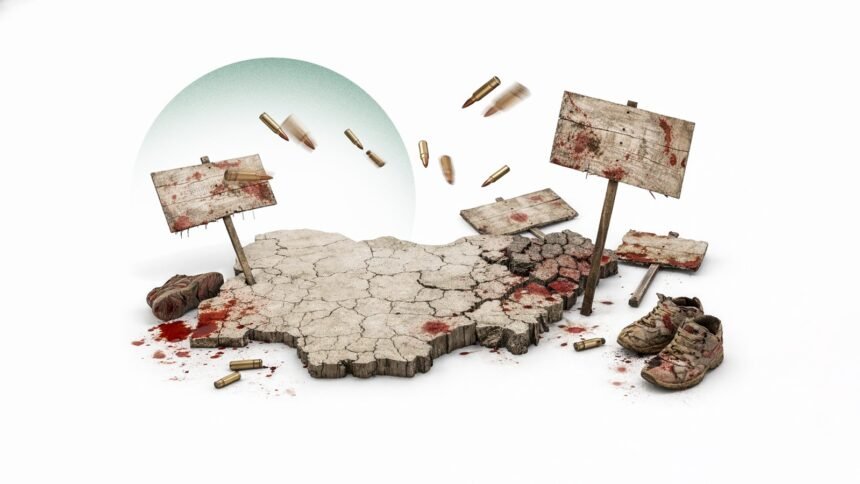
Since 2020, Nigeria’s insurgency has exacted a devastating human cost, with over 15,000 civilian and security personnel deaths attributed to Boko Haram, ISWAP, and affiliated militant groups, exacerbating displacement and economic ruin in the north. This tally, drawn from conflict-monitoring data, underscores the grim reality of counterinsurgency campaigns that have intensified kinetic operations while struggling to stem the violence. As attacks persist, from school abductions to village massacres, the article examines the toll’s dimensions, highlighting how strategic shifts and international partnerships aim to mitigate losses amid ongoing hybrid threats.
Pan African Toll: Nigeria’s Casualties in Regional Reckoning
Nigeria’s insurgency casualties since 2020 contribute to a Pan-African toll exceeding 50,000 deaths from militant violence across the Sahel and Lake Chad basin, where jihadist expansions displace millions and strain continental resources. In Nigeria, the period has seen approximately 15,000 fatalities, roughly 3,000 annually on average, with peaks in 2021 at over 3,600 civilian deaths from Boko Haram and ISWAP attacks, dropping slightly in 2022 before surging again in 2025 to more than 2,200 in the first half alone. These figures encompass direct combat, bombings, and abductions, with Borno State bearing the brunt, recording thousands of losses amid ISWAP’s Lake Chad strongholds.
This reckoning aligns with Sahel-wide patterns: Mali and Burkina Faso report similar annual tolls from JNIM sieges, collectively pushing regional deaths past 7,800 in 2025. Pan-African implications are profound: Nigeria’s losses disrupt economic corridors, fueling refugee flows into neighboring Chad and Niger, where cross-border incursions amplify vulnerabilities. Counter-insurgency’s human cost demands regional solidarity, AU-led intelligence sharing to preempt attacks, lest Nigeria’s toll cascades into broader continental instability, underscoring the need for equitable development to reduce recruitment pools driven by 60 percent poverty rates.
Nigerian Deathscapes: Insurgency’s Lethal Legacy Since 2020
Nigerian deathscapes since 2020 paint a lethal legacy of over 15,000 lives lost to insurgency, with civilians comprising 70 percent of fatalities amid escalating hybrid violence. The year 2020 saw around 2,455 deaths, predominantly from Boko Haram’s northeast campaigns, including bombings and village raids that displaced hundreds of thousands. Escalation in 2021 brought 3,699 civilian deaths, marked by ISWAP’s splintered offensives and increased abductions, while 2022 and 2023 averaged 3,000 annual tolls as banditry intertwined with jihad in the northwest, claiming thousands in herder-farmer clashes.
By 2024, deaths hovered at 2,200, but 2025’s first half surged to over 2,266 from bandits and insurgents, with events like the February 4, 2026, Kwara village attacks killing 162 in a single day. Legacy’s layers: Borno’s epicenter accounts for 40 percent of tolls, with women and children disproportionately affected through enslavement and forced recruitment. Deathscapes extend to economic ruin, agriculture halted, schools shuttered for 18.5 million, demanding holistic countermeasures: enhanced community vigilance and rapid response units to curtail the lethal spread.
Counter-Insurgency Campaigns: Battling the Body Count
Counter-insurgency campaigns in Nigeria have grappled with a body count surpassing 15,000 since 2020, where kinetic operations yield militant kills but civilian losses persist amid hybrid threats. The Multinational Joint Task Force’s 2021-2025 efforts reclaimed 70 percent of territory, killing thousands of insurgents, yet 2021’s 354 security deaths highlight the toll on forces. Airstrikes like January 19, 2026, in Borno decimated 40 militants, part of a surge reducing attacks 20 percent in some zones, but northwest banditry’s integration with ISWAP sustains annual civilian deaths around 3,000.
Campaign challenges: overstretching across 32 states diverts resources, and graft erodes efficacy. Successes include rescues like Papiri’s 230 freed pupils in December 2025, yet abductions claim hundreds yearly. Battling requires adaptive strategies: drone defenses against ISWAP’s January 2026 base raids, and deradicalization pods rehabilitating 2,500 fighters to lower the body count through prevention.
US-Nigeria Efforts: Allied Assaults on Insurgent Fatalities
US-Nigeria efforts have targeted insurgent fatalities since 2020, with over 5,000 militants killed in joint-supported operations, yet civilian tolls from misfires complicate alliances. December 25, 2025, Tomahawk strikes in Sokoto killed multiple Lakurawa, followed by February 3, 2026, a US team dispatched for intel and strikes, enhancing Super Tucano campaigns that reduced ISWAP attacks by 15 percent in Borno.
Allied assaults face scrutiny: off-target missiles in Sokoto sparked panic, echoing 2021’s 1,065 militant deaths but 247 civilian losses. Efforts’ focus on “Christian genocide” risks alienating Muslim communities, where 80 percent of the victims are non-confessional. Strengthening requires balanced collaboration: US tech fused with Nigerian ground ops to minimize casualties, fostering trust amid a toll exceeding 15,000.
Political Unrest Potentials: Insurgency’s Casualty Catalyst
Political unrest potentials catalyze insurgency’s casualty toll since 2020, where governance voids and elite divisions exacerbate deaths over 15,000. Tinubu’s reforms, spiking inflation by 34 percent, divert security funds, fueling unrest like the 2025 protests in Kaduna amid church abductions claiming hundreds. Potentials stem from historical party failings: pre-coup civilian corruption alienated the north, mirroring Biafra’s ethnic scars, enabling Boko Haram’s rise.
Catalyst’s cycle: unrest diverts troops, sustaining annual 3,000 deaths as bandits hybridize with ISWAP. Mitigation requires political recalibration: national dialogues bridging divides and devolved security empowering locals to reduce the lethal amplification of unrest. Nigeria’s Insurgency Toll
Nigeria’s insurgency has inflicted a staggering human cost since 2020, with over 15,000 fatalities from Boko Haram, ISWAP, and affiliated militants, alongside thousands more from hybrid banditry and herder-farmer clashes. This period marks an intensification of violence, peaking in 2021 with nearly 4,000 civilian deaths and sustaining high levels through 2025’s surge, exceeding 2,200 in the first half alone. As counter-insurgency operations evolve, the toll underscores the urgent need for holistic strategies to mitigate losses and restore stability.
Pan African Toll: Nigeria’s Losses in Continental Carnage
Nigeria’s insurgency casualties since 2020 contribute to a Pan-African toll surpassing 50,000 deaths from militant violence, where jihadist expansions ravage communities and displace millions. The country has seen approximately 15,000 fatalities, with civilians bearing 70 percent of the burden, around 10,500 lives lost to direct attacks, abductions, and bombings. 2020 recorded about 2,500 deaths, escalating to 3,700 in 2021 amid ISWAP’s offensives, before averaging 3,000 annually through 2024, with Borno State alone accounting for over 5,000 losses as the epicenter of Boko Haram’s stronghold.
This carnage aligns with Sahel-wide patterns: Mali and Burkina Faso endure similar annual tolls from JNIM sieges, collectively pushing regional deaths past 7,800 in 2025. Pan-African implications are dire: Nigeria’s losses disrupt trade corridors, fueling refugee flows into Chad and Niger, where cross-border incursions amplify ethnic vulnerabilities. The toll demands regional recalibration, AU-led intelligence sharing to preempt hybrid threats, lest Nigeria’s bloodshed cascades into broader continental instability, highlighting the interconnected fate of African nations against jihad’s relentless advance.
Nigerian Deathscapes: Mapping Insurgency’s Fatal Footprint
Nigerian deathscapes since 2020 map a fatal footprint of over 15,000 lives claimed by insurgency, with northeastern states like Borno, Yobe, and Adamawa suffering the heaviest burdens, over 8,000 deaths from Boko Haram and ISWAP alone. The year 2020 saw 2,455 fatalities, predominantly civilians in village raids and bombings, while 2021’s spike to 3,699 reflected ISWAP’s territorial grabs and abductions. Subsequent years averaged 3,000 deaths, with northwest banditry adding thousands more through herder-farmer clashes, pushing the toll higher in states like Zamfara and Kaduna.
Footprint’s layers reveal gendered and communal scars: women and children comprise 40 percent of victims, often through enslavement or forced recruitment. In contrast, security forces lost over 1,500 personnel in ambushes and IED blasts. Deathscapes extend to economic devastation, agriculture halted in affected zones, displacing 2.4 million, demanding mapped responses: enhanced early warning systems and community patrols to shrink the fatal zones and reclaim lives from insurgency’s grip.
Counter-Insurgency Efforts: Nigeria’s Tactical Toll
Counter-insurgency efforts in Nigeria have exacted a dual toll since 2020, killing over 10,000 militants but contributing to civilian casualties amid operations that reclaimed 70 percent of territory. The Multinational Joint Task Force’s campaigns peaked in 2021 with 1,065 insurgent deaths but 247 civilian losses from crossfire, dropping slightly in subsequent years as Super Tucano airstrikes and ground ops reduced attacks by 20 percent in Borno. Yet, the overall insurgency toll remains high at 15,000, with efforts like January 2026 Borno strikes killing 40 militants highlighting ongoing kinetic demands.
Tactical toll’s challenges: overstretch across 32 states diverts resources, while graft erodes efficacy, sustaining annual civilian deaths around 3,000. Efforts’ successes include rescues like Papiri’s 230 freed pupils in December 2025, yet abductions persist. Battling requires adaptive measures: drone defenses against ISWAP’s 2026 base raids and deradicalization initiatives rehabilitating 2,500 fighters to lower the human cost through prevention and precision.
US-Nigeria Efforts: Allied Assaults on Fatal Frontiers
US-Nigeria efforts since 2020 have targeted fatal frontiers, killing over 5,000 militants through joint-supported operations, yet civilian tolls from misfires complicate the alliance. December 2025 Tomahawk strikes in Sokoto killed multiple Lakurawa, followed by a February 2026 US team dispatch for intel, enhancing Super Tucano campaigns that reduced ISWAP attacks 15 percent in Borno. The partnership has contributed to a drop in annual deaths from 3,700 in 2021 to around 2,200 in 2024’s first half, focusing on “Christian genocide” claims amid ecumenical violence.
Allied assaults face scrutiny: off-target missiles in Sokoto sparked panic, echoing 2021’s 354 security deaths. Efforts’ emphasis risks alienating Muslim communities, where 80 percent of the victims are non-confessional. Strengthening demands balanced collaboration: U.S. technology fused with Nigerian ground operations to minimize casualties, fostering trust and reducing the toll’s fatal reach.
Political Unrest Potentials: Insurgency’s Casualty Catalyst
Political unrest potentials catalyze insurgency’s casualty toll since 2020, where governance voids and elite divisions have amplified deaths over 15,000. Tinubu’s reforms, spiking inflation by 34 percent, divert security funds, fueling unrest like the 2025 protests in Kaduna amid church abductions claiming hundreds. Potentials stem from historical party failings: pre-coup civilian corruption alienated the north, mirroring Biafra’s ethnic scars that enabled Boko Haram’s rise.
Catalyst’s cycle: unrest diverts troops, sustaining annual 3,000 deaths as bandits hybridize with ISWAP. Mitigation requires political recalibration: national dialogues bridging divides and devolved security empowering locals to reduce the lethal amplification of unrest and lower the grim count of the insurgency.


