





Continental Canopies: Pan-African Baobab Legacies
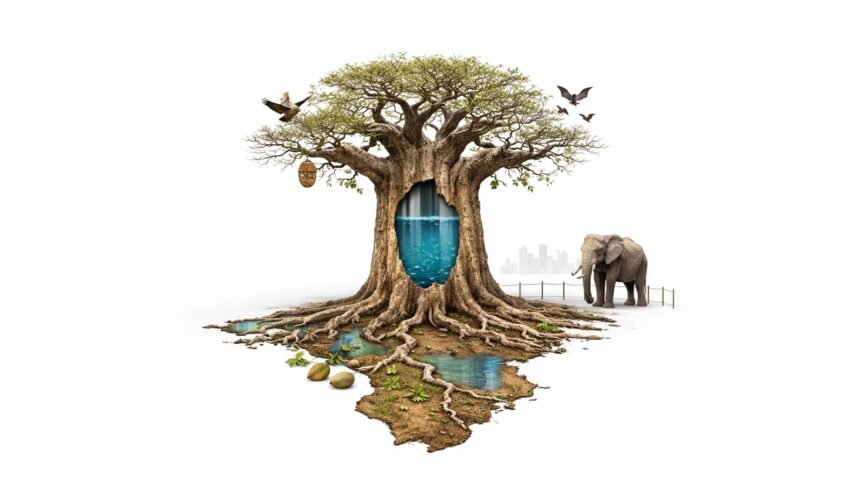
Baobab trees, emblematic giants of Africa’s arid and semi-arid landscapes, stand as living monuments to ecological resilience and cultural heritage, their swollen trunks storing water to endure prolonged droughts while providing sustenance through nutrient-rich fruits and leaves. Across the continent, these Adansonia species—primarily Adansonia digitata in mainland Africa—face escalating threats from urbanization, deforestation, and climatic shifts, prompting a mosaic of conservation efforts that blend indigenous knowledge with modern strategies. In the Great Lakes region, encompassing the Democratic Republic of Congo, Uganda, Rwanda, Burundi, Tanzania, and Kenya, baobabs thrive in drier fringes such as Tanzania’s semi-arid zones and Kenya’s southern savannas, serving as keystone species that foster biodiversity hotspots within lakeside ecosystems. Their conservation narrative intertwines with pan-African imperatives: trees once revered as ancestral meeting points now symbolize battles against habitat loss, and regional initiatives echo broader continental calls for sustainable stewardship.
Rift Guardians: Baobab Conservation in the Great Lakes
Conservation in the Great Lakes centers on safeguarding baobabs as ecological anchors, whose slow growth and centuries—long lifespan make them vulnerable yet vital to savanna stability. In Tanzania’s semi-arid expanses, efforts target emerging challenges such as overharvesting of fruit and bark, compounded by land conversion for agriculture, and community-led programs promote sustainable use to preserve genetic diversity and soil health. In Kenya’s southern regions, home to robust baobab populations, integrated management emphasizes local communities harvesting leaves for food while protecting trunks from elephant damage through fencing and refugia, ensuring tree persistence in human-elephant conflict areas. The Democratic Republic of Congo’s urban frontiers, exemplified by Kinshasa’s lone centenarian baobab, highlight activist-driven preservation amid megacity sprawl, with groups lobbying against development to retain these cultural sentinels. Across the lakes, transboundary collaborations under frameworks like the African Union’s environmental agendas foster seedling propagation and habitat restoration, countering fragmentation in a region where baobabs bolster watershed integrity around Victoria, Tanganyika, and Kivu.
Ancestral Anchors: The Baobab Tree’s Regional Role
The baobab tree in the Great Lakes region embodies ancestral roots, with its fruit pulp yielding vitamin C-rich sustenance that supports rural diets. At the same time, its leaves serve as fodder and medicine, sustaining livelihoods in Burundi’s dry plateaus and Rwanda’s volcanic soils. In Uganda’s savanna belts, baobabs provide shade and nesting sites for birds and bats, enhancing pollination networks crucial for adjacent farmlands. Their hollows, often housing bees or small mammals, create microhabitats that ripple through food webs, underscoring their keystone status. Culturally, these trees host traditional gatherings and rituals, as in Tanzanian villages, where they mark historical negotiations or communal decisions, mirroring the Democratic Republic of Congo’s ferry-port baobab, planted to commemorate colonial-era infrastructure and now a symbol of resistance to erasure. Conservation harnesses this dual utility, with programs in Kenya and Tanzania integrating baobab agroforestry to boost food security. When trees are interplanted with crops, they reduce erosion and improve yields, forging a bridge between heritage and habitat protection.
Warming Waters: Climate Change’s Grip on Lakeside Baobabs
Climate change tightens its grip on Great Lakes baobabs, amplifying droughts that stress their water-storing capacities and erratic rains that erode root systems in flood-prone rift valleys. Projections indicate 20-30 percent variability in precipitation by mid-century, threatening Tanzania’s semi-arid stands, where prolonged dry spells have already halved seedling survival, while in Kenya’s southern zones, rising temperatures are accelerating elephant-induced damage as herds seek baobab bark for moisture. The Democratic Republic of Congo’s urban baobabs, like Kinshasa’s solitary specimen, face compounded risks from pollution and heat islands, where megacity expansion exacerbates microclimatic shifts. Pan-African responses, informed by continental studies on baobab resilience, advocate for climate-smart conservation: drought-resistant cultivars in Rwanda’s reforestation drives and Burundi’s community nurseries, where baobabs are prioritized for carbon sequestration potential, storing up to 140,000 liters of water per tree to buffer against warming. These adaptations mitigate feedback loops: healthier baobabs increase soil moisture and nutrient cycling, reducing the lakes region’s vulnerability to El Niño-driven extremes.
Unified Uplands: Pathways to Baobab Preservation
Pathways to baobab preservation in the Great Lakes demand unified uplands, where grassroots activism meets policy innovation to shield these icons from peril. In the Democratic Republic of Congo, pressure groups stage public rallies and blockades to halt urban incursions, drawing government allies who champion ancestral prohibitions against felling. Tanzania’s semi-arid initiatives embed baobabs into land-use planning, curbing overexploitation through cooperatives that regulate harvesting and promote value-added products such as baobab powder. Kenya’s refugia models, which protect trees from megaherbivores, extend into cross-border corridors with Uganda, facilitating genetic exchange amid habitat fragmentation. Rwanda and Burundi integrate baobabs into national biodiversity strategies, leveraging tourism around lakeside groves to fund monitoring. Challenges persist, indifferent officials, funding shortfalls, and demographic pressures, but pan-African synergies, from seed banks to awareness campaigns, envision a resilient future: restored uplands where baobabs not only survive but thrive, anchoring ecosystems and cultures against an uncertain horizon.


