





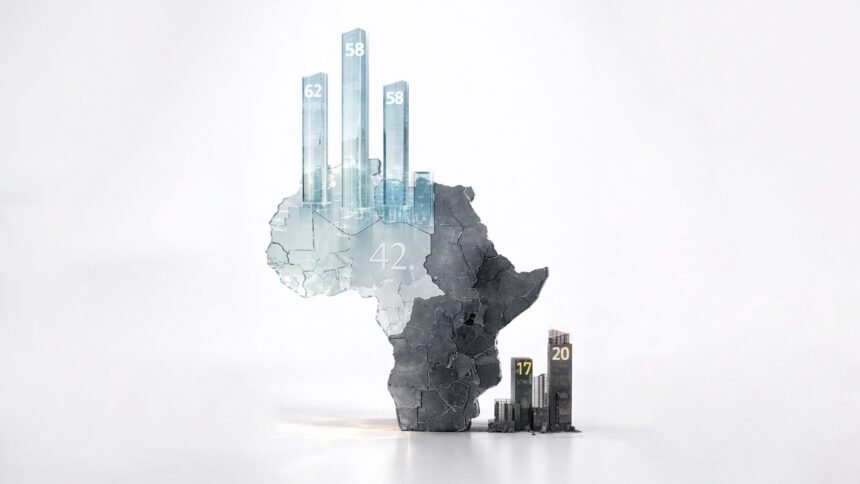
Rwanda has recorded its highest-ever score in the 2025 Corruption Perceptions Index (CPI), scoring 58 out of 100, according to the latest report released by Transparency International on February 10. The result overrepresents a slight improvement from 57 in 2024 and places Rwanda 41st among 182 countries globally.
The CPI measures perceived levels of public sector corruption, drawing on expert assessments and business surveys. Scores range from 0 (highly corrupt) to 100 (very clean). While the index captures perceptions rather than direct cases, it remains one of the most widely referenced governance indicators globally.
On the continent, Seychelles maintained its position as Africa’s best performer with 68 points. The island nation has consistently ranked highest in Africa, supported by relatively strong institutions, independent oversight bodies, and a functioning judiciary. Its small size and relatively diversified economy have also contributed to stronger accountability systems.
Cape Verde followed with 62 points. The West African archipelago is often cited for its stable democratic institutions and comparatively low levels of political interference in public administration. Botswana, tied with Rwanda at 58 points, continues to be recognised for long-standing institutional stability, prudent management of natural resources, and relatively strong anti-corruption enforcement mechanisms.
These top-performing African countries share certain characteristics: sustained political stability, functioning oversight institutions, transparent public financial management systems, and relatively independent anti-corruption agencies.
At the other end of the spectrum, several African countries continue to struggle with deeply entrenched corruption. In East Africa, Burundi scored 17 points, ranking 167th globally. The Democratic Republic of Congo scored 20 points (163rd), reflecting persistent governance challenges, including weak institutional oversight and corruption linked to extractive industries.
Somalia and South Sudan, though not mentioned in Rwanda’s regional comparison, have historically ranked among the lowest globally in past CPI reports. These countries face compounded challenges, including prolonged conflict, fragile state institutions, political instability, and limited enforcement capacity.
Low-scoring countries often face systemic issues, including a weak rule of law, limited judicial independence, a lack of transparency in public procurement, and restricted civic space. In some contexts, conflict and political instability further erode accountability systems.
Overall, Africa’s performance in the CPI remains mixed. While a handful of countries have shown gradual improvements through governance reforms and digitalisation of services, many have stagnated or declined.
The continent’s average score remains below the global average of 42, highlighting persistent governance gaps. According to Transparency International, more than two-thirds of countries worldwide score below 50, signalling widespread corruption risks that undermine development.
In many African economies, corruption continues to affect key sectors, including public procurement, infrastructure development, health services, and natural resource management. Governance experts note that tackling corruption is critical for improving investor confidence, strengthening domestic revenue mobilisation, and achieving the African Union’s Agenda 2063 goals.
Interestingly, the 2025 CPI also reflects governance concerns in advanced economies. Several traditionally strong performers, including the United States, Canada, and the United Kingdom, experienced declines due to weakened oversight institutions and increasing political interference. The global average score has fallen to 42, its lowest level in more than a decade.
This trend reinforces a key message: corruption is not confined to developing countries. Institutional erosion can occur anywhere oversight mechanisms weaken.
For Africa, the report underscores both progress and urgency. Countries that have improved their scores often combine political commitment with structural reforms, including strengthened audit institutions, digitised government services, independent anti-corruption agencies, and whistleblower protection.
Rwanda’s record score reflects sustained governance reforms and accountability mechanisms. However, analysts caution that continued progress across Africa will depend on deepening institutional independence, protecting civic space, and ensuring that anti-corruption frameworks translate into tangible improvements in citizens’ daily lives.
As African nations pursue economic transformation and regional integration, transparency and accountability remain central to unlocking sustainable growth across the continent.


