



The Pan-African Paradigm of Institutional Fragmentation and Monetary Sovereignty
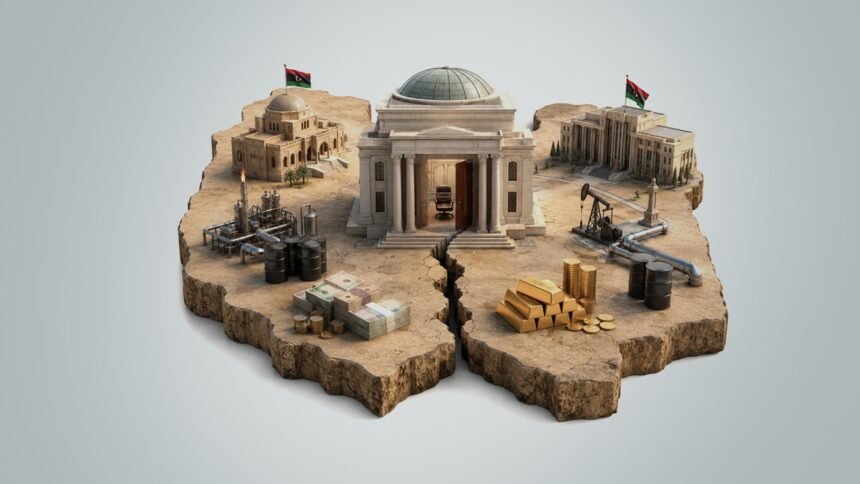
Across the African landscape, few institutions carry more weight for national stability than the central bank, the body entrusted with safeguarding a currency, its reserves, and by extension the material fate of ordinary citizens. Libya’s Central Bank has for years functioned as one of the last nominally unified state institutions in a country split since 2014 between rival eastern and western administrations, both a symbol and a casualty of the country’s fractured political architecture. The resignation of Governor Naji Issa, submitted this week to both of Libya’s competing legislative chambers without public explanation, is more than a personnel matter; it is a structural tremor running through the fragile scaffolding that has kept Libya’s oil revenues, currency, and financial system from complete collapse since the fall of Muammar Gaddafi in 2011. When the stewardship of monetary sovereignty itself becomes hostage to factional politics, the broader Pan-African project of institutional resilience is tested at its foundation, demanding a recalibration of how divided states protect the economic architecture their citizens depend on for reclaiming any semblance of normal life.
A Resignation Without Explanation
Naji Issa submitted his resignation in nearly identical letters addressed to the heads of Libya’s two rival legislative chambers, the eastern-based House of Representatives and the western High Council of State, according to two documents dated August 9 and confirmed as authentic by Issa himself. “I apologize for not being able to continue in my duties as Governor of the Central Bank of Libya, without stating the reasons, due to their sensitivity,” the letter read. Issa declined to elaborate further when contacted directly, leaving analysts, oil markets, and ordinary Libyans to speculate about the political or financial pressures behind the decision. The deliberate vagueness of the letters is itself instructive: in a country where control of the central bank has repeatedly triggered national crises, an unexplained resignation functions as a pressure signal within the fractured architecture of Libyan governance, even without a single fact being disclosed.
The Precedent of 2024 and the Fragility of Consensus Appointments
Issa’s tenure began in 2024, when Libya’s two rival chambers reached a rare consensus to appoint him to end a prior standoff that had paralyzed the bank. That earlier crisis erupted in August 2024 when western factions moved to oust then-governor Sadiq al-Kabir and replace him with a rival board, prompting eastern factions to shut down the country’s oil production in retaliation. This move sharply curtailed Libya’s oil output and exports, imposing a high structural cost on state revenue. Issa’s appointment was engineered as a compromise precisely to prevent a repeat of that paralysis. His resignation now, barely two years into that arrangement, raises the immediate question of whether the underlying factional tensions that produced the 2024 crisis were ever genuinely resolved, or merely suspended pending the next destabilizing trigger.
The High Council of State’s Bid to Preserve Stability
Mohamed Takala, head of the High Council of State, moved swiftly to ask Issa to remain in his post “to maintain financial, economic, and political stability.” At the same time, the resignation is considered in accordance with constitutional and legal procedures. The House of Representatives, notably, had not yet responded to Issa’s resignation as of this writing, an asymmetry in institutional response that itself reflects the deeper structural imbalance between Libya’s two rival power centers. Any vacancy or contested succession at the Central Bank carries outsized risk given the institution’s role in managing Libya’s oil revenues, the country’s principal source of state income, and its foreign currency reserves, both of which underpin the value of the dinar and the functioning of the broader economy.
Oil, Currency, and the Stakes of a Divided Financial Architecture
The Central Bank’s fragility cannot be separated from Libya’s oil economy, the primary engine of state revenue and the leverage point both rival factions have repeatedly used against one another. The 2024 shutdown of oil production in response to the Kabir dispute demonstrated how quickly financial governance crises can cascade into production and export disruptions with global market consequences, given Libya’s position as one of Africa’s major oil exporters. A prolonged vacancy or contested leadership fight at the bank now risks reopening that same channel of coercion, with factions potentially again using control over the financial architecture or threats to oil output as bargaining leverage in the absence of a unified national government. For a country still without a permanent constitutional settlement more than a decade after Gaddafi’s fall, each such episode compounds the broader trajectory of institutional fatigue.
Reclaiming Institutional Continuity Amid Political Fracture
Naji Issa’s resignation, however it is ultimately resolved, is a reminder that Libya’s most consequential fault line runs not through its oil fields or its militias but through the institutions meant to hold the state together in their absence. The Pan-African imperative here is one of structural continuity: financial institutions, once captured or destabilized by factional competition, become nearly impossible to insulate from the broader legitimacy crisis afflicting the state itself. Whether Issa remains, as the High Council of State has requested, or a successor is named amid continued rivalry between Tripoli and the east, Libya’s path toward reclaiming genuine monetary sovereignty depends on a political settlement its rival chambers have avoided for over a decade. Until that reconciliation is reached, each resignation, however quietly delivered, will continue to register as a tremor across a financial architecture that African markets and Libyan citizens can ill afford to see fracture further.