






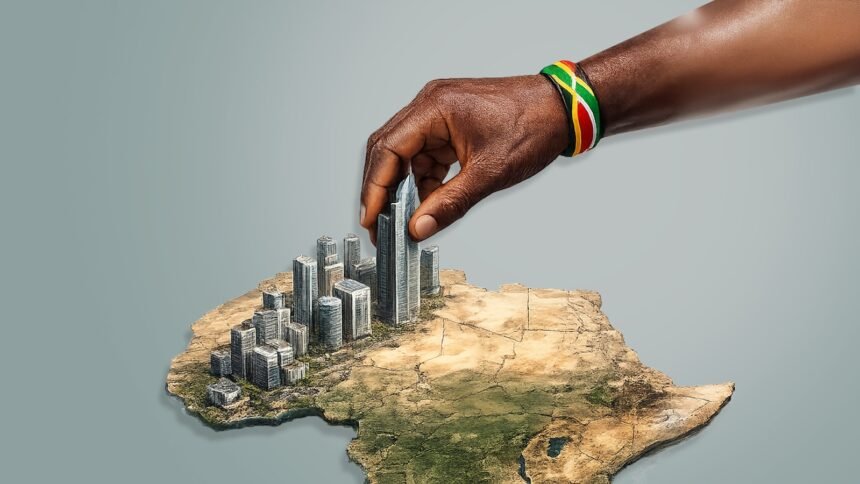
Pan-African Capital Flows
Within the evolving currents of Africa’s economic landscape, capital movements across regions symbolize a deepening commitment to unity and mutual upliftment. By early 2026, intra-African investments have accelerated, propelled by the African Continental Free Trade Area’s mechanisms that integrate markets serving 1.3 billion consumers. South Africa, as the continent’s financial hub, directs substantial flows westward, thereby strengthening linkages that bolster resilience against external disruptions such as global tariff hikes or commodity price fluctuations. With Africa’s aggregate gross domestic product poised to surpass 3.5 trillion dollars by 2030, these flows prioritize strategic sectors, from fintech to renewables, in West Africa’s dynamic economies—Nigeria’s bustling megacities, Ghana’s stable markets, and the Ivory Coast’s agro-industrial zones. This westward surge fosters a balanced ecosystem -in which southern expertise meets western potential, driving a Pan-African narrative of shared growth and reduced dependence on distant powers.
South Africa’s Outward Ambition
South Africa’s economic momentum, projected to grow by 1.4 percent in 2026, fuels its corporations’ drive to expand beyond its borders, targeting West Africa’s opportunities amid domestic constraints. Rooted in strengths like advanced banking and mining, South African entities now emphasize digital and sustainable sectors, capitalizing on a robust rand and mature exchanges. In 2025, the nation’s outward foreign direct investment stock reached 124 billion dollars across the continent, with West Africa absorbing a growing share as global fragmentation prompts regional focus. Institutions such as Standard Bank and Absa are exploring expansions in Lagos and Accra, seeking to strengthen digital finance amid rising consumer demand. This ambition arises from internal pressures—unemployment exceeding 32 percent and infrastructural strains—urging firms to harness West Africa’s demographic dividend and emerging middle class. Nonetheless, navigating regulatory variations and exchange rate volatility requires a nuanced approach that integrates local insights to achieve lasting impact.
West Africa’s Investment Magnetism
West Africa’s magnetic pull for investment stems from its rapid demographic expansion and resource-rich terrain, attracting South African capital to high-potential areas. Nigeria, with its 200 million-plus population, stands as a fintech and energy epicenter, while Ghana’s policy stability and the Ivory Coast’s cocoa-driven economy offer reliable entry points. In 2025, the region’s growth averaged 4 percent, surpassing continental norms, supported by infrastructure like the Lagos-Ibadan rail and Abidjan’s port upgrades. The Economic Community of West African States facilitates cross-border ease, with reduced barriers for South African goods in machinery and services. Political reforms, including updates to mining codes in Mali and Senegal, enhance the appeal of resource investments. However, challenges such as energy deficits and governance inconsistencies necessitate collaborative models that emphasize local empowerment to sustain this magnetism.
Investment Vectors Unveiled
South African investment vectors into West Africa delineate a trajectory from traditional strongholds to innovative frontiers, infusing billions into pivotal developments. In 2025, commitments exceeded $ 1.5 billion in Nigerian banking and Ghanaian renewables, as evidenced by MTN’s network enhancements across the region. Absa’s financial tours aim to expand credit in the Ivory Coast, thereby supporting small businesses in Senegal and Burkina Faso. Mining pursuits focus on Ghana’s gold and Nigeria’s lithium, syncing with global green demands. These vectors gain traction through bilateral accords, slashing tariffs and enabling agro-processing alliances in cocoa and cashews. Intra-regional investments, though accounting for only 3 percent of new projects, are increasing with the AfCFTA’s protocols, underscoring the need for further alignment to maximize reach and counter competitors from Asia.
Economic Symbioses Explored
The economic interdependencies between South Africa and West Africa foster a reciprocal model in which inflows generate employment and knowledge exchange. South African ventures in Nigeria’s infrastructure, amounting to millions, improve logistics, elevating trade by 15 percent yearly. In Ghana, manufacturing partnerships enhance local capabilities, reduce imports, and spur export growth. This synergy invigorates West African markets with South African products, such as processed foods and financial instruments, while West African commodities enrich South African supply chains. Multipliers—each invested dollar yielding two in gross domestic product—highlight the bond, tackling South Africa’s job shortages and West Africa’s funding gaps. Inequities persist, calling for policies that ensure broad participation, particularly for youth and women in emerging digital economies.
Development Horizons Ahead
Looking forward, South Africa’s westward investments herald a developmental uplift, resonating with Agenda 2063’s integrated vision. Anticipations for 2026 include a 12 percent increase in transactions, fueled by clean energy collaborations and technology infrastructure. In Nigeria and Ghana, these could create 80,000 positions, addressing youth bulges. Ivory Coast’s industrial zones, bolstered by South African acumen, establish the region as an agro-manufacturing leader. Sustainable progress depends on managing ecological concerns, such as sustainable mining practices, and navigating shifts like U.S. trade policies. By focusing on green innovations and capacity building, these horizons can foster inclusive advancement, converting investments into sustainable legacies that advance Africa’s collective prosperity.


