






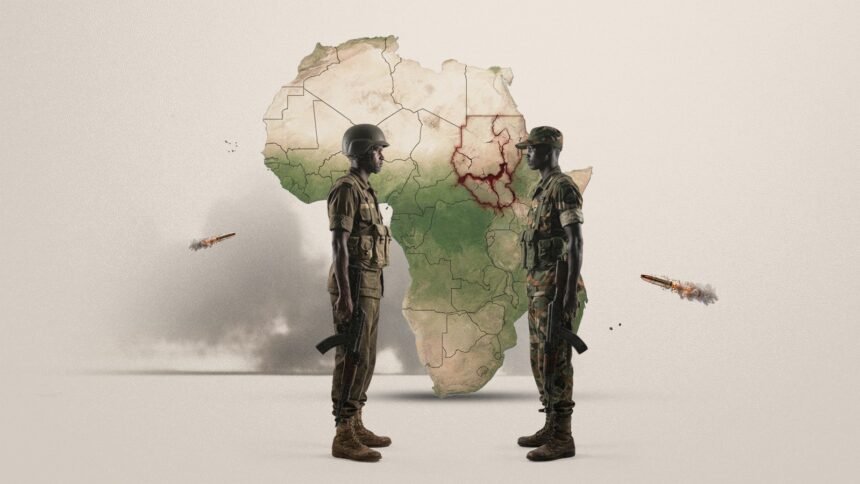
Whispers from the Nile: Sudan’s Historical Scars and Pan-African Resonance
Nestled at the confluence of Africa’s ancient arteries, where the Blue and White Niles merge in a testament to unity’s fragility, Sudan has long been a mosaic of diverse peoples bound by geography yet fractured by power’s relentless pursuits. This land, once the heart of the Kushite empire that rivaled pharaonic Egypt, bears the imprints of colonial divisions sown by British and Egyptian overlords in the 19th century, which deepened ethnic and regional rifts. Independence in 1956 did little to heal these wounds; instead, it ignited the first civil war (1955-1972), a brutal clash between the Arab-dominated north and the marginalized south, fueled by religious impositions and resource inequities. The Addis Ababa Agreement offered a fleeting respite. Still, the discovery of oil in the south and the imposition of Sharia law in 1983 reignited the flames, leading to the second civil war. This 22-year ordeal claimed over two million lives through direct violence, engineered famines, and systematic displacements.
The 2005 Comprehensive Peace Agreement culminated in South Sudan’s secession in 2011. Still, it left the north—now Sudan proper—grappling with unresolved grievances in regions such as Darfur, the Blue Nile, and South Kordofan. The Darfur conflict, erupting in 2003, saw Omar al-Bashir’s regime unleash Janjaweed militias (precursors to today’s Rapid Support Forces, or RSF) in a genocidal campaign against non-Arab communities, resulting in 300,000 deaths and millions displaced, as documented by international tribunals. Bashir’s iron-fisted rule, marked by International Criminal Court indictments for war crimes, ended with the 2019 popular uprising—a Pan-African echo of the Arab Spring—where Sudanese youth, women, and civil society demanded “freedom, peace, and justice.” Yet, the transitional government’s power-sharing between military factions unraveled in April 2023, pitting the Sudanese Armed Forces (SAF) under General Abdel Fattah al-Burhan against the RSF led by General Mohamed Hamdan Dagalo (Hemedti). This fratricidal war has transformed Sudan into a proxy battlefield, displacing over 12 million internally and forcing more than four million to seek refuge in neighboring Chad, Ethiopia, Egypt, and South Sudan. In a Pan-African context, Sudan’s plight mirrors the continent’s broader struggles against neocolonial exploitation, where gold mines in Darfur and agricultural lands in Gezira become pawns in global games, undermining the African Union’s (AU) aspirations for self-determined peace and highlighting the urgent need for unified continental solidarity to staunch this bleeding wound.
The Devouring Storm: Sudan’s Unfolding Humanitarian Catastrophe
As 2025 draws to a close, Sudan’s humanitarian landscape is a harrowing vista of compounded crises, where war’s voracity devours the essence of human survival. Over 30.4 million people—nearly two-thirds of the population—require urgent assistance, a figure projected to swell to 32-33 million by early 2026 amid unrelenting violence and environmental perils. The conflict’s epicenter in Darfur, particularly El Fasher, exemplifies the abyss: besieged by RSF forces since mid-2023, the city harbors over 800,000 residents, half of them refugees from earlier displacements, now trapped in “siege-like conditions” with markets bombed, hospitals razed, and entire neighborhoods reduced to rubble. Recent reports from December 2025 confirm mass killings following RSF advances, with thousands slain, including civilians in displacement camps like Zamzam, where satellite imagery reveals widespread destruction and forced evacuations. In Tawila, another Darfur flashpoint, acute malnutrition has claimed at least 13 children in recent weeks. At the same time, Al Jazirah state—Sudan’s former agricultural heartland—has experienced a 683 percent increase in food insecurity, leaving families to forage for wild leaves and use contaminated water sources.
Nationwide, famine grips 24.6 million people in acute hunger, with 637,000 enduring IPC Phase 5 catastrophe levels in North Darfur’s IDP camps and the Nuba Mountains of South Kordofan. Between December 2024 and May 2025 alone, more than 24 million people experienced acute food insecurity, a crisis exacerbated by the war’s disruption of agricultural cycles and supply chains. Health infrastructure teeters on collapse: 80 percent of facilities shuttered or destroyed, fueling cholera epidemics that have killed thousands, alongside surges in malaria, dengue, and measles amid vaccine shortages. Children bear the heaviest burden—522,000 hunger-related deaths reported, with 30 percent of under-fives malnourished and half of the 10 million displaced being minors. Ethnic violence compounds the horror: RSF’s scorched-earth tactics in non-Arab areas include mass rapes, with victims as young as infants, and forced labor in captured territories, evoking Darfur’s 2003 genocide. Climate adversities—devastating floods in eastern Sudan, displacing hundreds of thousands, persistent droughts in the west—interlace with conflict, eroding livelihoods for a population where 70 percent once depended on agriculture. This manufactured maelstrom has birthed the world’s largest displacement crisis, with over 12 million IDPs and four million refugees straining host nations’ resources, underscoring Sudan’s transformation into a continental emergency that demands immediate, multifaceted intervention.
The Parched Wells: Funding Gaps Eroding Lifelines
The sinews of relief in Sudan are frayed by a profound funding shortfall, rendering global commitments illusory for those in need. The 2025 Humanitarian Response Plan (HRP), seeking $4.2 billion to aid 18 million people, has secured only 24.5 percent—$1.06 billion—leaving a substantial $3.2 billion shortfall that imperils lives daily. This shortfall, a stark decline from prior years, stems from donor apathy, competing global crises such as the war in Ukraine and the Gaza conflict, and austerity measures in major donor nations. The World Food Programme (WFP), pivotal in combating famine, has appealed for $722 million but is reaching only 1 million of the 2.3 million people in dire need, warning of a “massive” crisis in which millions starve due to denied access. UNHCR’s operations, facing a 63 percent funding gap, struggle to support four million refugees, while UNICEF laments the collapse of child protection services amid resource scarcities.
From a Pan-African perspective, this inequity reflects systemic biases in global aid architectures, in which Africa’s emergencies are consistently underprioritized despite their scale. U.S. policy shifts, European fiscal constraints, and selective Gulf investments—often channeled through conflict parties—exacerbate the strain. The consequences are visceral: rationed food distributions, closed clinics, and preventable deaths mounting into the millions. As the 2026 appeal looms, overshadowed by projections of even greater needs, the funding shortfall not only prolongs suffering but also undermines Sudan’s fragile social fabric, calling for a reevaluation of international solidarity to address these parched wells.
Grassroots Guardians: Emergency Response Rooms as Sudanese Sentinels
In the shadow of institutional failures, Sudan’s Emergency Response Rooms (ERRs) emerge as beacons of indigenous resilience, channeling the spirit of the 2019 revolution into wartime salvation. Forged in Khartoum’s war-torn neighborhoods post-April 2023, these volunteer-driven networks—now over 100 strong across urban and rural enclaves—coordinate evacuations, water purification, medical aid, and food distribution with remarkable efficacy. By late 2025, ERRs had assisted 11.5 million people, navigating RSF sieges in Darfur to deliver essentials and organizing community kitchens in Kordofan amid bombardment. Predominantly youth-led and gender-inclusive, they integrate women’s leadership in addressing sexual violence, fostering safe spaces and psychosocial support where international agencies falter due to access barriers.
These ERRs represent a Pan-African paradigm shift: decolonizing aid by prioritizing local knowledge over bureaucratic hierarchies, outmaneuvering UN convoys in speed and cultural attunement. Yet, their heroism is imperiled—looted supplies, targeted volunteers mistaken for partisans—highlighting the need for protection and integration into formal responses. As Sudanese sentinels, ERRs embody communal agency, offering a blueprint for sustainable, African-centered humanitarianism that honors the continent’s ethos of ubuntu.
Barricades of Despair: Navigating Aid Blockages in a War-Torn Labyrinth
Aid delivery in Sudan traverses a labyrinth of deliberate obstructions, where belligerents weaponize access to consolidate control. RSF sieges around El Fasher and other Darfur hubs block 600 daily trucks, their proclaimed “humanitarian pauses” often pretexts for looting and assaults on camps. SAF checkpoints in Khartoum and Gezira extort or detain convoys, while mined roads, aerial restrictions, and customs delays at borders like Chad’s Adre crossing compound the impasse. In ethnic hotspots, blockades serve genocidal ends—non-Arab communities starved as reprisal, with reports of dead bodies contaminating wells in besieged areas, forcing consumption of tainted water.
These barriers are strategic: control over Darfur’s gold fields and Nile Valley ports trumps civilian welfare, resulting in 58 monthly access incidents—a 30 percent rise from 2024—including ambushes and asset seizures. For ERRs and UN teams, the challenge is multifaceted—bureaucratic edicts from Burhan’s Port Sudan government clash with the volatility at the front line. Pan-African calls for demilitarizing corridors remain unheeded amid arms inflows from foreign patrons, perpetuating a cycle where blockages claim more lives than combat, demanding urgent diplomatic pressure to unlock these barricades of despair.
Shadows Under Fire: Targeting Humanitarian Warriors
Humanitarian personnel in Sudan operate amid escalating predation, their sanctity eroded in a conflict that views mercy as a vulnerability. 2025’s global tally of 245 assaults on aid workers finds Sudan rivaling Gaza, with systematic targeting decimating operations. Drone strikes on South Kordofan hospitals have killed 114, including medics; RSF abductions in Tawila and SAF shellings in El Fasher tally over 200 incidents by mid-year, a 14 percent surge. UN inquiries indict both sides for “deliberate” attacks on clinics, where 460 patients and staff perished, and looted convoys that strip essential supplies.
This onslaught shrinks “humanitarian space,” with local ERR volunteers—lacking international protections—suffering disproportionately: youth aides slain in crossfire, families extorted. In a Pan-African frame, such impunity violates the AU’s human rights frameworks, necessitating tribunals to safeguard these warriors and restore norms of neutrality in Sudan’s shadowed fields.
United Fronts: AU-UN Alliances Amid Mounting Strains
The African Union and United Nations forge a beleaguered alliance against Sudan’s tide, blending continental ownership with global resources. The AU’s Peace and Security Council mandates ceasefires and the provision of corridor access. The UN, through OCHA’s HRP coordination, has channeled $12 billion worldwide but faces hurdles in Sudan: airdrops sustaining 50,000 in Tawila, fragile December 2025 accords for El Fasher access amid violations.
Drawing from UNAMID’s Darfur legacy, hybrid probes into ethnic violence and UNHCR’s refugee support in Chad underscore synergies. Pan-African principles prioritize African-led solutions—integrating ERRs and AU-mediated transitions—yet funding shortfalls and Security Council deadlocks strain their efficacy. Their efforts shine in advocacy: UN High Commissioner Volker Türk’s $2.6 billion pleas, AU anti-impunity drives, building a resilient front against erasure.
Horizons of Hope: Envisioning Sudan’s Aid Trajectory
As 2026 beckons, Sudan’s humanitarian horizon blends dire forecasts with seeds of renewal, with 32-33 million projected in need amid protracted war and climatic upheavals. Famine’s expansion—IPC Phase 5 potentially engulfing millions without truce—intersects with floods and droughts, while proxy escalations threaten further displacement. Challenges abound: shrinking resources amid WFP warnings, localization gaps, and fuel shortages imperiling aerial aid.
Yet, potential flickers—ERR scalability, AU-UN pacts for inclusive dialogues, and Sudan’s enduring civil society pushing for civilian governance. The roadmap requires bold action: full funding for HRP, targeted sanctions against obstructors, and the empowerment of ERR as partners. In the context of Pan-African unity, Sudan’s revival demands a collective stand against external meddlers and for equitable aid—transmuting chaos into cohesion. The Nile’s eternal flow inspires perseverance; its people merit no less, lest Africa’s soul dim in neglect.


