





The Pan-African Paradigm of Economic Sovereignty and Informal-Sector Resistance
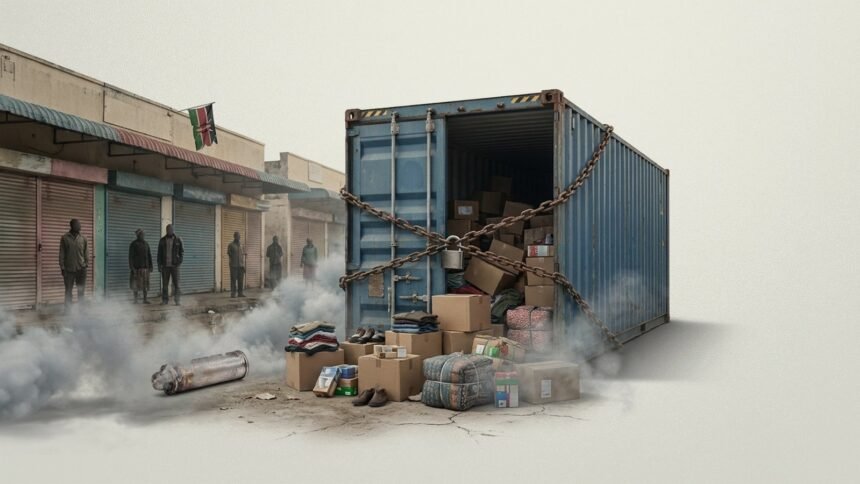
Across the African landscape, the tension between state efforts to formalize revenue collection and the survival strategies of informal traders who form the backbone of urban commerce has become one of the continent’s most persistent structural fault lines. In Nairobi, that tension erupted into the streets on August 28, when riot police fired tear gas to disperse small-scale traders protesting a sharply raised customs valuation benchmark, forcing hundreds of businesses in the central business district to shutter for the day. The Kenya Revenue Authority frames its new benchmark as a necessary correction against under-declaration and undervaluation of imports, a formalization drive consistent with a broader continental push toward domestic resource mobilization and reduced dependence on external financing. Yet the traders who packed Nairobi’s downtown streets experience this same policy as an existential threat to already thin margins. This is the Pan-African paradigm of economic sovereignty playing out at street level: a state asserting its fiscal authority to fund its own institutional trajectory, colliding directly with an informal sector whose own claim to economic self-determination rests on precisely the low-cost, consolidated import channels the new benchmark now closes off.
A Benchmark Doubled, A Street Divided
The Kenya Revenue Authority’s revised customs benchmark, in effect since August 20, raises the minimum reference valuation for a consolidated forty-foot shipping container to 3.2 million Kenyan shillings, equivalent to roughly $24,700, up from 2.5 million shillings previously. The authority has characterized the new figure as a minimum reference point rather than a fixed valuation, meaning importers whose goods genuinely exceed that threshold must declare actual worth and pay duties accordingly. At the same time, those below it face a higher default assessment than before. For traders who rely on consolidated shipments, pooling goods from multiple small importers into a single container to reduce per-unit clearance costs, the higher benchmark functions as a direct tax on the very business model that has allowed Nairobi’s informal import sector to remain price-competitive against larger, formally capitalized retailers.
The Revenue Authority’s Structural Rationale
The KRA’s stated rationale rests on a straightforward institutional logic: systemic undervaluation of consolidated shipments disadvantages both compliant businesses that declare accurate values and domestic manufacturers competing against underpriced imports. This is a familiar continental pattern; governments across Africa have increasingly turned to customs valuation reform, digital tracking systems, and revenue authority modernization to close structural gaps in domestic resource mobilization, particularly as external development financing has grown more constrained and unpredictable. Kenya’s approach reflects a broader institutional trajectory visible from Lagos to Lusaka: recalibrating customs and tax architecture as a form of fiscal sovereignty, and attempting to fund state capacity from domestic revenue streams rather than perpetuating dependence on external creditors and donors whose priorities do not always align with national development goals.
The Informal Economy’s Precarious Architecture
For traders like Muturi Kariuki, who joined Friday’s demonstrations, the stakes are framed in explicitly sovereign terms. “We are standing for our citizenship and our right to do business and our right to build our future,” he told reporters amid the tear gas and closed storefronts. That framing, invoking citizenship and future-building rather than narrow commercial grievance, reflects how deeply informal traders understand their economic activity as bound up with a broader claim to self-determination within a formal economy that has historically offered them limited institutional support, access to credit, or regulatory accommodation. Kenya’s informal sector, like similar sectors across the continent, operates within a structurally precarious architecture: high exposure to policy shocks, minimal capital buffers, and near-total absence from the formal safety nets available to registered enterprises, conditions that transform even modest tariff adjustments into existential threats for individual livelihoods.
Policing Dissent in the Marketplace
The state’s response, riot police deploying tear gas against unarmed traders in a commercial district, illustrates the recurring continental pattern of security apparatus mobilized against economic grievance. This dynamic risks converting a fiscal policy dispute into a broader crisis of state-citizen trust. Kenyan police did not respond to requests for comment following Friday’s clashes, an institutional silence that leaves the proportionality of the response publicly unaddressed. This pattern, in which legitimate economic grievances trigger security responses rather than negotiated policy dialogue, has recurred across the continent in recent years, from fuel subsidy protests to tax reform demonstrations, and reflects a structural gap between the state’s revenue-mobilization imperatives and its capacity, or willingness, to build consensus-based mechanisms for absorbing the resulting friction.
Reclaiming the Marketplace: Sovereignty in the Fiscal Trenches
Nairobi’s tear-gassed streets this week remind us that continental conversations about economic sovereignty and reduced dependence on external financing cannot be resolved through valuation benchmarks alone; they require institutional mechanisms that bring informal traders into genuine dialogue with revenue authorities, rather than confronting them at the barricade line. Kenya’s traders, no less than its policymakers, are making a legitimate claim to economic self-determination, rooted in the daily arithmetic of survival in a marketplace shaped by currency pressures, import costs, and thin margins. Reclaiming a durable form of fiscal sovereignty, one that expands state capacity without hollowing out the informal sector that sustains millions of livelihoods, will require Kenya’s institutions to treat this week’s unrest not as a security problem to be dispersed, but as a structural signal demanding a more inclusive fiscal architecture in the future.