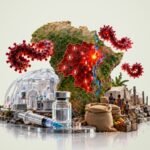

Eastern Congo’s Ebola Outbreak Has Become a Regional Emergency, and Its Course Now Depends as Much on Food, Trust and Security as on Science
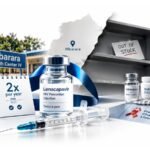
The surest way to find out whether a new Ebola vaccine works is to test it while the virus is spreading; the hardest place to do that is in the middle of a crisis that also brings hunger, violence and fear. On Saturday 24 October, the Democratic Republic of Congo began doing exactly that, launching a clinical trial in Bunia, the capital of Ituri Province, as it struggles to contain the deadliest and fastest-growing Ebola outbreak in its history.
The TUMAiNi trial will evaluate candidate vaccines against Ebola caused by the Bundibugyo virus among contacts of confirmed cases. It is led by the National Institute for Biomedical Research (INRB), which serves as Congo’s national public health laboratory, with technical, scientific and logistical support from the World Health Organization.
A Trial Run from Ituri
Ituri’s governor, Major General Kasongo Gaby, said the launch marked a significant moment in the fight against the outbreak. “This event is of particular importance. It reflects our shared determination not to accept health threats passively, but to mobilize all available resources,” he said.
The choice of lead institution matters. Placing a Congolese laboratory at the head of the trial means that the knowledge gained about Bundibugyo vaccines, and the experience of running such research under outbreak conditions, should stay in the country that needs it. Testing among contacts of confirmed cases also targets the people most likely to be exposed, which is where any protective effect would count first.
More Than 9,000 Cases and Five Countries
Since the outbreak was declared in mid-May, Congo has confirmed more than 9,000 cases of Ebola. The virus has crossed borders. Kenya has reported nine cases, and on 20 October the WHO said Nigeria had confirmed one imported case of Bundibugyo virus disease in the Federal Capital Territory, making it the fifth country to detect the virus since Congo declared the outbreak on 15 May. Uganda was declared Ebola-free in August after reporting 20 cases.
Inside Congo, the outbreak has now reached an eighth province, according to the UN’s World Food Program. “Today, the outbreak has spread to an eighth province, reaching communities already under immense pressure,” said David Stevenson, WFP’s country director in Congo. “As it spreads, hunger continues to undermine the measures needed to contain it.”
When Staying Home Means Going Hungry
Containing Ebola asks families to limit movement, report symptoms and accept isolation. In a country of more than 105 million people where many already struggle to eat, those measures can mean losing the means to feed children. Stevenson described the case of Francine Birungi Amoti in Mungbwalu, in Ituri, the epicenter of the outbreak, who has lost a child to Ebola and is raising her six surviving children and another baby entrusted to her care. Violence has cut her off from her fields.
“If you go, you may not even return alive, and I do not have money to buy food at the local market. So we stay at home, and WFP helps us enormously,” she told Stevenson. “This is what a crisis on top of a crisis looks like: disease and bereavement, compounded by insecurity and hunger,” Stevenson said.
In Butembo, in North Kivu, Isabelle Kyakimwa arrived at an Ebola treatment center without strength. As she recovered, she told WFP staff: “Food is important for us as patients because it helps us regain the strength to keep going.”
Trust, Logistics and a Funding Gap
Stevenson was careful about the limits of his agency’s role. “Food does not treat Ebola. Medical teams do,” he said. “But their work takes place amid severe food insecurity and continued violence that repeatedly displaces families, destroys livelihoods and complicates access to care,” WFP says it has two critical roles: helping families seek care without sacrificing food, and providing the logistics backbone that keeps the wider response moving.
That backbone needs money. WFP says it needs $115 million over the next six months, including $79 million for hot meals and dry rations. At the same time, agencies working in the field are struggling to win the trust of local communities, and international groups are calling for the protection of health workers. A vaccine trial depends on both: on families willing to take part, and on staff who can reach them safely.
Science Made at Home
Africa’s capacity to protect itself from epidemics is often measured in doses donated from abroad. The trial in Bunia points to a different measure: a Congolese institute leading research on a Congolese outbreak, with international partners in support. That is a form of structural sovereignty worth building on.
But science alone will not end this outbreak. If the trial is to succeed, and if any vaccine it identifies is to be used, the response around it must also be funded, from the meals that keep patients strong to the security that lets responders and families move without fear. Without that, the most advanced research in Ituri will still be working against hunger and violence.