



With Access to the US Market in Doubt, African Exporters are Testing How Far China’s Two-Year Tariff Holiday Can Carry Them, and on Whose Terms
“Let us move from interest to deals, and from deals to prosperity.” With that line, South Africa’s Minister of Trade, Industry and Competition, Parks Tau, urged businesses in Pretoria on Thursday 22 October to make use of duty-free access to the Chinese market while it lasts.
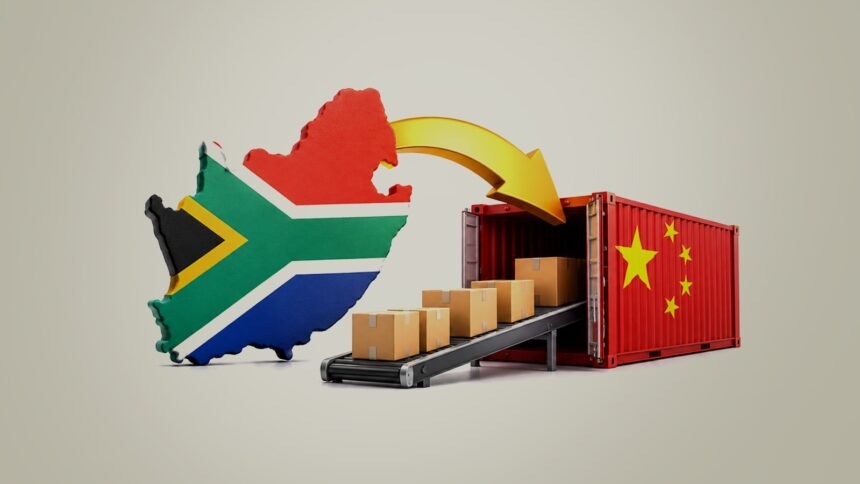
The occasion was a briefing hosted jointly by the Chinese Embassy, Tau’s department and the South African Revenue Service (SARS) and attended by about 400 people from government, business and trade associations. Its subject was China’s zero-tariff treatment for African countries, a unilateral scheme announced by President Xi Jinping on 14 February 2026 in a message to the African Union summit. It gives qualifying products duty-free entry to China, covering 100 percent of tariff lines except 47 subject to tariff-rate quotas, from 1 May 2026 to 30 April 2028.
The First Numbers
Early figures show a sharp rise in trade. China’s ambassador to South Africa, Wu Peng, said bilateral commerce reached almost $15 billion from May to August, a year-on-year increase of nearly 24 percent. Exports to China rose nearly 25 percent to $5.3 billion, while imports from China rose 23 percent to $9.47 billion. South Africa’s agricultural exports to China reached nearly $500 million in the period, up more than 35 percent.
Tau added figures from SARS: between 1 June and 31 August it issued 25,975 certificates of origin, the documents that allow qualifying goods to enter China without duty, and customs declarations rose 199 percent year on year. These are early indicators of activity. They show that exporters are using the scheme, though not on their own how much additional export revenue it has created.
A Trade Gap That Has Not Closed
The headline growth hides an old imbalance. Even after the jump, South Africa bought about $1.79 of goods from China for every dollar it sold there between May and August. The longer trend is similar: according to Tau, bilateral trade reached R642 billion in 2025, up from R483 billion in 2021, but over the same period exports to China rose only from R198 billion to R222 billion while imports from China rose from R284 billion to R420 billion. China remains South Africa’s largest trading partner, with a Chinese investment stock of R117 billion in 2024 and more than 200 Chinese companies invested in the country.
Tau was direct about what South Africa wants. “A relationship of this importance must rest on predictable rules and balanced trade,” he said. His department has drawn up a Top 100 portfolio of value-added products for the Chinese market, from agro-processing, beverages and pharmaceuticals to machinery, plastics and automotive products, so that promotion efforts target goods with identified opportunities rather than raw commodities alone.
Racing a Two-Year Clock
The scheme is temporary, and Pretoria is trying to lock in its benefits before it expires. “The zero-tariff treatment runs for two years, and we are not waiting for it to expire,” Tau said. In February, he and Chinese Minister Wang Wentao signed a framework agreement on economic partnership in Beijing. South Africa and China are now negotiating an Early Harvest Agreement through the Southern African Customs Union (SACU), with officials in Beijing this week working to conclude it. It is meant to give exporters certainty beyond 2028 while including safeguards for South African industry and jobs.
Wu Peng said the trade structure between the two countries had improved and many Chinese companies had expanded their investment in South Africa, and that China would work with South Africa on the Early Harvest Arrangement to provide a long-term, stable and predictable framework. Schalk Human, SARS’s interim deputy commissioner, said the revenue service would work with the Chinese government to improve the export environment for South African companies.
The Washington Factor
The push towards China is also a response to strains with the United States. Washington has extended the duty-free African Growth and Opportunity Act (AGOA) until 2028, but South Africa risks being excluded. US President Donald Trump has taken issue with several of South Africa’s domestic and foreign policies and has claimed that the government is persecuting white Afrikaners, an accusation the government denies.
Tau framed diversification as protection. “South Africa trades with all its partners. Diversifying our markets is how we protect South African jobs in an uncertain world,” he said. “That is what we want, not only more trade, but more factories, more processing and more jobs here at home.”
Choosing the Terms, Not Just the Partner
For South Africa, and for the many African economies offered the same Chinese scheme, the real question is not whether to trade with China but on what terms. A preference granted unilaterally can be withdrawn the same way, which is why Pretoria is pressing for a negotiated arrangement through SACU before the 2028 deadline.
Economic self-determination here means turning a temporary opening into lasting capacity: factories that process goods at home, exporters who can rely on rules that outlast a single policy cycle, and a trade balance that begins to narrow. If the Early Harvest talks deliver that, South Africa will have used a two-year window to reduce its exposure to both Washington’s and Beijing’s decisions. If they do not, the surge of 2026 may prove to be a brief spike in an old pattern.