





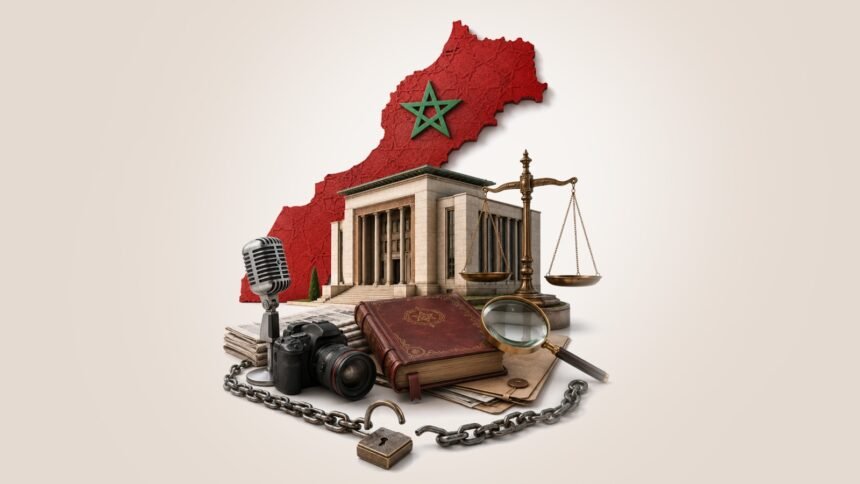
The Pan-African Paradigm of Press Freedom and Institutional Accountability
Across the African landscape, the space afforded to dissenting voices remains one of the clearest barometers of a state’s structural commitment to genuine self-governance rather than mere appearance. The brief detention and subsequent release of veteran Moroccan journalist and political commentator Ali Lmrabet, arrested on arrival at Tangier airport on Sunday and freed on Wednesday pending a continuing investigation into alleged defamation and libel, offers a compact but revealing window into North Africa’s uneven trajectory toward press freedom. Lmrabet, now 66 and a French national based in Spain, has spent more than two decades as one of the Moroccan monarchy’s most persistent critics. This history includes a 2003 imprisonment and a decade-long ban from practicing journalism domestically. His case sits at the intersection of two competing narratives: a Moroccan state eager to project institutional maturity and rule-of-law legitimacy to international partners, and a domestic security apparatus still willing to deploy detention as a tool against commentary it deems offensive to institutions. The Pan-African stake in this story extends well beyond Morocco’s borders, feeding into a continental conversation about whether genuine sovereignty can be claimed by states that continue to police the boundaries of permissible speech about their own leadership.
The Arrest and the Ambiguous Architecture of Moroccan Defamation Law
Lmrabet’s detention was formally grounded in notices issued against him over online content that Casablanca prosecutors said was suspected of constituting criminal offenses under Moroccan law, specifically allegations of defamation and libel targeting unnamed individuals and institutions. The prosecutor’s office, in confirming his release, was careful to note that “the appropriate legal consequences will be determined once the investigation is completed,” language that leaves the case structurally unresolved rather than closed, a pattern civil society groups have long identified as characteristic of how Morocco’s legal architecture around speech operates. Unlike jurisdictions with narrowly codified defamation statutes, Morocco’s legal framework affords prosecutors considerable latitude in defining what constitutes an offense to institutions, a structural ambiguity that rights advocates argue functions less as a neutral legal standard and more as a discretionary instrument available for deployment against particularly persistent critics. Lmrabet’s decades-long record as a commentator, including his 2003 conviction on charges that notably included offending King Mohammed VI, situates his latest arrest within a continuous institutional trajectory rather than an isolated legal episode.
A Career Forged in Confrontation with State Power
Lmrabet’s biography is itself a case study in the asymmetric relationship between individual dissent and institutional power in North Africa. His 2003 imprisonment and the subsequent 2005 court order banning him from practicing journalism in Morocco for ten years did not silence him; instead, he rebuilt his platform as an independent political commentator on social media, operating from Spain while continuing to address Moroccan audiences directly, bypassing the traditional press institutions from which he had been formally excluded. This trajectory illustrates a broader continental pattern in which digital platforms have become the primary battleground for dissenting voices operating under legal or professional restriction, offering a structural workaround to formal bans even as it exposes commentators to renewed legal jeopardy whenever they physically re-enter the jurisdictions whose leadership they critique. Lmrabet’s decision to fly into Tangier, despite his long history of confrontation with Moroccan authorities, underscores the recurring risk borne by diaspora-based critics who maintain ties to their countries of origin, a risk shared by exiled and semi-exiled commentators across numerous African states with similarly discretionary speech laws.
Reading Morocco’s Release Within Its International Positioning
The timing of Lmrabet’s release cannot be entirely divorced from Morocco’s broader diplomatic posture this week, as Rabat simultaneously moves to formalize its participation in an international force tied to Gaza stabilization efforts, a step that positions the kingdom as an increasingly active player in regional diplomacy beyond the African continent. States pursuing heightened international legitimacy have structural incentives to avoid prolonged, internationally scrutinized detentions of well-known critics, particularly those holding foreign nationality, since such cases invite exactly the kind of press freedom commentary that complicates a state’s broader diplomatic narrative. Whether Lmrabet’s release reflects genuine institutional recalibration or simply tactical timing designed to minimize international friction remains an open question, one that will only be answered by how the continuing investigation proceeds and whether formal charges are ultimately filed. For now, the case stands as a reminder that press freedom in North Africa remains contingent, granted and withdrawn according to a calculus that weighs domestic control against international reputation.
Toward a Sovereign Standard for Dissent Across the Continent
Lmrabet’s case, however it ultimately resolves, adds another data point to a continental pattern in which African states continue to negotiate the boundary between legitimate legal accountability and the suppression of institutional criticism. A genuinely sovereign approach to governance, in Morocco and across the region, would require legal architectures for speech and defamation that are transparent, narrowly defined, and insulated from discretionary deployment against a state’s most persistent critics. Until such structural reform occurs, cases like Lmrabet’s will continue to recur, each one testing whether North African institutions are moving toward the kind of durable, rules-based accountability that underpins genuine sovereignty, or merely managing the optics of dissent one high-profile detention at a time. The broader Pan-African project of self-determination is inseparable from this question, since a continent cannot claim full sovereignty over its own narrative. At the same time, its journalists remain subject to the discretionary whims of the institutions they cover.