



South Africa’s Municipal Water Systems Are Failing in Places Where Treatment Plants, Sewage Works and Warnings to Residents All Break Down at Once
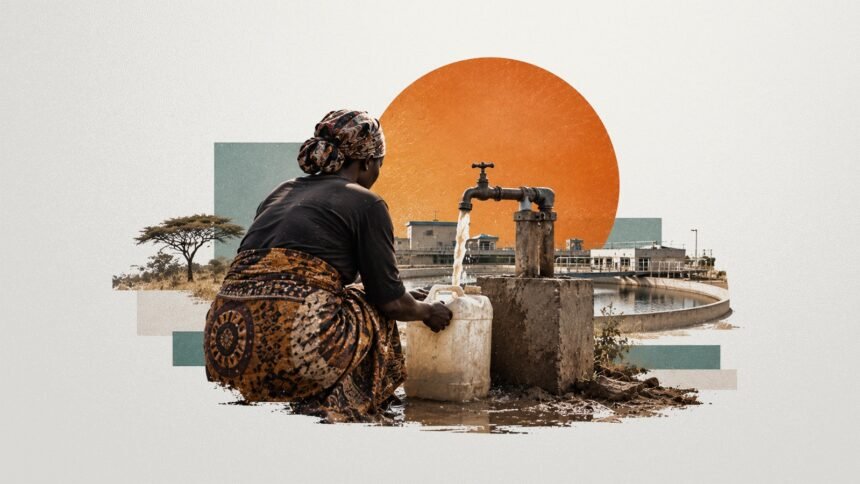
Clean water is noticed only when it is gone. In Bronkhorstspruit, east of Pretoria, it went quietly. For about three weeks, from 24 September to 14 October, water leaving the town’s treatment works was not chlorinated, and nobody told the people drinking it. By the time the authorities acted, hundreds of families were queuing at the local hospital with children suffering stomach cramps and diarrhea.
Between 7 and 18 October, 408 cases of gastrointestinal illness were reported in the area, most of them in children under four, according to a joint statement by the national ministries of health and of water and sanitation, the Gauteng provincial government and the City of Tshwane. No deaths have been reported. Daily cases peaked at 72 on 13 October; 16 new cases were recorded on 18 October. Patients came from Zithobeni, Bronkhorstspruit, Dark City, Rethabiseng and Sokhulumi in Tshwane’s Region 7. Most were rehydrated and sent home within a day.
What the Tests Found
Laboratory tests on stool samples by the National Institute for Communicable Diseases (NICD) detected norovirus, Campylobacter and Shigella in three of four specimens analyzed, along with other pathogens that cause stomach cramps and diarrhea. No cholera bacteria were found. The mix of pathogens and the speed of spread, officials said, pointed to a common water supply. Tests by the Department of Water and Sanitation (DWS) on 14 October backed this up, finding extremely high levels of E. coli and total coliforms in water leaving the Bronkhorstspruit Water Treatment Works and in the Ekandustria and Zithobeni reservoirs.
Further specimens are being collected to determine whether a formal outbreak declaration is needed. DWS has asked the Water Research Commission to run independent water tests, with results expected from Wednesday, and to investigate the causes of the contamination, with a report due by 28 October.
A Chain of Failures
The DWS investigation set out how the crisis unfolded. The City of Tshwane had difficulties with its chlorine supplier, so water was not disinfected for three weeks. The plant draws from the Bronkhorstspruit River, which is badly polluted by sewage from dysfunctional wastewater treatment works upstream in Victor Khanye Municipality and from failing City of Tshwane sewage pump stations. Pumps, sand filters and other mechanical equipment at the treatment works were also not working.
Most damning was the silence. The investigation found that the city failed to warn residents that their water had not been chlorinated and should not be drunk or used for cooking, washing or bathing, even after boiling, as the 2025 Compulsory Standards for Water Services require. DWS says it has started accountability steps against those responsible for the pollution and for breaches of water and sanitation standards. The city shut the plant on 14 October, restored chlorine by 15 October and reopened it on 16 October, while telling residents the water was not yet safe to drink.
Tankers, Bleach and No Timeline
Since 14 October, the city has been trucking in drinking water from the Cullinan treatment works, which tests show is safe, and is expanding the fleet to 36 tankers. Residents supplied by the Bronkhorstspruit plant have been told not to use tap water for drinking, cooking, bathing, brushing teeth, washing food or washing clothes. It may only be used to flush toilets. “Previously stored water should be discarded, and water containers must be disinfected using household bleach,” officials said. Health promoters are going door to door and using loud-hailers to spread the message, and the city has been told to improve how it communicates with residents.
The city is appointing the bulk water utility Rand Water as an implementing agent to improve the plant’s performance. It may keep the works isolated for longer while essential repairs are done. Officials say it is not yet possible to say when residents will be able to drink their tap water again. The city says refurbishing the plant has long been a priority, with R21 million spent this financial year and more than R107 million in spending and planned investment over three years.
Not the First Warning
Tshwane has faced several waterborne outbreaks in recent years. In 2023, cholera killed 29 people in Hammanskraal, a township just outside Pretoria, in an outbreak linked to substandard water purification. In 2025, officials confirmed 48 typhoid cases in the same area east of Pretoria, with the source still unclear. Each crisis has followed a similar pattern: aging plants, polluted rivers, slow detection and residents who learn too late that their taps are unsafe.
Safe Water as a Basic Measure of Self-Government
South Africa’s Constitution guarantees access to sufficient water, and the country has the engineers, laboratories and regulators that detected this outbreak within days of the peak. What failed was the everyday work of local government: keeping a chlorine contract running, maintaining pumps and filters, treating sewage upstream and telling residents the truth in time. Self-rule is tested less in national speeches than at a treatment works in Region 7. Until municipalities can be trusted with those basic tasks, young children in places like Zithobeni and Dark City will keep paying for failures that no one warned their parents about.