



The Pan-African Paradigm of Climate Exposure and Urban Abandonment
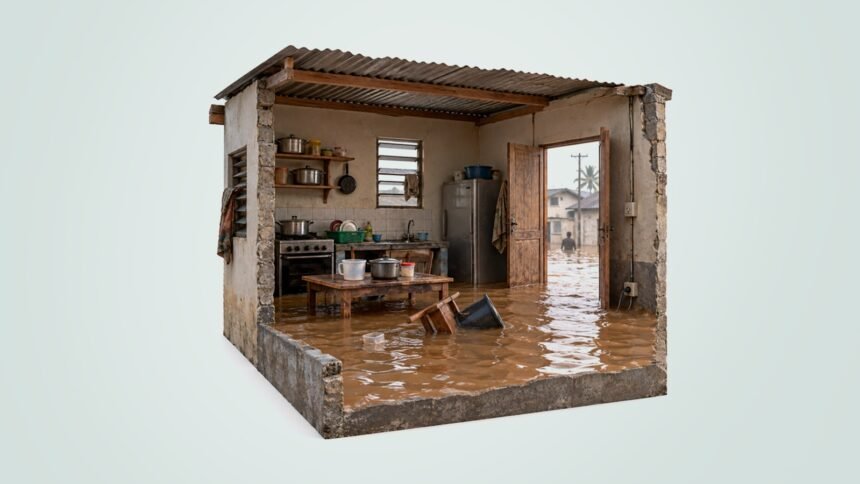
What does infrastructure mean to a woman who drowns in her kitchen at two in the morning because the floodwater outside her home found the electrical current before rescue services found her street? In the early hours of Friday, a pregnant woman in Cameroon’s economic capital, Douala, died of electrocution after torrential rains submerged the city’s fifth district, her body discovered by neighbors only after a call went unanswered and a kitchen door had to be forced open. Her death, isolated as a headline, is in fact a structural artifact: the predictable consequence of decades of underinvestment in drainage, electrical safety, and flood mitigation across West and Central Africa’s fastest-growing coastal cities. As climate volatility intensifies rainfall patterns across the continent, the question is no longer whether African cities will flood, but whether the institutions responsible for urban planning will finally treat resilience as sovereignty, the capacity to protect citizens from foreseeable hazard, rather than as an afterthought subordinated to extraction-driven economic priorities. Douala’s flooded streets this week are a referendum on that choice.
A Night Interrupted: The Anatomy of a Preventable Death
The account neighbors pieced together is unsparing in its ordinariness. “I heard her talking on the phone at 9 pm, but nothing after that,” one neighbor recalled, describing how a husband’s unanswered call prompted the eventual discovery of the body. Firefighters removed her remains from the flooded property early Friday morning. This was not a singular catastrophic surge but a slow accumulation, rain that fell steadily through the night until the electrical infrastructure inside an ordinary home became a lethal hazard. The tragedy sits at the intersection of two structural failures common across rapidly urbanizing African coastal cities: housing stock built without adequate elevation or drainage consideration, and electrical systems without the circuit protections that, in better-resourced jurisdictions, would have cut power the instant floodwater made contact. Neither failure is unique to Cameroon; both reflect an infrastructural matrix still calibrated for a climate regime that no longer exists.
Knee-Deep by Sunrise: A District Under Siege
Residents of Douala’s fifth district described a night that escalated with unnerving speed. “Around 2 am, I woke up to relieve myself. I put my feet on the floor and realized the water was up to my knees,” one resident recounted. “By the time I reached the living room, the water was already up to my thighs.” By morning, motorists and pedestrians trying to reach the city center found roads impassable, forcing many to turn back or wait for hours in the hope that the waters would recede. “I’m at a loss, I’m actually a bit flustered,” one woman told local reporters as she sat stranded in her car, uncertain whether to press forward or retreat. The scale of structural damage across the district remains, as of this writing, only partially assessed, itself an indicator of how thinly resourced Cameroon’s municipal disaster-response apparatus remains relative to the frequency of the hazards it is now expected to manage.
The Meteorological Warning and the Politics of Preparedness
Cameroon’s meteorological service has warned residents to brace for even heavier rainfall in the days ahead, a forecast that, in a city still assessing Friday’s damage, reads less as reassurance than as an indictment of institutional readiness. Douala, home to the country’s principal port and much of its industrial base, sits at a low-lying confluence of rivers and Atlantic tidal influence that has long made it structurally vulnerable to flooding. Yet the recurrence of catastrophic flood events- this is neither Douala’s first nor, meteorologists suggest, its last severe inundation this rainy season- exposes the gap between climate forecasting capacity and the drainage and housing-code enforcement needed to translate warning into protection. A forecast is not resilience; at best, it is a countdown. The structural question for Cameroonian authorities is whether the coming days will bring reinforced drainage capacity and emergency shelter provisioning, or whether residents of the fifth district will again be asked to wade through what infrastructure failed to prevent.
Toward a Sovereignty of Resilience
The death of a pregnant woman in a flooded Douala kitchen will not, on its own, alter the trajectory of Central African urban planning. But it adds to an accumulating body of evidence that climate adaptation across the continent cannot remain a donor-funded afterthought or a line item deferred to the next budget cycle. Genuine sovereignty over the built environment, the capacity of African municipalities to protect their own populations from the hazards of a warming Atlantic, requires structural investment in drainage systems, electrical safety codes, and early-warning infrastructure that reaches households before the water does, not merely a meteorological bulletin issued after the fact. Douala’s flooded fifth district is, in miniature, the argument for a continental recalibration: that resilience against climate hazard must be built into the architecture of African cities as a matter of self-determination, not requested as a favor from institutions whose interests lie elsewhere. Until that recalibration happens, the water will keep finding its way to the door.