




The International Criminal Court arrived at an uncomfortable truth this week: Sudan’s Darfur region is witnessing atrocities that feel disturbingly familiar, as if the script written in blood two decades ago is being performed again with renewed brutality. On Monday, ICC prosecutors announced they are gathering evidence of alleged mass killings, rapes, and crimes against humanity following the Rapid Support Forces’ capture of el-Fasher, the Sudanese army’s final stronghold in western Darfur. The timing could not be more alarming, for as investigators begin their grim documentation, famine—actual, classifiable famine—has spread to el-Fasher and Kadugli, marking only the fifth time the world has officially recognized such conditions since the International Food Security Phase Classification began its work.
The picture emerging from el-Fasher is one of horror stacked upon horror. After an 18-month siege, the paramilitary RSF finally overwhelmed the city in early November, and eyewitness accounts describe a calculated campaign of terror: fighters conducting door-to-door searches, separating men from their families, committing mass executions, and perpetrating widespread sexual violence. The World Health Organization documented that armed groups killed at least 460 individuals at a single hospital and abducted medical personnel. Yet these numbers, ghastly as they are, represent only the deaths that have been recorded. The true toll remains unknowable, obscured by the chaos of war and the fog of conflict that surrounds the trapped population.
What makes el-Fasher particularly haunting is the scale of human suffering concentrated in a single location. The city, which housed approximately 260,000 residents before the final RSF offensive, has seen more than 70,000 people flee in recent weeks. Survivors reaching safety describe horrific scenes: the separation of men deemed to pose a threat, the targeting of ethnic minorities, the systematic stripping of dignity that accompanies conquest in Darfur’s brutal conflict. Around 5,000 have sought refuge in the nearby town of Taw, whilst nearly 200,000 others remain trapped within el-Fasher itself, their fate unknown, their access to food, water, and medical care cut off or severely restricted.
The International Committee of the Red Cross, an organisation that has witnessed virtually every major humanitarian catastrophe of the modern era, issued a stark warning this weekend. Mirjana Spoljaric, the ICRC’s president, told Reuters that the unfolding tragedy bears the unmistakable hallmarks of previous Darfur atrocities. “It is history repeating itself,” she said, “and it worsens each time one faction seizes control from another.” Her words carry the weight of institutional memory, a reminder that Darfur has been down this road before—in the early 2000s, when the Janjaweed militias unleashed what international observers widely characterised as genocide, resulting in the deaths of hundreds of thousands.
The famine classification itself represents a catastrophic breakdown of society. According to IPC criteria, el-Fasher and Kadugli now exhibit “a complete breakdown of livelihoods, hunger, alarmingly high levels of malnutrition, and fatalities.” The metrics are clinical but the reality is visceral: populations where at least one in five households face severe food insecurity and starvation; where malnutrition-related deaths have reached specified thresholds; where children waste away from malnutrition that should have been preventable. In el-Fasher, the conflict has destroyed the very infrastructure that keeps people alive—markets have ceased functioning, farming has become impossible, and the distribution of humanitarian aid has been reduced to a trickle.
The ICC’s decision to mobilise investigators represents an important acknowledgement of what is happening, yet investigators cannot stop bullets or distribute food. The court’s prosecutions, whilst potentially important for future justice, do nothing to alleviate the immediate suffering of the nearly 200,000 people whose fates hang in the balance. The conflict has already claimed over 40,000 lives according to UN estimates, though aid organisations warn the actual figure could be substantially higher. More than 14 million people have been displaced across Sudan, and disease outbreaks accompany displacement like predictable shadows.
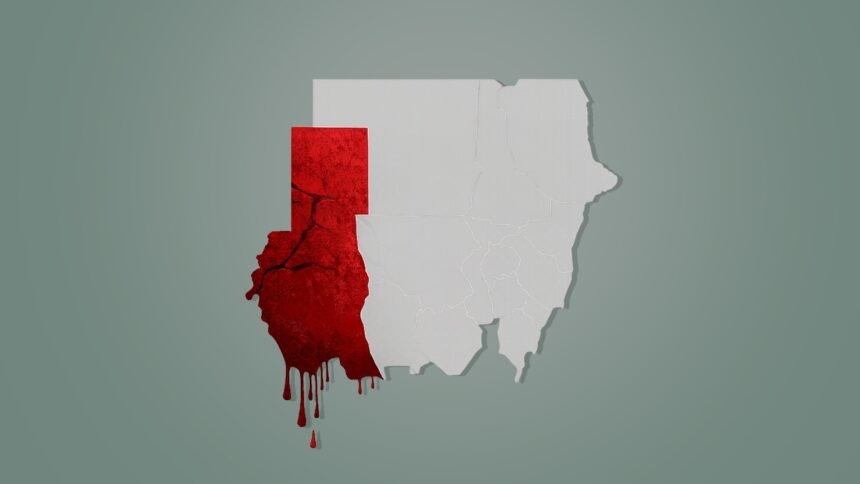
What makes the situation in el-Fasher unique among Sudan’s many tragedies is the concentration of vulnerability. This is not a crisis spread across a nation, but one compressed into a single city where nearly 200,000 people face simultaneous threats: violence, starvation, disease, and the psychological trauma of knowing that escape may be impossible. As investigators document crimes, as the international community issues stern statements, and as the RSF consolidates its control of more than a quarter of Sudan’s territory, the people of el-Fasher live in a hell of their own making—or rather, in a hell created by forces beyond their control. History, as Spoljaric warned, is repeating itself in Darfur. The question is no longer whether atrocities will be documented, but whether anyone will arrive in time to prevent the next chapter from being written in tragedy.