



The COP30 is part of a series of negotiations that began in 1992. The year 1992 witnessed numerous significant events, including the adoption of the Framework Convention on Climate Change (UNFCCC). Rio de Janeiro, Brazil, hosted the United Nations Conference on Environment and Development, also known as the Earth Summit, where the UNFCCC was adopted and opened for signature, The Convention’s secretariat is headquartered in Bonn, Germany, the UNFCCC was opened for signature at the United Nation Headquarters in New York City later in 1992, the UNFCCC serves as the legal basis for all subsequent agreements, including the Kyoto Protocol at COP3 and the Paris Agreement at COP21.
The Negotiation Agenda of COP30:
This year, negotiations on climate change continue with the parties to the Convention in Belem, Brazil. This is the 30th meeting of the Conference of the Parties since 1995. According to Article 7 of the UNFCCC, the COP is the supreme decision-making body of the Convention. The COP is held annually. Only in 2020 was the meeting unable to take place due to the COVID-19 pandemic.
This year, discussions focus on strengthening countries’ voluntary commitments (Nationally Determined Contributions, NDCs) to reduce greenhouse gas emissions. With global temperatures expected to rise by 1.5 degrees Celsius compared to pre-industrial levels, the parties are seeking to activate the Loss and Damage Fund to support countries directly affected by climate change. African negotiators are pushing for a mechanism to compensate those impacted by climate change in Africa through the Least Developed Countries (LDCs) and the African Group of Negotiators (AGN).
The negotiations focus on strengthening and developing a mechanism for financial and technical support to developing countries to enhance their resilience and transition to a low-carbon economy. Increasing climate finance for African countries is crucial, and African leaders have reiterated their call for developed countries to fulfil their financial commitments related to climate finance, particularly the Loss and Damage Fund, which is dedicated to countries affected by climate crises and disasters.
Africa’s Role during the COP32 Negotiations:
Africa is strongly participating in the conference and playing a prominent, influential role. The continent has a strong voice in the negotiations, focusing on issues of sustainable development, climate justice, Africa’s challenges, and investment opportunities, especially in emissions reduction, the carbon market, and the green economy. African participants focused on the importance of addressing the climate impacts affecting the continent, such as drought, floods, food security, and climate-related migration, which directly affect people’s lives. Africa also emphasised the need to activate the Loss and Damage Fund to compensate countries facing burdens and losses due to climate change, such as coastal states and small island developing states SIDS. They also called for technology transfer and capacity building to support sustainable economic growth.
The conference saw active participation from African civil society organisations and
youth networks, which worked to raise awareness and amplify the continent’s voice on climate issues and the importance of empowering youth in shaping and implementing
climate solutions.
Africa affirmed at COP30 its vital role in achieving the goals of the Paris Agreement by supporting regional climate strategies that balance economic growth and environmental protection. They also stressed the need for genuine international partnerships to enhance the continent’s resilience to the negative impacts of climate change.
Hosting COP32 in Ethiopia:
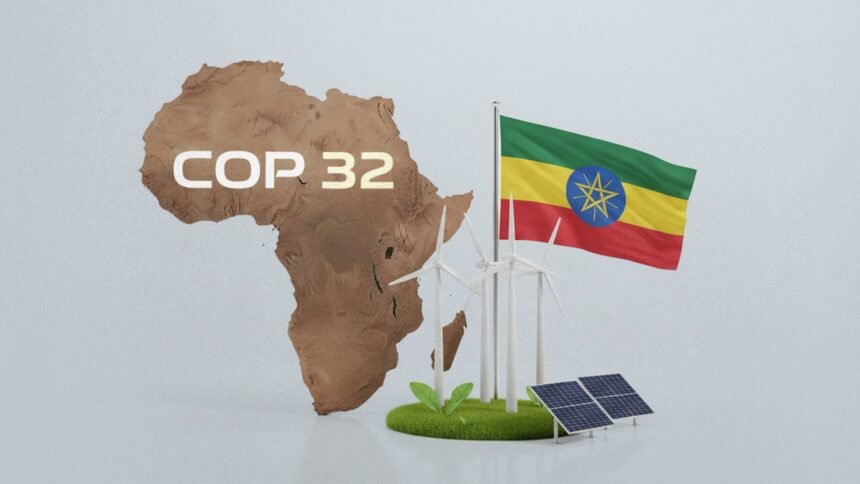
During COP30, it was announced that Africa will host the COP32 Conference of the Parties in 2027 in Addis Ababa, Ethiopia. This is a significant achievement for the continent and underscores its influence on climate issues and multilateral diplomacy.
The African Union played a significant role in securing the continent’s bid to host the conference, coordinating and unifying its position with international and regional partners. The African Climate Change Secretariat was a key supporter of this bid, and there was also close coordination with the host country, Ethiopia. Reuters reported that Ethiopia will host COP32 in 2027, with Ambassador Leulseged Tadese Abebe stating, “We are deeply grateful for the trust and confidence bestowed on the Ethiopian people and government.” He added, “COP32 will play a significant role in guiding climate action in this critical decade. The Ethiopian press briefing on hosting COP32 in Ethiopia was held on November 15, 2025, during the COP30 conference in Belém, Brazil. It was provided on the official platform for Ethiopia to present its readiness and commitment to host the 32nd Conference of the Parties (COP32) under the UNFCCC, scheduled for 2027 in Addis Ababa.
Africa’s Opportunity for Development and Climate Adaptation. Africa COP32 is an opportunity for the continent to prepare and highlight its environmental and developmental issues. It is an opportunity to prioritise regional and local needs and coordinate diplomatic efforts that align positions and interests, thus strengthening the continent’s voice at this global event.