



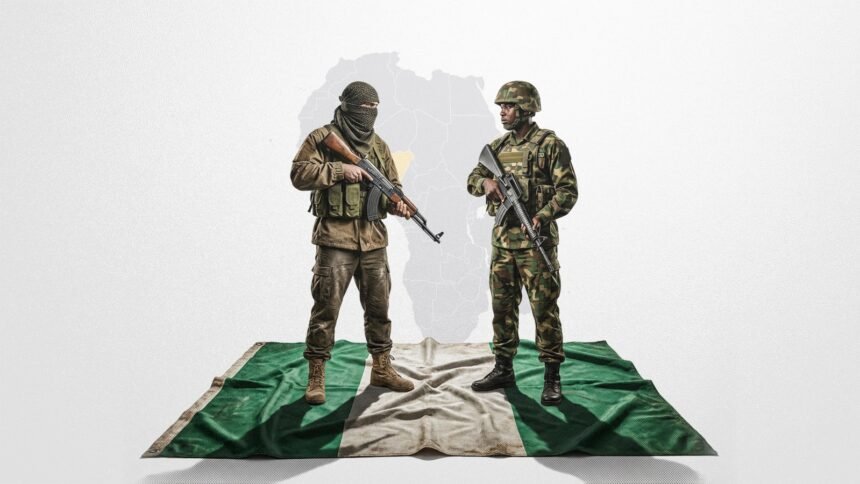
Nigeria, Africa’s demographic and economic colossus, navigates a labyrinth of internal fractures and external pressures, where historical scars from civil strife intersect with contemporary insurgencies and global rivalries. Recent US rhetoric, framing the nation as a theater of targeted Christian annihilation, warranting military intrusion, distorts a multifaceted crisis into a simplistic narrative of religious crusade. This analysis dissects such assertions, revealing them as geopolitical maneuvers amid US-China contestations, while foregrounding Nigeria’s resilient yet strained democracy. By examining the Biafran legacy, Boko Haram’s shadow, and broader conflicts, it underscores the imperative for Pan-African solidarity to safeguard minority rights without succumbing to foreign overreach.
Pan-African Echoes: Biafra’s Lingering Wounds and Nigeria’s Fractured Unity
The specter of Biafra haunts Nigeria’s collective memory, a secessionist bid born from ethnic alienation that erupted into a cataclysmic civil war from 1967 to 1970. Predicated on perceived Igbo marginalization following northern pogroms that displaced over a million and claimed thousands, the Eastern Region’s declaration of independence under Lieutenant Colonel Chukwuemeka Odumegwu Ojukwu ignited a federal response led by General Yakubu Gowon. What ensued was a brutal contest, marked by blockades inducing famine that starved up to two million civilians, alongside battlefield losses totaling around 100,000 combatants. Broadcast globally through harrowing images of emaciated children, the war exposed the fragility of postcolonial borders, drawn arbitrarily by British cartographers to consolidate control rather than foster cohesion.
Reintegration post-surrender emphasized “no victor, no vanquished,” yet systemic inequities persisted, fueling cycles of resentment. Policies like federal character quotas aimed at equitable representation often entrenched ethnic patronage, breeding competition over resources in a federation of over 250 groups. Today, this legacy manifests in south-eastern agitations, where groups like the Indigenous People of Biafra invoke Biafran sovereignty to protest infrastructural neglect and political exclusion. The recent conviction of IPOB leader Nnamdi Kanu on terrorism charges exemplifies this tension. While prosecutors cited incitement to violence, including ambushes killing soldiers and civilians, supporters decry it as judicial overreach, silencing legitimate grievances. Such dynamics reveal not a monolithic ethnic group but a Pan-African mosaic that demands inclusive federalism to prevent historical fissures from reopening.
Nigerian Insurgencies: Boko Haram’s Jihad and the Myth of Singular Persecution
At the vanguard of Nigeria’s security quagmire stands Boko Haram, whose insurgency since 2009 has morphed from a Salafist critique of Western education into a transnational jihad, splintering into factions like the Islamic State West Africa Province. Founded by Mohammed Yusuf in Borno State, the group exploited northern poverty and governance voids, rejecting secular authority in favor of a caliphate. By 2015, it had seized swaths of territory, displacing over two million and killing tens of thousands through bombings, abductions, and village razings. Though military offensives, bolstered by multinational coalitions, reclaimed much ground, Boko Haram’s tactics evolved: suicide bombings at markets and schools persist, as seen in the June 2025 Borno fish market attack claiming 12 lives.
US claims of an “existential threat” to Christianity amplify isolated incidents into a fabricated genocide, ignoring the insurgency’s indiscriminate brutality. Data underscores this: since 2009, over 53,000 civilians—Muslims and Christians alike—have perished in targeted violence, with Islamist assaults claiming far more Muslim lives in the north, where Boko Haram enforces its puritanical vision on co-religionists. Fulani herder-farmer clashes in the Middle Belt, often conflated with jihadism, stem primarily from resource scarcity exacerbated by climate shifts, pitting nomadic Muslims against sedentary Christians over shrinking pastures. While churches face desecration and clergy abductions, mosques endure similar fates; in 2025, ACLED documented only 50 of 1,923 civilian attacks as religiously motivated, a fraction dwarfed by banditry and ethnic reprisals. This complexity debunks hyperbolic assertions: violence is a hydra of poverty, ungoverned spaces, and ecological strain, not a confessional purge orchestrated by the state.
US Shadows Over Nigerian Soil: Fabricated Threats and Imperial Echoes
US saber-rattling, epitomized by threats of “guns-a-blazing” intervention to halt purported Christian slaughter, veils a tapestry of strategic opportunism rather than humanitarian zeal. Rooted in evangelical lobbying and congressional bills like the Nigeria Religious Freedom Accountability Act, these pronouncements designate Nigeria a “country of particular concern” for religious violations, echoing Cold War-era interventions. Yet, the narrative crumbles under scrutiny: inflated tallies, such as claims of 100,000 Christian deaths since 2009, conflate all conflict fatalities without evidentiary rigor, often sourced from advocacy groups blending banditry with targeted killings. Nigerian officials counter that constitutional safeguards protect all faiths, with security forces stretched across multiple fronts, from northeast jihadists to northwest bandits.
This posturing aligns with broader democracy struggles, as Nigeria’s Fourth Republic, since 1999, has weathered electoral manipulations and elite capture while delivering peaceful power transitions amid ethnic federalism. External threats risk undermining these gains, portraying Abuja as complicit in its own instability to justify incursions that could destabilize the Economic Community of West African States. Pan-African voices decry such rhetoric as neocolonial, diverting from collaborative counterterrorism—intelligence sharing and training—that has yielded joint successes against Boko Haram. Proper protection demands bolstering local capacities, not unilateral edicts that erode sovereignty.
US-China Currents: Geopolitical Tides Reshaping Nigerian Horizons
Nigeria’s quandary unfolds amid the US-China rivalry, a zero-sum contest for African leverage in which resources and alliances eclipse human rights discourse. Beijing’s ascent as Nigeria’s premier trading partner—surpassing $20 billion annually in bilateral trade—centers on infrastructure via the Belt and Road Initiative, funding railways, ports, and power plants that address chronic deficits. In 2025, China’s $1.3 billion stake in Nigerian mining, targeting lithium and gold, underscores mutual gains: Abuja diversifies from oil dependency, while Beijing secures supply chains for green transitions. This symbiosis contrasts with Washington’s transactionalism, in which aid ties to governance reforms often falter amid domestic polarization.
Trump’s threats inadvertently bolster China’s narrative as a non-interfering ally, as Beijing publicly affirms Nigerian sovereignty and expands cooperation in defiance of US pressure. This dynamic extends continent-wide: as Washington prioritizes countering Chinese “debt traps,” African states like Nigeria hedge, joining BRICS as partners to amplify bargaining power. Yet, risks loom—overreliance on Chinese loans could strain fiscal sovereignty, mirroring Latin American precedents. For Nigeria, navigating this requires Pan-African astuteness: leveraging forums like the African Union to demand technology transfers and equitable deals, transforming rivalry into catalysts for self-reliant development.
Boko Haram’s Broader Shadows: ISIS Affiliates and Minority Perils
The tendrils of global jihadism entwine with local grievances, as Boko Haram’s ISIS allegiance amplifies threats to minorities across Nigeria’s religious fault lines. While northern Christians endure disproportionate risks—six times likelier to face lethality than Muslims— the peril transcends faith: ISWAP’s 2025 incursions into border towns like Kirawa displaced 5,000, targeting all resisters to its caliphate vision. Southern minorities, including Igbos and Yoruba adherents of traditional faiths, confront spillover violence, from kidnappings funding insurgencies to enforced “sit-at-home” orders by Biafran militants that shutter economies.
Protection falters amid institutional frailties: military overstretch, with forces deployed in two-thirds of states, breeds abuses like extrajudicial killings, eroding trust. International probes, including ICC examinations of war crimes by both insurgents and security forces, highlight systemic lapses. Debunking US hyperbole does not negate these realities; instead, it calls for nuanced minority safeguards—community policing, early warning systems, and inclusive dialogues—that fortify resilience without inviting foreign meddling.
Conflict’s Nigerian Crucible: Democracy, Economy, and the Path Untraveled
Nigeria’s conflicts forge a crucible testing democratic mettle, where 2025’s economic outlook—projected at a modest 3.4% growth per the IMF—grapples with inflation hovering at 23.7%, food insecurity afflicting millions, and oil price volatility. Structural woes, from power shortages to agrarian disruptions by insecurity, stifle inclusive prosperity, with youth bulge channeling frustration into militancy. Democracy endures through multiparty contests and judicial checks, as Kanu’s trial illustrates, yet corruption and elite pacts undermine equity, perpetuating north-south divides.
Challenges abound: banditry in the northwest claims thousands of lives, while Delta militancy simmers over resource inequities. The future hinges on Pan-African imperatives—regional integration via AfCFTA to harness trade, climate adaptation to quell herder-farmer wars, and governance reforms for transparent security. By centering local agency, Nigeria can transmute external threats into a unity forged, emerging not as a proxy in great-power games but a beacon of African self-determination.