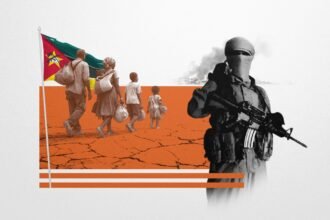






From OAU to APSA: Africa’s Long March Toward Self-Defended Peace
The African continent has hosted more United Nations peacekeeping operations than any other region on earth—fourteen concurrent missions at their peak, absorbing roughly 80 percent of the UN’s global peacekeeping budget and 85 percent of its deployed personnel. This disproportionate burden began with the very first large-scale UN intervention in modern history: the 1960–1964 Opération des Nations Unies au Congo (ONUC), a 20,000-strong force that arrived amid the chaos of Congolese independence and left behind a trail of contested legacies, including the assassination of Patrice Lumumba and the death of Secretary-General Dag Hammarskjöld.
Since then, Africa has been both laboratory and graveyard for every doctrinal evolution in peacekeeping—from traditional cease-fire monitoring (UNEF-style) to the muscular protection-of-civilians mandates of the Brahimi era, and now to the hybrid “peace enforcement” experiments in Mali and the Central African Republic. The African Union, born in 2002 out of the ashes of the Organisation of African Unity, sought to reverse the logic of perpetual foreign guardianship. Its Constitutive Act (Article 4(h)) boldly claimed the right of intervention in cases of genocide, war crimes, and crimes against humanity—a radical departure from the OAU’s sacrosanct non-interference principle. The African Peace and Security Architecture (APSA)—with its Peace and Security Council, Continental Early Warning System, African Standby Force, and Peace Fund—was intended to operationalize that claim.
Reality has been harsher. The African Standby Force remains a paper brigade, fragmented into five uneven regional brigades that have never deployed as a unified entity. Funding has been the Achilles heel: until 2023, the AU covered less than 3 percent of its own peace operation costs, relying on European Union and Western bilateral donors who attach strings that often clash with African priorities. UN Security Council Resolution 2719 (December 2023), which authorises up to 75 percent UN-assessed funding for AU-led or AU-authorised operations, was hailed as historic. Yet, two years later, only the Somalia transition remains tentatively eligible. The continent continues to supply the bodies, while others control the purse and the strategic direction.
South Sudan: The Longest-Running Protection Crisis in Modern Peacekeeping
No mission better illustrates the strengths and pathologies of contemporary peacekeeping than the United Nations Mission in South Sudan (UNMISS), established in July 2011 on the very day South Sudan declared independence. What began as a modest state-building mission of 7,000 troops was rapidly transformed after the December 2013 civil war into one of the most heavily mandated protection operations in UN history.
By 2016, UNMISS was authorised to deploy 17,000 troops and 2,101 police under a Chapter VII mandate that explicitly prioritised the protection of civilians “by all necessary means, including undertaking robust and active patrolling.” The mission created “Protection of Civilians” (PoC) sites adjacent to its bases—first in Bentiu, then Malakal, Juba, Wau, and Bor—effectively turning UN compounds into the world’s largest refugee camps under blue-helmet guard. At their peak in 2016–2017, these sites sheltered nearly 230,000 people who feared annihilation by government or opposition forces.
UNMISS has repeatedly demonstrated that, when properly resourced and politically backed, peacekeepers can prevent mass atrocities. During the 2016 Juba crisis, Indian and Ethiopian troops held the line around the PoC sites while fighting raged metres away. In Bentiu in April 2014 and Malakal in February 2016, peacekeepers physically opened their gates to thousands fleeing ethnic massacres. Yet the mission has paid a steep price: over 150 personnel killed in action or by disease since 2011, making South Sudan the most lethal environment for UN peacekeepers in the past decade.
The fundamental contradiction remains unresolved: UNMISS protects civilians from a sovereign government that increasingly views the mission as an occupying force. President Salva Kiir’s administration has restricted patrols, blocked supplies, and, in 2024–2025, repeatedly demanded the mission’s drawdown ahead of elections; it has no intention of holding free elections. The 2018 Revitalized Agreement lies in tatters—transitional security arrangements unimplemented, the constitution unpassed, oil revenues siphoned by elites, while 8.9 million people require humanitarian assistance. Climate shocks—three consecutive years of catastrophic flooding along the White Nile—have turned vast areas into inland seas, displacing another million and making large parts of the country unreachable except by helicopter.
UNMISS today operates in a state of managed stagnation: neither able to enforce peace nor permitted to leave. Its $1.2 billion annual budget sustains a force that is indispensable for survival yet incapable of delivering the political transition it was mandated to support. The mission has become, in the words of one senior UN official, “a costly refugee camp with guns.”
Haiti 2023–2025: When African Solutions Meet Caribbean Realities
It was against this backdrop of African peacekeeping experience—and exhaustion—that Kenya agreed in July 2023 to lead the Multinational Security Support mission in Haiti. The symbolism was powerful: the first African-led security mission in the Western Hemisphere, framed as Global South solidarity with a fellow post-colonial nation crushed by centuries of foreign intervention and extraction. President William Ruto presented it as proof that Africa had graduated from being a consumer of security to a provider of security.
Eighteen months later, that narrative lies in ruins.
The MSS arrived with grand ambitions but anaemic means. Kenya eventually deployed 744 officers instead of the promised 1,000; total force size never exceeded 1,100 from all contributing countries. Mainly confined to a logistics base near Toussaint Louverture International Airport, the mission achieved tactical successes—reopening the road to Vieux-Caille, securing the main port terminal, reducing kidnappings along Route Nationale 1—but failed to dislodge a single major gang coalition from the neighbourhoods they control. By mid-2025, armed groups still dominated 85–90 percent of Port-au-Prince, exacting protection taxes, maintaining food and fuel distribution, and paralysing what remains of the state.
Funding was the original sin. Unlike traditional UN peacekeeping, the MSS relied on a trust fund fed by voluntary contributions—chiefly from the United States ($600+ million pledged) and Canada. Delays in disbursement left Kenyan officers without functioning armoured vehicles for months; spare parts sat in Mombasa while the mission operated at what President Ruto publicly called “40 percent capacity.” Intelligence cooperation foundered on the reality that the Haitian National Police, with fewer than 7,000 operational officers for a country of 12 million, is deeply infiltrated by the very gangs it is meant to fight.
The reputational cost to Kenya has been severe. Officers trained in a domestic policing culture marked by extrajudicial killings and protest suppression were parachuted into a context where community trust is nonexistent. Rights groups documented cases of Kenyan personnel firing indiscriminately during escorts, and the mission’s physical isolation from Haitian civilians bred resentment rather than legitimacy.
The Gang Suppression Force: Same Wine, New Bottle
In September 2025, the UN Security Council voted to transform the MSS into the Gang Suppression Force (GSF)—a hybrid creature with 5,500 authorised personnel, a UN Support Office for logistics and medical evacuation, yet still financed through voluntary contributions rather than assessed budgets. Kenya surrendered overall command but retained the largest contingent. The resolution was passed days before the MSS mandate expired, in a now-familiar pattern of eleventh-hour improvisation.
The GSF is MINUSTAH reincarnated with different branding. Like its 2004–2017 predecessor, it promises robust action but arrives after the state has already collapsed; it relies on a national police force that is part of the problem; it operates in a political vacuum with no functioning government or agreed transition roadmap. The ghosts of past interventions—cholera introduced by Nepalese peacekeepers, sexual exploitation scandals, the 2010–2017 billions that vanished into contractors’ pockets—hover over every press release announcing “a new chapter.”
As of November 2025, fewer than 500 additional personnel have deployed under the GSF banner, and the United States has delivered twenty second-hand armoured vehicles—hardly the “predictable resource package” President Ruto demanded. Meanwhile, gang federations have consolidated, importing drones and heavy weapons, and private military companies circle like vultures offering quick-fix solutions that history shows only deepen dependency.
The Deeper Malady: Peacekeeping Without Politics
Both South Sudan and Haiti expose the same structural deformity: contemporary peacekeeping has become a sophisticated holding operation that can prevent the worst atrocities and deliver humanitarian aid at scale, but cannot resolve the political crises that generate violence in the first place.
In Juba and Port-au-Prince alike, elites have learned to game the system—tolerating just enough international presence to keep aid flowing and sanctions at bay, while ensuring that no mission ever acquires the mandate or leverage to force genuine power-sharing or accountability. The UN Security Council, paralysed by vetoes and competing interests, authorises ever more robust forces but refuses to confront the root causes: in South Sudan, the monopolisation of oil rents by a tiny predatory class; in Haiti, the hollowing-out of the state by foreign debt, NGO parallel governance, and criminal capture.
Until peacekeeping is paired with enforceable political compacts—backed by the credible threat of sanctions, arms embargoes, and targeted asset seizures—the cycle will continue. South Sudan’s PoC sites and Haiti’s gang-controlled citadels are not anomalies; they are the logical endpoint of a model that substitutes indefinite crisis management for sustainable resolution.
Toward an African-Led Future—or More of the Same?
The dream of genuinely African solutions persists. Rwanda, Ethiopia, and Senegal have demonstrated that well-trained, rapidly deployable African forces can stabilise situations where Western troops fear to tread. Yet without predictable financing, unified command structures, and the political will to impose solutions on recalcitrant elites, these capabilities remain trapped in a patronage system that rewards presence over performance.
Haiti was meant to be the proof-of-concept that Africa could export security beyond its own borders. Instead, it has become the latest chapter in a centuries-long story of foreign experiments conducted on Haitian and African bodies alike. Until the international community—and especially the permanent members of the Security Council—treats sovereignty as something more than a rhetorical flourish, the blue helmet will remain less a symbol of hope than a marker of managed despair.
Vertières, where Dessalines defeated Napoleon’s army in 1803, still stands. The Haitian people, like the civilians huddled in Bentiu and Malakal, have never stopped fighting for the promise it represented. The tragedy is that those sent to “help” them keep arriving with new names for the same surrender.