




Pan-African Hunger Shadows: Legacy of Dependency Amid Global Aid Eclipse
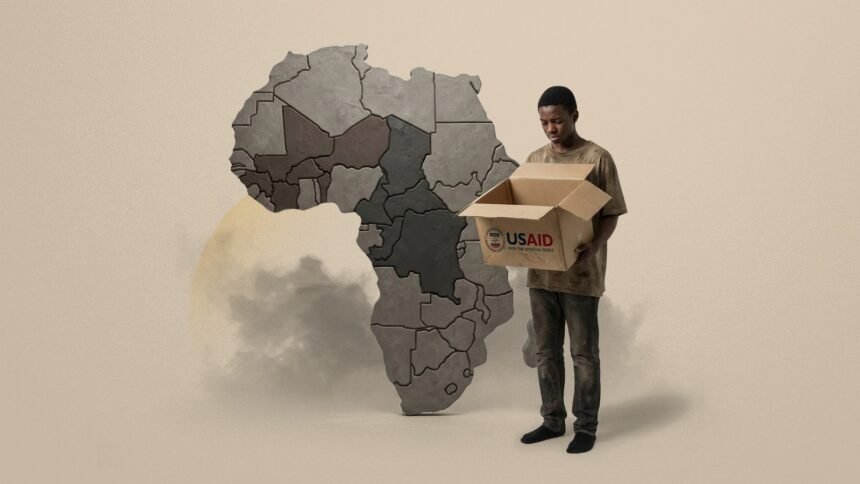
Across the vast expanse of Africa’s sun-scorched savannas and equatorial rainforests, a silent storm brews, not of monsoons or tempests, but of vanishing lifelines that once tethered millions to survival. The abrupt dismantling of USAID in early 2025, coupled with a cascading collapse in UN humanitarian funding entering 2026, has thrust the continent into an era of unprecedented vulnerability. This retrenchment, driven by Western fiscal realignments and a pivot toward domestic priorities, has severed the arteries of support that flowed billions of dollars annually into food security nets. In a Pan-African lens, where communal resilience has long battled colonial echoes of extraction, these cuts expose the fragility of external benevolence. From the Sahel’s arid fringes to the Congo Basin’s verdant depths, food insecurity morphs from a chronic ailment to an acute peril, affecting over 100 million people. Yet, this rupture also ignites a discourse on sovereignty: can the eclipse of aid kindle flames of endogenous renewal? This exploration contrasts West Africa’s volatile insurgencies with Central Africa’s protracted conflicts, unveiling how diminished resources amplify hunger’s grip while beckoning pathways to accountability and self-reliance.
USAID’s Fading Footprint: Unraveling Threads in Africa’s Food Fabric
USAID’s dissolution, formalized under executive orders prioritizing “America First,” eradicated a colossus that disbursed over $50 billion globally in 2024, with Africa claiming a lion’s share for agriculture, nutrition, and emergency response. In West Africa, programs like Feed the Future bolstered smallholder yields in countries such as Nigeria and Ghana. At the same time, Central Africa’s resilience initiatives in the DRC strengthened communities against cyclical floods. The agency’s abrupt halt triggered immediate voids: therapeutic foods for malnourished children in Kenya dwindled, and early-warning systems like FEWS NET went offline, blinding responses to famine precursors. Compounding this, UN funding plummeted to a decade-low in 2025, with only $12 billion against a $46 billion appeal, forcing agencies like WFP to slash rations across the continent. In Nigeria alone, WFP’s December 2025 resource depletion cut support for 300,000 children, presaging a 2026 catastrophe where 35 million teeter on hunger’s edge. This dual assault, USAID’s exit and UN’s contraction, strips bare the dependency woven over decades, where aid constituted up to 18% of GDPs in fragile states, yet often bypassed local systems, fostering paternalism over partnership.
West Africa’s Withering Harvests: Insurgency and Insecurity in Aid’s Vacuum
In West Africa’s mosaic of bustling markets and nomadic pastures, food insecurity surges as aid’s retreat collides with entrenched volatility. Nigeria, the region’s giant, exemplifies the peril: 35 million at hunger’s brink in 2026, including three million children in severe malnutrition, amid Borno State’s resurgence of catastrophic levels unseen in a decade. USAID’s pre-2025 infusions underwrote nutrition for 5.6 million youths; their absence, per local health workers, escalates acute cases from “serious” to “critical” in northern states. Chad, hosting 1.4 million refugees doubled by Sudan’s spillover, faces 3.7 million in severe insecurity during lean seasons, with WFP’s funding shortfalls halving rations and shuttering programs. Cameroon’s Far North, besieged by Boko Haram remnants, risks cutting aid to half a million, amplifying displacement where floods and droughts already ravage yields. Niger and Mali’s Sahelian belts, scarred by jihadist incursions, project emergency phases for millions, with land restoration efforts, once USAID-backed, stalling, yielding 64% hunger spikes in reduced-ration zones. These cuts not only empty granaries but also erode social fabrics: youth desperation fuels unrest, perpetuating cycles in which conflict accounts for 77% of regional insecurity figures. Yet glimmers emerge; Nigeria’s nascent national ownership of local flood warnings hints at budding resilience.
Central Africa’s Congested Crises: Conflict’s Chokehold on Sustenance
Central Africa’s dense jungles and mineral-rich plateaus harbor a different torment, where protracted wars intersect with aid’s atrophy to deepen food voids. The Democratic Republic of Congo, epicenter of displacement, sees 28 million, one in four, food insecure, with eastern provinces’ 10.3 million bearing the brunt of the conflict. USAID’s $351.7 million shortfall vanishes by late 2025, halving recipients from 2.3 million to 600,000, with complete pipeline breaks forecast for 2026. Malnutrition thresholds soar tenfold above emergency levels, as soup kitchens close and cholera surges 62% amid lack of clean water access. The Central African Republic, reeling from rebel skirmishes, halves aid to a third of needs, leaving 2.3 million in crisis phases amid 50% population insecurity. South Sudan’s Jonglei, severed from UN airlifts post-cuts, isolates famine-prone pockets where 637,000 endure catastrophic conditions, risking eight million more. Chad’s eastern fringes, overlapping West’s woes, absorb Sudanese influxes, straining hosts where 3.7 million face lean-season desperation. Unlike West’s episodic insurgencies, Central’s embedded militias weaponize starvation, blocking roads and farms; aid’s retreat amplifies this, with WFP’s reductions pushing emergency levels threefold since 2020. Local voices decry the void: in DRC clinics, medics ration beds, echoing a continent-wide lament of preventable peril.
Contrasting Currents: West vs. Central in Food Insecurity’s Grip
West and Central Africa, though contiguous, diverge in the contours of hunger amid aid’s ebb. West Africa’s Sahelian volatility, jihadist flare-ups, and climate caprices yield acute spikes, as in Nigeria’s 15,000 catastrophic cases, where funding gaps halve WFP outreach from 1.3 million. Central’s entrenched civil strife, like DRC’s eastern quagmire, fosters chronic emergencies, with 2.3 million perpetually in Phase 4, aid cuts precipitating total collapses. West tallies 55 million lean-season risks, driven by displacement’s 77% concentration in four nations; Central’s 28 million DRC insecure mirror this, but with deeper malnutrition, child rates tenfold emergencies. Both suffer ration reductions: West’s 64% hunger surge post-cuts vs. Central’s cholera spikes. Yet, West’s urban densities enable nascent national responses, like Nigeria’s flood funds; Central’s remoteness isolates aid, as UNHAS halts leave Jonglei famished. This dichotomy underscores Pan-African imperatives: the West demands agile interventions against bursts, while the Central region pursues sustained peacebuilding to unlock farms. Aid’s absence unites them in peril, projecting 13 million malnourished children continent-wide, a clarion for unified resilience.
UN’s Diminishing Beacon: Accountability in the Aid Abyss
The UN’s 2026 appeals, halved to $23 billion amid donor retreats, spotlight accountability lapses in a system once buoyed by USAID’s heft. In West Africa, WFP’s Nigeria plan targets a mere 2.5 million with $516 million, down from 3.6 million, prioritizing “lifesaving” amid Borno’s bombings that claimed 4,000 in 2025’s first eight months. Central’s DRC requires $700 million to avert March stockouts, yet global shortfalls, $2.7 billion in peacekeeping, starve missions. Accountability falters: parallel NGO economies siphon funds, as Sierra Leonean farmers decry “money-takers who come and go.” UN coordinators like Nigeria’s Mohamed Malick Fall advocate national ownership, local lean-season support, yet funding’s 18% absorption in places like Cameroon betrays bureaucratic bloat. This eclipse demands transparent metrics: why 98 million reached in 2025 versus 123 million prior? Pan-African scrutiny, via AU’s Agenda 2063, could enforce donor pledges, ensuring aid catalyzes, not cripples, sovereignty.
Seeds of Self-Reliance: Pan-African Pathways Beyond Aid’s Shadow
Amid the void, self-reliance sprouts as Africa’s antidote. In West Africa, Nigeria’s tax reforms yield 12% of GDP in health insurance revenues, while Ghana’s peer learning on extractives transparency diversifies away from aid. Central’s DRC eyes sovereign funds from mineral rents, projecting $1.2 billion in buffers by 2040. Diaspora remittances, $420 million in Sierra Leone alone, fuel microenterprises, bypassing donor whims. Social ventures, like Chad’s solar cooperatives, harness blockchain for transparent finance, yielding 20-fold returns on poultry. AfCFTA swells intra-trade 15%, knitting cocoa corridors from West to Central. Women’s collectives in Cameroon disburse communal loans, embodying ubuntu’s rotational ethos. These endogenous blooms align with Amílcar Cabral’s “tell no lies,” transmuting dependency into dignity, aid as ally, not architect.
Accountability’s Arena: Challenges and Horizons in Hunger’s Wake
Perils persist: elite capture in Central’s DRC siphons rents, while West’s 71% youth unemployment spurs migration, 120,000 annually from Nigeria. Climate injustices flood Bolivians, demanding $300 million adaptive funds amid donor flight. Yet horizons gleam: 2026 mining booms could double revenues for universal care, fintech slashes remittance fees, and recirculates millions. Pan-African solidarity, ECOWAS insurance pools, and AU standby forces embody Nkrumah’s unity, pivoting from supplication to strategy. In this reckoning, Africa’s faultlines forge fortitude, a testament to resilience unbound.