



Rising tensions between the United States, Israel, and Iran may appear geographically distant from Africa, but their potential impact on the continent could be immediate and severe. At the centre of concern is the Strait of Hormuz, a narrow maritime corridor through which roughly 20 percent of the world’s oil supply passes.
Any disruption there would almost certainly drive up global fuel prices, with direct consequences for African economies already vulnerable to energy shocks. Many African countries are net importers of petroleum products. A spike in oil prices would quickly translate into higher transport costs, increased food prices, and broader inflationary pressure.
For governments managing fragile currencies, tight fiscal space, and subsidy burdens, sustained high oil prices could strain national budgets and slow economic growth.
Hamad Hussain, a climate and commodities economist at the United Kingdom-based firm Capital Economics, told Al Jazeera that if crude oil prices rose to $100 per barrel and remained there, global inflation could increase by 0.6–0.7 percentage points. Such a scenario would also push natural gas prices higher.
For African central banks, particularly in emerging and frontier markets, this would complicate efforts to stabilise currencies and ease monetary policy. Policymakers across the continent tend to be highly sensitive to commodity price swings, especially those affecting fuel and food.
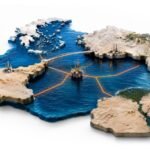
Located between Iran and Oman, the Strait of Hormuz connects the Persian Gulf to the Gulf of Oman and the Arabian Sea. In 2024, oil flows through the corridor averaged about 20 million barrels per day, according to the U.S. Energy Information Administration. The Strait also accounts for about one-fifth of global liquefied natural gas (LNG) shipments.
Major crude exporters whose oil passes through Hormuz include Iran, Iraq, Kuwait, Qatar, Saudi Arabia, and the United Arab Emirates. Several African countries import refined fuel products sourced from these markets, linking the continent directly to the stability of the waterway.
The strait is only 33 kilometres wide at its narrowest point, with shipping lanes about 3 kilometres wide in each direction. With few viable alternative routes for Gulf exports, even temporary disruptions could trigger significant volatility in global energy markets.
Beyond fuel imports, African economies are also exposed through trade and shipping networks. Countries such as South Africa, Kenya, and Nigeria rely on stable global maritime routes for energy supplies and broader commercial trade. Any escalation affecting Hormuz would likely increase freight costs and insurance premiums, further pressuring supply chains.
Asian economies, notably China and India, are among the largest importers of crude flowing through the strait. Given Africa’s expanding trade ties with these economies, an energy shock could indirectly dampen demand for African exports.
Iran has previously signalled that closing the Strait remains within its strategic options. However, such a decision would require approval from its Supreme National Security Council and ratification by the government, according to the Iranian state media. While a full closure remains unlikely due to the far-reaching global consequences, markets remain sensitive to even the threat of disruption.
For Africa, the Strait of Hormuz is more than a distant geopolitical flashpoint. It exposes structural vulnerabilities in the continent’s energy security framework.
Higher oil prices would ripple through transport systems, electricity generation in oil-dependent states, food distribution networks, and government subsidy programmes.
As African governments pursue energy diversification, including renewables, expanded natural gas production, and, in some cases, nuclear power, the current tensions underscore the urgency of reducing dependence on imported petroleum products.
In an interconnected global economy, instability in a narrow maritime corridor thousands of kilometres away can quickly translate into higher living costs across African capitals.