



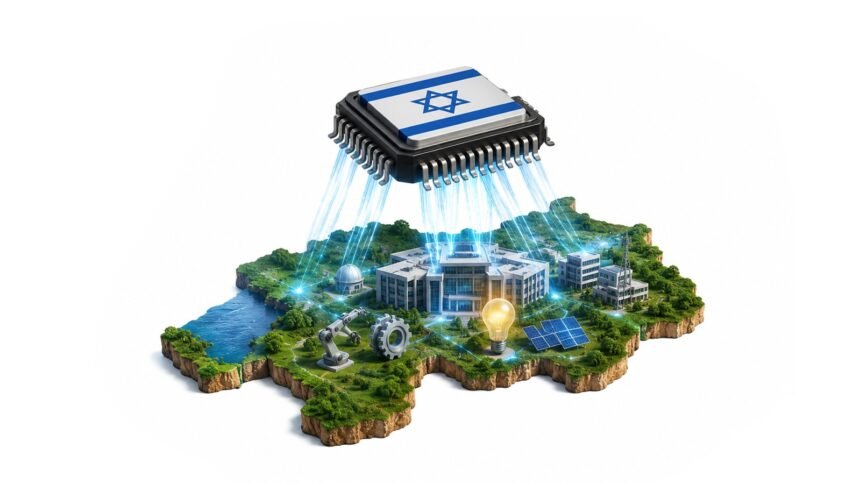
Rwanda has signed new cooperation agreements with Israel to expand collaboration in education, scientific research, and development, as the country seeks to tap into Israeli expertise to strengthen skills, innovation, and institutional capacity.
The agreements, signed in Jerusalem on Monday, July 6, by the Minister of Foreign Affairs and International Cooperation, Olivier Nduhungirehe, and Israel’s Foreign Minister, Gideon Sa’ar, establish new frameworks for cooperation in education and development.
One memorandum of understanding focuses on basic education, Information and Communication Technology (ICT), Technical and Vocational Education and Training (TVET), higher education, and scientific research. The second establishes cooperation between MASHAV, Israel’s Agency for International Development Cooperation, and the Rwanda Cooperation Initiative to facilitate the exchange of development knowledge and experience.
Speaking after the signing ceremony, Nduhungirehe said the agreements reflect a shared commitment to investing in people and institutions through knowledge exchange and practical cooperation.
“Today, we signed two memoranda of understanding. The first, between MASHAV and Rwanda Cooperation, reflects our shared commitment to exchanging development experience and home-grown solutions. The second, on education, will strengthen cooperation between institutions in both countries and expand exchanges, training programs, and capacity-building opportunities,” he said.
The agreements are expected to create opportunities for collaboration among universities, research institutions, vocational training centers, and public institutions, while supporting skills development in areas increasingly central to Rwanda’s economic transformation.
Israel is globally recognized for its strengths in innovation, technology, and entrepreneurship, areas that Rwanda has prioritized as it builds a knowledge-based economy.
Beyond education, the two countries also discussed ways of strengthening broader bilateral cooperation and exchanged views on regional security issues.
Nduhungirehe said the discussions underscored a shared commitment to dialogue and international cooperation.
“Today’s discussions and agreements reflect the strength of our partnership and our shared ambition to deepen cooperation for mutual benefit. I am confident that this visit will bring new momentum to Rwanda-Israel relations.”
For his part, Sa’ar said Rwanda and Israel share a common history of overcoming adversity through resilience, innovation, and long-term investment in development.
“Israel and Rwanda demonstrate that nations are not measured by their size but by the determination and resilience of their people. Both our countries have turned great challenges into remarkable achievements,” he said.
He described Rwanda as one of Africa’s fastest-growing economies with a clear vision for innovation and development, while noting that Israel has built a globally recognized ecosystem for technology, science, and entrepreneurship despite facing persistent security challenges.
According to Sa’ar, the newly signed agreements will help expand cooperation across sectors critical to future economic growth.
“Looking at the agreements we have signed today, we can see that our partnership is making a real difference by training the next generation of leaders in agriculture, innovation, education, higher education, and more.”
The Israeli minister also welcomed the Washington Accord between Rwanda and the Democratic Republic of Congo, expressing Israel’s support for its full implementation.
During his visit, Nduhungirehe toured Jerusalem’s Old City and the Western Wall before visiting Yad Vashem, Israel’s official memorial to Holocaust victims.
Reflecting on the visit, he said it reinforced the historical bond between Rwanda and Israel, two nations whose histories have been shaped by genocide but whose recovery has been defined by resilience and renewal.
“Rwanda and Israel share ties that go beyond diplomacy. Both our countries are marked by painful histories and profound tragedies. But what defines us today is the resilience of our people and our determination to transform adversity into progress, to turn the tragedy of genocide into socio-economic transformation, resilience, and innovation.”
He added that the shared experiences of both countries continue to shape their commitment to peace, development, and cooperation, providing a foundation for partnerships that extend beyond diplomatic relations into knowledge exchange and institution-building.
The latest agreements add to growing cooperation between Rwanda and Israel, with both countries seeking to deepen collaboration in education, innovation, and development as drivers of long-term economic growth.