





The Pan-African Paradigm of Resource Sovereignty and Value Retention
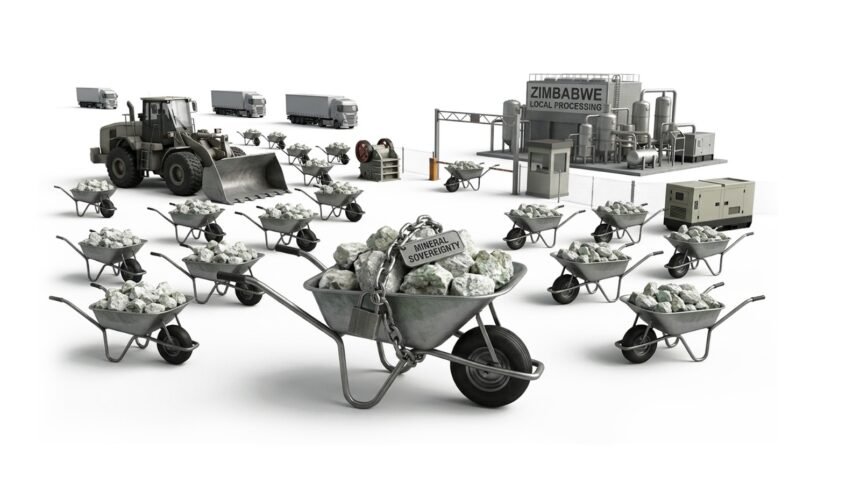
A jaw crusher, a front-end loader, a heavy-duty generator and twenty wheelbarrows, the inventory of equipment Zimbabwe’s Anti-Corruption Commission seized alongside a Chinese national this week reads less like evidence in a smuggling case than a small factory’s worth of machinery dedicated to a single purpose: moving raw lithium out of the country before the state can tax, process or even properly count it. The arrest of Ning Yaokun, a director at Orequest (Pvt) Ltd, over an alleged scheme to smuggle more than seven hundred tonnes of unbeneficiated lithium ore using fraudulent export paperwork is, on its surface, a domestic corruption case. Read structurally, it is a case study in the recurring extractive-sector problem confronting mineral-rich African states: raw ore leaves the continent at a fraction of the value it would carry if processed locally, while the institutional capacity to police fraudulent export documentation lags well behind the sophistication of the syndicates exploiting it. Zimbabwe’s push toward mineral beneficiation, and this arrest specifically, are best understood as a contest over whether African states can retain the value of their own resource endowments rather than merely hosting their extraction.
Fraudulent Papers, Real Tonnage: The Anatomy of the Scheme
According to ZACC, the alleged syndicate became fully operational in May 2026, running a processing and dispatch facility at a property in Ruwa where lithium ore was stockpiled and prepared for export. Investigators say the operation relied on paperwork falsely purporting to originate from Bikita Minerals, a legitimate producer, to disguise the ore’s true source and evade the regulatory scrutiny that unbeneficiated exports are meant to attract. Ning Yaokun, who also goes by Tony, surrendered to authorities on 10 September and is expected to appear before the Harare Magistrates’ Court on charges including contravening the Customs and Excise Act, attempted smuggling and unlawful dealing. He joins several other suspects already on remand in connection with the scheme, including Orequest’s finance director, MinMin Song, and another named associate, Shuvai Mu.
Through Forbes Border Post to the Port of Beira
The logistics ZACC has reconstructed span two countries and multiple modes of transport. In July, twenty-three trucks carrying roughly six hundred and ninety tonnes of lithium ore allegedly passed through the Forbes Border Post near Mutare using the fraudulent Bikita Minerals paperwork, while two further trucks carried ore onward to the Port of Beira in Mozambique, where the cargo was allegedly offloaded on 22 July, placing Zimbabwean lithium on a maritime export route entirely outside official channels. A separate three trucks carrying a combined sixty tonnes were intercepted after presenting what investigators say were fraudulent export documents, providing the thread that eventually unraveled the wider operation.
Four Hundred and Twenty Tonnes Recovered, Value Still Unknown
Following the initial interceptions, investigators traced a further stockpile of three hundred tonnes at the Ruwa premises and another sixty tonnes stored in containers abandoned at a truck stop in Lochinvar, Harare, bringing the total recovered mineral, alongside the sixty tonnes intercepted at the border post, to four hundred and twenty tonnes. Zimbabwe’s Ministry of Mines and Mining Development has not yet determined the value of either the smuggled or the recovered lithium. ZACC has acknowledged that while the alleged smuggling caused financial prejudice to the state, the full extent of that loss remains unquantified, an admission that itself illustrates the difficulty African mineral-exporting states face in even measuring what raw-resource smuggling costs them, let alone preventing it.
Beneficiation as Policy: Zimbabwe’s Wider Crackdown on Raw Exports
This arrest lands squarely within Zimbabwe’s broader policy push to curb raw mineral exports and force greater local beneficiation and value addition before ore leaves the country, a policy direction shared, with varying degrees of enforcement success, across several of the continent’s lithium- and cobalt-producing states as global demand for battery minerals accelerates. ZACC has said its investigation into the wider syndicate continues, with some suspects still being sought, suggesting the 420 tonnes recovered so far represent only a portion of what may have moved through the network since May. The case underscores a structural tension at the heart of beneficiation policy: the more valuable a mineral becomes on world markets, the greater the incentive to route it around whatever domestic processing requirements a government tries to impose.
From Raw Ore to Refined Sovereignty
The deeper stakes of the Orequest case extend well past Zimbabwe’s borders. As African states from the DRC to Namibia push their own beneficiation agendas for critical minerals feeding the global battery and electronics supply chain, the capacity to detect and prosecute exactly this kind of scheme, fraudulent paperwork, cross-border trucking, offshore ports as the final laundering point, becomes as important to resource sovereignty as the underlying mineral policy itself. Recovering four hundred and twenty tonnes and arresting a handful of syndicate members is a start. Still, the structural test of Zimbabwe’s beneficiation ambitions will be whether the institutions built to enforce them can keep pace with the sophistication of the networks built to evade them, converting the continent’s mineral wealth into refined value and refined sovereignty rather than another chapter of raw extraction quietly trucked across a border.