


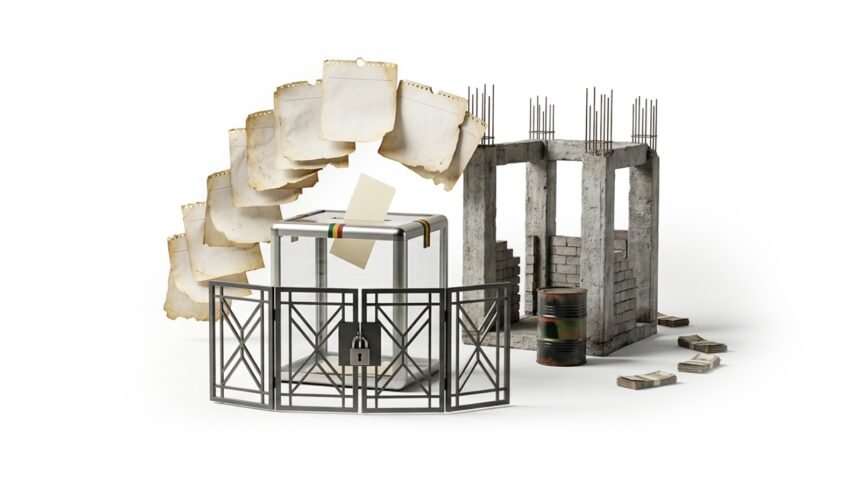
The Pan-African Paradigm of Democratic Accountability and Post-Independence Reckoning
Fifteen years since independence, and South Sudan’s citizens have still never cast a ballot for their own president, a fact that lends December’s promised election an outsized symbolic weight even as a United Nations-appointed commission warns that almost none of the underlying conditions for a credible vote currently exist. The Commission on Human Rights in South Sudan’s latest findings, delivered after a fresh tour of the country, describe a state where corruption and political violence have shown no meaningful improvement since a scathing report the previous year, even as the government insists the long-delayed polls will finally proceed. For a continent still working through what genuine post-independence self-determination looks like in practice rather than in constitutional text, South Sudan’s predicament is a hard case: a nation whose sovereignty was won through decades of struggle and confirmed by referendum, yet whose institutions have proven unable, or unwilling, to translate that sovereignty into the basic mechanisms of accountable governance its own people can rely on. Reclaiming that unfinished promise will require confronting entrenched elites directly, not simply staging a vote and calling the reckoning complete.
A Commission’s Verdict: “Little Has Changed”
The UN-appointed commission’s language left little room for diplomatic softening. Commissioner Carlos Castresana Fernandez warned that when violations go unpunished and public resources are diverted without consequence, impunity becomes entrenched, and that entrenchment breeds further violence, a direct causal chain linking the commission’s corruption findings to its concurrent warnings about ongoing killings, displacement, sexual violence and arbitrary detention. The commission’s chair, Yasmin Sooka, put the continuity even more starkly, saying the patterns have changed little while the human cost continues to grow. Both officials urged independent investigations into the abuses documented. This call presumes an institutional capacity for accountability that the report’s own findings suggest does not currently exist within South Sudan’s state structures.
Kiir, Machar, and a Collapsed Power-Sharing Deal
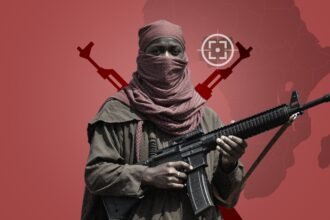
The immediate driver of the violence the commission documented is the breakdown of the power-sharing arrangement between President Salva Kiir and his long-time rival, opposition leader Riek Machar, who remains imprisoned even as forces allied to the two men clash. That collapse has narrowed political and civic space just as South Sudan is supposed to be opening it for its first competitive national election, with the commission noting that many of the safeguards and conditions necessary for peaceful, credible polls are missing. The persistence of an unresolved rivalry between the same two men who have anchored South Sudan’s post-independence politics since before the 2013 civil war underscores how little the underlying elite bargain has shifted even as the country’s formal governance structures have evolved on paper.
Billions in Oil Revenue, Few Schools or Hospitals
The corruption dimension of the commission’s findings is, in some respects, the more damning. Its report accuses government elites of stealing billions of dollars in oil revenue while doing virtually nothing to build the schools, hospitals or other basic institutions that revenue was meant to fund, a diversion of resources at a scale that helps explain why a nation with substantial petroleum wealth remains among the world’s most impoverished. The commission’s warning that this pattern showed a “lack of progress” compared to its major report the previous year suggests that whatever anti-corruption commitments the government has made publicly have not translated into any measurable change in how oil revenue is actually managed or accounted for.
Twice Delayed: The Long Road to December’s Vote
South Sudan’s government says it intends to hold elections in December. Still, the country’s electoral timeline carries its own history of broken promises: the polls have already been delayed twice, in 2022 and 2024, on both occasions because the government failed to build the administrative and security capacity a national vote requires. Whether December’s date holds, or becomes the third postponement in a pattern now stretching back the better part of a decade, will depend on factors the commission’s report suggests remain largely unaddressed: a functioning electoral administration, a de-escalated security environment, and civic space wide enough for genuine political competition, none of which currently exist at the level international observers would consider a credible threshold.
Sovereignty Deferred, Not Denied
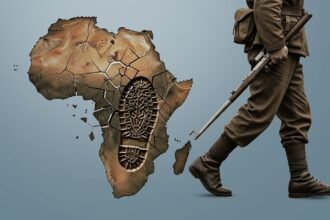
None of this means South Sudan’s sovereignty is somehow incomplete or illegitimate; it means the harder, unglamorous work of building institutions capable of exercising that sovereignty accountably remains undone fifteen years after independence was won. A credible December election, if it happens, would be a genuine milestone. Still, the commission’s findings make clear that a single vote cannot substitute for the deeper structural work of prosecuting corruption, demobilizing factional violence, and rebuilding a state that answers to its citizens rather than to Kiir, Machar, or whichever elite coalition currently controls the oil revenue. The Pan-African project of self-determination was always meant to be judged not by the moment sovereignty was declared, but by what nations built with it afterward. On that measure, South Sudan’s reckoning is still very much deferred, not delivered.