

The Pan-African Paradigm of Extraction and Custodial Impunity
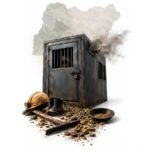
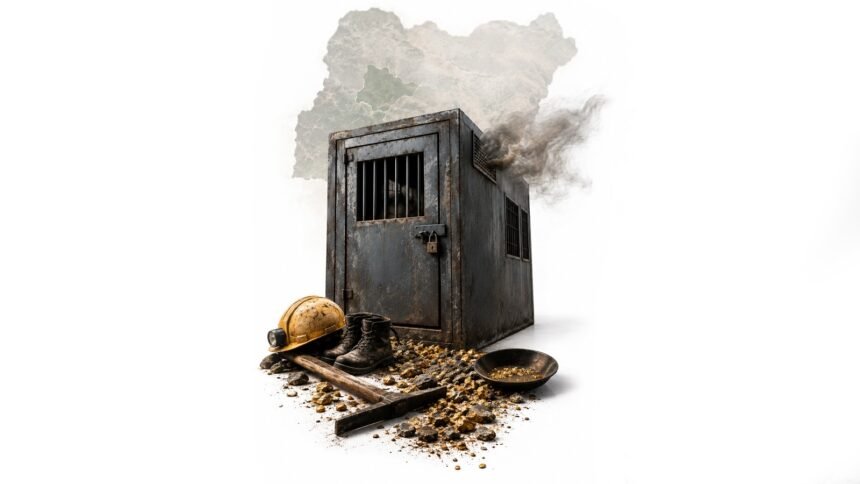
Thirty-seven men and boys walked into a holding cell inside a Nigerian paramilitary facility this week and did not walk out. Most were teenagers, some as young as fourteen, seized in raids on illegal gold pits west of Minna and locked into a space with no ventilation to speak of. Within hours they were dead, suffocated in the custody of a state meant to protect them. The tragedy sits at the exact intersection where Africa’s mineral wealth and its institutional fragility collide most violently: a continent rich enough to draw smugglers, brokers and multinational buyers to its soil, yet still governed in places by security architectures indifferent to the survival of the very citizens who work that soil. What happened in Niger state is not simply a local scandal of overcrowding and negligence. It is a referendum on whether African institutions can be trusted to hold African bodies, literally and figuratively, without killing them. The continent’s long-term claim to sovereignty over its resources rests not only on renegotiating contracts with foreign buyers but on proving that the state apparatus tasked with policing extraction can itself be held accountable. Nigeria’s response to this custodial catastrophe, and whether it results in structural reform rather than another quietly shelved inquiry, will say much about the trajectory of that reclaiming.
A Paramilitary Force and a Failure of Air
The Nigeria Security and Civil Defense Corps, a paramilitary body that operates alongside the police, raided suspected illegal mining sites in the Wushishi-Lukoto area on 15 and 16 September and detained dozens of miners in Minna, the capital of Niger State. By Thursday, 37 were dead in the cell. The NSCDC’s initial explanation invoked a disease outbreak; an intelligence assessment reviewed by wire reporters instead pointed to overcrowding and inadequate airflow as the operative cause. Survivors described a scramble for breath, banging on cell doors that guards refused to answer. One man who escaped because he was nearest the entrance recalled detainees screaming that people were dying one after another, and not being believed. Niger’s interior minister has since suspended the state NSCDC commandant pending an inquiry, and President Bola Tinubu has ordered an investigation, moves that acknowledge institutional failure without yet defining what accountability will look like.
Gold Beneath Niger State, Grief Above It
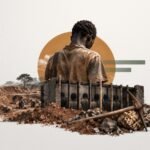
Niger State, larger than Belgium twice over, sits atop reserves of gold, tantalite, copper and lithium that draw artisanal miners by the thousands and, increasingly, the criminal syndicates that tax them. Governor Umar Bago, who confirmed the death toll and declared three days of mourning, noted that many of the dead were children aged 14 to 18 who had left school for the mines. That detail reframes the tragedy as a structural one: a mineral economy so lucrative and so informally governed that families calculate school fees against the immediate returns of pit labor, and that calculation increasingly ends in state custody rather than a classroom. The postponement of electoral campaigning in the state, alongside the burial of the men under Islamic tradition without forensic investigation, has already drawn criticism that evidentiary rigor was sacrificed to the optics of swift closure.
The Politics of a Curfew
Grief in Minna turned quickly to confrontation. Protesters, some carrying machetes, sticks and hunting rifles, converged near the NSCDC office demanding accountability, and security forces responded with tear gas and, according to a wire witness, live rounds. At least one body lay in the street as soldiers moved to restore order and an overnight curfew took hold. The scene captures a recurring asymmetry in African custodial politics: a state that reacts to institutional failure first with force against the aggrieved, and only secondarily with the suspension of the officials responsible for the failure itself. Miners at the protest insisted they were not criminals but people simply seeking a way to make a living, a framing that indicts not the individuals detained but the informal economy that both tolerates and criminalizes their labor depending on who is asking.
Sovereignty Measured in Ventilation
The scandal in Minna will likely fade from international coverage within weeks, overtaken by the next crisis. But the specific, almost banal cause of death, a locked room without air, deserves to outlast the news cycle, because it distills a much larger continental question into a single measurable failure of care. A government’s legitimacy is tested not only in how it negotiates mineral royalties or courts foreign investment, but in whether the cells it operates can keep the people inside them alive. Nigeria’s investigation, if it produces disciplinary consequences beyond a single suspended commandant, could offer a rare template for custodial reform elsewhere on the continent. If it does not, Niger state’s buried teenagers will join a long list of preventable deaths absorbed into the routine cost of an extractive economy that has yet to reclaim either its resources or its institutions on terms that protect the people closest to the ground.