



The Pan-African Paradigm of Contagion and Confidence
In Butembo on Wednesday, mourners gathered to honor Marie-Célestin Karondwa, a local official of the UDPS party who had spoken on local radio about Ebola and politics and was violently attacked on his way home. He died three days later, and his house was set on fire, Africanews reported on 1 October 2026. His uncle, Katembo Fataki, asked for what every grieving family in a war zone asks for: to know who did it, and for the government to act. Karondwa was buried in his native Lubero.
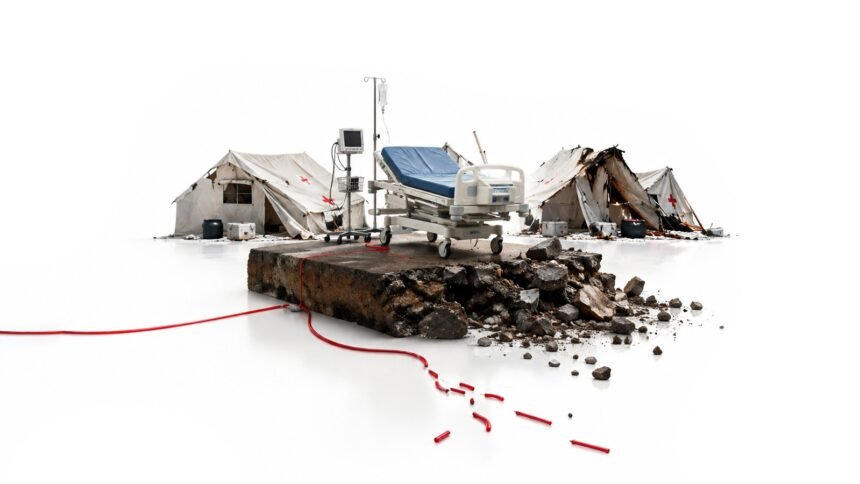
His death is one thread in a wider unraveling. In Ituri province, thousands of displaced people have fled an Ebola-hit camp after soldiers entered it, and a treatment facility has burned down, Reuters and UN News reported the same day. Together, these events show that the Democratic Republic of Congo’s deadliest Ebola outbreak is no longer only a medical emergency. It has become a test of whether public health can function where trust and security have both collapsed.
A Killing That Speaks to Suspicion
Africanews reported that health authorities in North Kivu continue to face mistrust over the Ebola response, with some residents believing health teams are financially motivated, an allegation the teams reject. Dr Kalima Nzanzu, chief medical officer at Matanda General Referral Hospital, said people think that talking about Ebola means health workers “have been paid to do this”, which he called completely untrue.
That suspicion is not trivial. An epidemic response depends on people reporting symptoms, accepting isolation and allowing safe burials. Where residents believe the response is a business, every one of those steps becomes harder. UN News also reported that two people involved in the Ebola response were reportedly killed in Lubero on 27 and 28 September, a sign of how dangerous that suspicion can become.
Kigonze: When Security Operations Scatter Contacts
In Ituri, security forces entered the Kigonze camp looking for weapons, clashes followed, and residents fled over the past week, Reuters reported, citing Congolese and health officials. UN Senior Ebola Coordinator Julien Harneis said the camp, home to some 19,000 displaced people, now lies abandoned. UN News reported that soldiers were searching for weapons and suspected members of armed groups and that gunfire was heard.
The public health cost is direct. Two health officials told Reuters that about 1,000 Ebola contacts had been living in the camp, and one said only about a fifth have since been traced. An Ebola transit center, where suspected cases could be isolated, tested and treated, also burned down. Harneis told UN News that losing such a center means losing capacity and investment, and that “people do not get access to the care that they really need.”
Displacement Camps as Amplifiers
Camps concentrate risk. The UN refugee agency told Reuters there have been 88 confirmed Ebola cases in Congo’s displacement sites and 56 deaths, including in Kigonze, and warned the toll is likely an underestimate. The International Organization for Migration said its fatality rate for Ebola cases in other camps was above 80 percent, against an average of around 50 percent, according to Reuters. Ituri, South Kivu and North Kivu are home to more than 5 million displaced people.
The insecurity reaches beyond Kigonze. UN News reported that more than 3,000 people fled the Rhoe displacement camp in Djugu territory after clashes intensified on 27 September, and that fighting in Masisi has displaced more than 24,000 people since mid-September. Insecurity has delayed the transport of laboratory samples and the transfer of confirmed patients, and some aid organizations have suspended activities.
The Scale of an Outbreak Without Precedent
The outbreak, declared in May and caused by the Bundibugyo virus, is already the deadliest in Congo’s history, having killed at least 3,982 people, Reuters reported. UN News put confirmed infections above 8,000 and said the virus has spread across seven provinces, with Ituri as the epicenter. The UN described it as second only to the 2014 to 2016 West African epidemic.
The response has grown too. The World Health Organization said mobile safe-burial teams in Ituri have increased from 53 to 114, and that it aims to provide more than 1,800 beds across 54 health facilities, but that it still needs more than 1,400 additional health professionals. Capacity is rising, but violence keeps destroying it.
The Asymmetry Between Guns and Clinics
The deeper pattern is an asymmetry of speed. A treatment center takes months of money and staff to build; it can be lost in one night. A contact list takes weeks of patient work to assemble; one security operation can scatter it. As long as military logic and public health logic run on separate tracks in eastern Congo, the virus will keep exploiting the gap between them.
Health Sovereignty Built on Trust
Structural sovereignty in health is not only about vaccines, beds, and laboratories, important as they are. It rests on the confidence of communities that the people treating them are on their side, and on the ability of the state to protect both patients and health workers. Karondwa’s family is demanding an investigation; that demand should be met, publicly and quickly, because impunity for attacks linked to the response feeds the very mistrust that keeps the virus moving. Security operations in camps must be coordinated with health authorities so that a search for weapons does not become a dispersal of contacts. And Congolese health institutions, rather than outside agencies alone, must be resourced to lead the response, so that residents see their own state, not a distant business, at the bedside. The trajectory of this outbreak will be decided as much by trust as by medicine.