


Four Years Late, and Finally Under Way
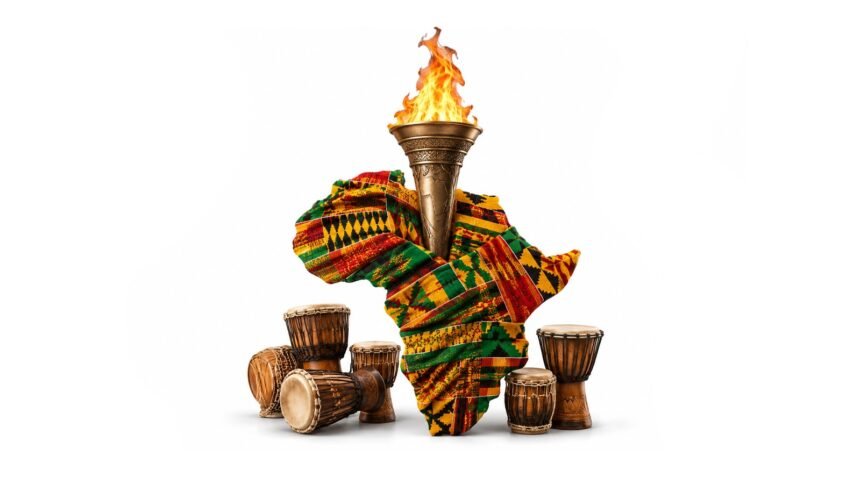
Hundreds of drummers set the rhythm. Performers in yellow, black, and white traditional Senegalese gowns moved in unison until, seen from the stands, they formed a giant map of Africa. Tens of thousands of spectators cheered at the Diamniadio Olympic Stadium near Dakar on Saturday as Senegalese President Bassirou Diomaye Faye declared open the fourth Summer Youth Olympic Games, the first Olympic event ever held on the continent.
For 11-year-old Yacoub, the lighting of the flame was the moment to remember. “I’m going to keep every image in my head, every single one,” he said. Aby Diouf, a 25-year-old spectator, called it “a historic event”. “It’s a marvelous celebration, and we are all here to bring the energy and get people hyped,” she said.
The Games’ motto, “Africa welcomes, Dakar celebrates”, set the tone for a ceremony built around West African oral storytelling, concerts by Senegalese singers, the athletes’ parade and the sabar, a traditional Senegalese dance and drumming style that was given pride of place.
A Ceremony Built Around a Continent
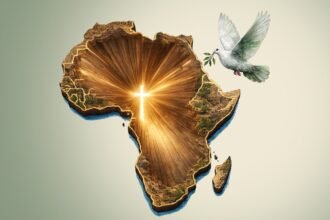
The organizers chose to tell a continental story rather than a national one. Senegalese athletes Abdourahmane Marieme Sy, a fencer, and Aicha Diop, a judoka, lit the Olympic cauldron. To close the ceremony, men and women representing each of the 54 African countries recognized by the United Nations stood in traditional dress from their nations, then merged into one fluid mass and danced together as a symbol of African unity.
Participants and visitors read it the same way. Fatou Sabaly, a 15-year-old swimmer from Gambia, said she had learned “so many things about Senegalese culture”. “This ceremony shows that there is so much talent in Africa, and I hope lots of people around the world watched it,” she said. Eleonore, a Swiss volunteer, said her favorite moment was when the dancers “formed the African continent”. “It really symbolized unity and showed how it brings everyone together here,” she said.
Siré, who took part in the ceremony dressed in green, put it: “This is a memory we’ll be able to talk about for years to come. I think we’ve made history.”
The Numbers Behind the Games
About 2,700 athletes aged 14 to 17 will compete until 13 November in Dakar, the nearby city of Diamniadio and the beach resort of Saly. They will contest 153 medal events across 25 sports. The opening ceremony was broadcast live in more than 30 countries, and International Olympic Committee President Kirsty Coventry said every African nation had committed to showing the Games live.
The road to this opening was long. Singapore hosted the first summer Youth Games in 2010. Dakar was originally due to host in 2022, but the coronavirus pandemic pushed the event back by four years. That Senegal held on to the Games through the delay is itself part of the story: hosting rights that slip can easily be lost, and Dakar kept them.
Refugees and a Returning Flag
Two delegations carry meaning beyond the medal table. The first refugee team ever to compete at a Youth Olympics will field six athletes based in Kenya and Uganda, in track and field, judo and taekwondo. For young people whose lives have been shaped by displacement, a place on an Olympic start line in Africa is a statement that their talent belongs on the same stage as everyone else’s.
The second is Russia. Its delegation of 13 athletes is competing under its national flag at an Olympic event for the first time since the full-scale invasion of Ukraine in 2022 led to its suspension. The decision shows that an African host city is now also a venue where questions of global sporting politics are settled, whether or not the host chose that role.
Sport as Diplomacy and Development
“This is a historic moment for Senegal, for Africa and for our entire Olympic family,” Coventry said at the ceremony. A former swimming gold medallist from Zimbabwe, she became the first woman and the first African to lead the International Olympic Committee last year, which gives the Dakar Games an added layer of symbolism: the first Olympic event in Africa is being overseen by the movement’s first African president.
African countries increasingly see sport as a tool for diplomacy and development. South Africa hosted the continent’s first FIFA World Cup in 2010. Morocco will co-host the 2030 tournament with Spain and Portugal. Rwanda hosted Africa’s first road cycling world championships last year, and Formula 1 is set to return to Africa with a Grand Prix in Rwanda early next decade. Botswana staged the World Athletics Relays in May.
Dakar adds the Olympic rings to that list. The Youth Games are smaller than the Summer Olympics. Still, they test the same things: venues, transport, security, broadcasting and the ability to run a multi-sport event over nearly two weeks across several sites.
Hosting on Its Own Terms
The deeper significance of the Dakar Games lies in who tells the story. For decades, Africa took part in global sport largely as a source of athletes for events staged elsewhere. A ceremony that put sabar drumming, oral storytelling and the dress of 54 nations at the center of an Olympic opening reversed that pattern, at least for one night. The continent hosted, framed and narrated the event in its own cultural language.
Whether that translates into lasting benefit will depend on what happens after 13 November: whether the venues stay in use, whether young athletes in Senegal and across the region gain better access to training, and whether the experience strengthens Africa’s case to host larger Olympic events in future. For now, Dakar has shown that the first Olympic flame on African soil could be lit by African hands, to an African rhythm.