


From Goma and Bukavu to Camps Across the Region
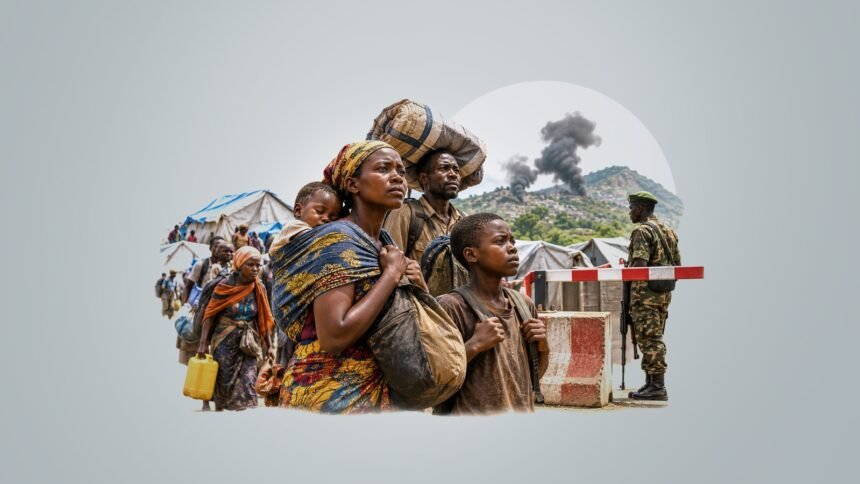
Here is the paradox at the center of the Great Lakes region today: every peace agreement on eastern Congo promises that refugees will go home in safety and dignity, and yet the places they would go home to remain at war, while the countries sheltering them are closing their doors. A new analysis by researchers at the Institute for Security Studies (ISS), published on Monday, sets out how Congolese refugees have become trapped between the two.
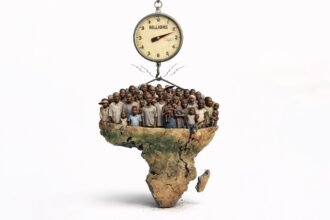
The scale is large. In June 2026, the UN refugee agency, UNHCR, counted 1.25 million Congolese refugees and asylum seekers, 80 percent of them hosted in Congo’s neighbors. More than 245,000 new arrivals were registered between January 2025 and April 2026, after the M23 rebels captured Goma and Bukavu in early 2025 and turned a long-running refugee situation into a regional emergency.
The ISS authors, Tatien Nkeshimana, Veronica Chepseba and Bram Verelst, argue that the gap between what peace processes promise and what refugees actually face is widening, and that the region’s security fears are now eroding refugee protection itself.
Promises on Paper
In June, the governments of Rwanda and the Democratic Republic of the Congo reaffirmed their commitment to the voluntary, safe and dignified return of refugees between the two countries. That pledge builds on the 2025 Washington peace accords and on the provisional agreement between Kinshasa and the rebel alliance AFC/M23, now known as FRN/M23, under the Doha process.
Earlier peace deals made similar promises and failed to deliver lasting solutions, the analysis notes. Continued insecurity, fresh displacement and worsening conditions in host countries have made the refugees’ situation worse, not better.
Host Countries Under Strain
Burundi has been hit particularly hard, with about 142,000 new arrivals, including some returning Burundians, most of whom crossed after the fall of Bukavu in February 2025 and of Uvira in December 2025. Uganda hosts 53 percent of the Congolese refugee population. It registered more than 236,000 arrivals between 2022 and 2025, on top of 139,500 South Sudanese refugees over the same period.
Funding has collapsed at the same time. In February, UNHCR reported that only 20 percent of the $35 million needed for its 2026 lifesaving assistance in Burundi had been received. In January, the International Rescue Committee warned that Uganda’s refugee health response had secured just 6 percent of the funding required for 2026, forcing it to cut health services for more than one million refugees.
These conditions shape decisions about going home. Within a month of the Burundi-Congo border reopening in February 2026, after M23 withdrew from Uvira, 33,000 Congolese refugees returned to Congo on their own, despite the fragile situation in South Kivu.
Returns to Rebel-Held Ground
UNHCR maintains a non-return advisory for North and South Kivu, and facilitated returns to M23-held areas are not possible. Even so, more than 80 percent of Congolese refugees in Rwanda say they are willing to return once conditions allow.
M23 encourages spontaneous returns to areas it holds, which it calls “post-conflict”. The ISS researchers warn that its conduct threatens the rights of refugees and displaced people. When it captured Goma, the group dismantled camps for internally displaced people, forcing hundreds of thousands of civilians to leave. The analysis also holds M23 responsible for widespread violence against civilians, including Rwandan refugees targeted on suspicion of links to the FDLR militia or to the Wazalendo militias that fight M23, and says several Rwandan refugees have been forcibly transferred to Rwanda.
According to the analysis, M23’s push for returns fuels suspicion of a broader strategy to consolidate rebel control and Rwandan influence in eastern Congo. Long-running disputes over the citizenship of Congolese Tutsi, and their perceived association with M23 and Rwanda, risk deepening community tensions as people come back.
Security Fears Turn into Closed Doors
The region’s history makes refugees a security issue as well as a humanitarian one. The 1994 genocide against the Tutsi in Rwanda, Congo’s regional wars and Burundi’s internal conflicts all left communities in prolonged exile. Armed groups including M23, the FDLR and Burundian rebels use the unresolved refugee situation to justify their fight, and the UN Group of Experts reports that militants recruit in refugee populations, including in camps in Rwanda and Uganda.
Host governments are responding with restrictions. In October, Burundi’s interior minister, Léonidas Ndaruzaniye, announced that people coming from or passing through M23-controlled areas would not be allowed to enter Burundi. In Burundi, Congolese refugees also face tighter encampment rules limiting work and movement, and the analysis cites reports that police and members of the ruling party’s youth wing, the Imbonerakure, have detained refugees before sending them to remote official sites. Uganda, citing Ebola, now requires Congolese travelers deemed non-essential to be sent back, a measure the authors say could block access to protection and runs against Uganda’s open-door refugee policy.
Protection Decided in the Region
The ISS researchers propose three steps: peace efforts that put refugees’ rights and independent monitoring alongside repatriation targets; integrated regional solutions for Congolese, Burundian and Rwandan refugees, developed with refugees themselves and not only with the states often responsible for their exile; and sustained funding so that return is voluntary rather than driven by deprivation.
The underlying point is that African states must own refugee protection, not outsource it to shrinking donor budgets. A homecoming forced by hunger or border closures is not the voluntary return that the Washington and Doha texts describe. The Great Lakes governments signed those promises. Keeping them will require treating refugees as people with rights, not as pawns in a contest for control of eastern Congo.