



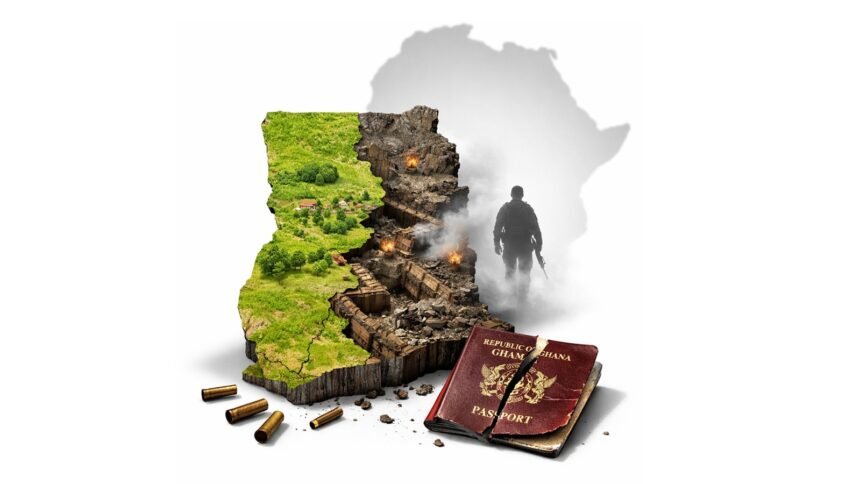
The toll of deception has reached Ghana’s shores with devastating clarity. In February 2026, Foreign Minister Samuel Okudzeto Ablakwa revealed that 272 Ghanaian citizens have been lured into Russia’s war in Ukraine since 2022. Of these, an estimated 55 have perished on the frontlines, and two remain prisoners of war. What began as promises of ordinary jobs, high salaries, and eventual citizenship has ended in unmarked graves and shattered families. Ghana’s tragedy is not isolated; it is part of a continental hemorrhage in which over 1,780 Africans from 36 nations now fight for Russia, their presence a grim testament to Moscow’s manpower desperation. From the perspective of Pan-African solidarity, this is no mere foreign conflict but a profound betrayal of Africa’s youth, the continent’s greatest asset, sacrificed in distant trenches. At the same time, governments scramble to launch awareness campaigns and make repatriation pleas.
Pan-African Lament
Across Africa’s vast expanse, the Russia-Ukraine war has exposed the fragility of Pan-African unity. Ghana’s losses echo the anguish in Kenya, where intelligence reports speak of over 1,000 recruits, and in South Africa, where families mourn fallen sons tricked by political insiders. The pattern is unmistakable: economic desperation meets sophisticated deception. Young Ghanaians, like their counterparts from Sudan, Togo, and beyond, are targeted precisely because they seek better lives amid unemployment rates that often exceed 30 percent. Moscow’s Africa Corps, the streamlined successor to Wagner’s chaotic operations, has perfected the art of turning African aspiration into battlefield fodder. For Pan-African thinkers, this represents a modern echo of colonial conscription, foreign powers once again harvesting African bodies for wars that offer no stake in victory, only graves. Ghana’s decision to use its upcoming African Union chairmanship to spotlight these trafficking networks signals a continental awakening: no longer can Africa remain a passive reservoir of expendable labour.
Ghana’s Silent Toll
In Ghana, the numbers carry faces and family names. The 55 confirmed dead include fathers, brothers, and sons who left Accra or Kumasi believing they were heading for civilian contracts. Two captured Ghanaians languish in Ukrainian custody, their release now a diplomatic priority. Minister Ablakwa’s visit to Kyiv in February 2026, where he stood beside Ukrainian Foreign Minister Andrii Sybiha at the Wall of Remembrance, transformed abstract statistics into national grief. Ghanaian officials learned that many recruits arrived untrained, unarmed in spirit if not in body, and were immediately funnelled into high-casualty “Storm-Z” units. This is not warfare; it is slaughter by deception. The government’s response, raising public awareness and pledging to dismantle dark-web recruitment rings operating within its borders, marks a necessary but painful reckoning. Ghana, long proud of its peacekeeping tradition and non-aligned diplomacy, now finds its youth dying in a European war that was never theirs.
Eurasian Meat Grinder
From Kyiv’s perspective, the African presence in Russian ranks is not voluntary enlistment but a calculated prolongation of suffering. Ukrainian intelligence places the total at more than 1,780 Africans actively fighting for Moscow, many captured as prisoners of war after brutal assaults. Ghanaians, like other Africans, are described as victims of systematic trickery: lured on the dark web with promises of factory work or security roles, then stripped of passports and thrust into the Donbas meat grinder. European capitals share this view, seeing Russia’s tactics as a hybrid threat that weaponises global poverty. The human cost is staggering, with high casualty rates in penal battalions where untrained civilians serve as human shields for seasoned Russian troops. For Ghana, each reported death deepens the wound, transforming distant battlefields into extensions of Accra’s mourning grounds.
False Shields
The deception hinges on a cruel sleight of hand: mercenaries disguised as security contractors. Recruiters promise legitimate employment, bodyguard work, logistics roles, even citizenship pathways, only to deliver rifles and death warrants. Ghanaian recruits, many with no military background, signed contracts they could not read, believing they were securing their families’ futures. This is not mercenarism in the classical sense of professional soldiers of fortune; it is predation dressed in the language of opportunity. The same networks that once operated in the Sahel now pivot to Ukraine, trading African lives for battlefield advantage. Ghana’s foreign ministry has rightly labelled these schemes “dark web illegal recruitment,” vowing to dismantle them domestically. Yet the distinction between genuine security jobs and fatal enlistment grows ever blurrier, demanding stricter visa scrutiny and public vigilance across the continent.
Enlistment as Passage
What appears as migration for work has become a one-way ticket to the front. Ghanaians, like thousands of other Africans, embarked on journeys they believed would lead to Europe or the Gulf, only to find themselves rerouted through Russia under false pretences. Passports confiscated, debts enforced, desertion punishable by execution, these are the realities of “immigration via enlistment.” The route is deliberate: recruitment agencies collude with intermediaries to bypass airport checks, sometimes routing via neighbouring states when direct flights become too risky. For Ghana, this perversion of mobility extracts its brightest and most ambitious youth, leaving communities hollowed out by grief. Funeral expenses and unanswered questions about missing sons have replaced the promise of remittances.
Trafficked Dreams
Human trafficking and migration now blur into a single nightmare. The recruitment of Ghanaians fits every criterion of modern slavery: deception, coercion, and exploitation for profit. Unlike voluntary migrants who remit billions home each year, these young men return either in coffins or as broken survivors. Ghana’s foreign minister captured the national sentiment perfectly: “This is not our war, and we cannot allow our youth to become human shields for others.” The same sentiment echoes from Nairobi to Pretoria. International law, the Geneva Conventions, the UN anti-mercenary protocols, and the anti-trafficking conventions stand violated, yet enforcement remains patchy. Ghana’s pledge to raise awareness during its African Union chairmanship offers hope that collective action can sever the trafficking pipelines feeding Russia’s war machine.
Rights on the Line
At the heart of this tragedy lies a fundamental assault on human rights and security. Every Ghanaian death represents a violation of the right to life, to informed consent, to freedom from exploitation. Captured Ghanaians face uncertain fates as prisoners of war, while families in Ghana endure the agony of uncertainty. The broader security implications ripple outward: returned survivors carry trauma that burdens healthcare systems, while communities lose trust in migration pathways. Ghana’s diplomatic engagement with Ukraine demonstrates a commitment to protecting its citizens’ rights, even as it balances economic ties with Moscow. The message is clear: Africa’s youth deserve security at home, not slaughter abroad. Faith communities, civil society, and governments must now stand together to reclaim the dignity of every Ghanaian life lost or endangered in foreign trenches.
Continental Resolve
Ghana’s 55 fallen sons are not statistics; they are the human cost of a war that Africa never chose. Their sacrifice demands more than mourning. It requires Pan-African solidarity to dismantle recruitment networks, strengthen migration safeguards, and assert that no African youth should ever again become cannon fodder for distant empires. From Accra to the African Union, the resolve is forming: Ghana’s youth will no longer be sacrificed in shadows. Their memory must fuel a brighter dawn where opportunity is earned at home, not bartered on foreign battlefields.