


Lured by Promises, Sent to a War
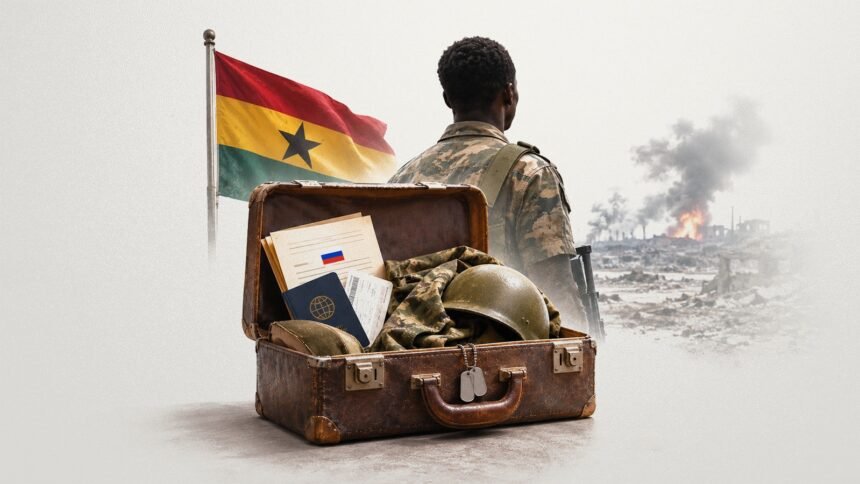
What does it take for a government in Accra to get a promise out of the Kremlin? In Ghana’s case, it took at least 62 dead citizens, 15 missing and months of public complaint. On Monday, Ghana’s government said in a statement that Russia had agreed to stop recruiting Ghanaian nationals to fight in its war in Ukraine.
According to Accra’s account, President Vladimir Putin gave the assurance to President John Mahama on the sidelines of last week’s Russia-Africa summit in Moscow, after Mahama raised the issue directly. Putin has said he will bar Ghanaians from taking part in the war, whether they arrive through irregular recruitment or enlist voluntarily. The account of the conversation comes from the Ghanaian side; no separate Russian statement setting out the terms was available.
The commitment is narrow, covering one country’s citizens, but the problem behind it is continental. Young Africans from several countries have been drawn into a European war on the strength of offers of jobs or study that turned out to mean a uniform and a posting to the front.
The Count So Far
The figures are stark. As of mid-August, more than 270 Ghanaians had fought for Russia, at least 62 had been killed, and a further 15 were missing. Those numbers date from more than two months ago, and the published count does not say who compiled it or how many Ghanaians may have been recruited since so that the true toll may be higher.
Last month, Ghana’s government said its citizens were being “tricked” into joining the Russian war effort, and urged Moscow to do more to halt the practice. That language matters. It frames the men not as mercenaries who chose a foreign war but as victims of deception, which gives Accra a basis to demand protection for them rather than simply disowning them.
Behind each number is a family that sent a son abroad expecting remittances and received, at best, silence. Fifteen missing men means fifteen households with no body to bury and no official answer, a burden that a recruitment ban going forward does nothing to lift.
A Pattern Across the Continent
Ghana is not alone. Kenya, South Africa, Nigeria, Cameroon and The Gambia have all complained that their citizens were lured to fight under false promises of work or educational opportunities. Ukrainian officials reported last week that a citizen of Botswana, recruited through social media, had been killed in Ukraine’s Luhansk region.
The common thread is the recruitment channel. Offers circulate online and through informal agents, promising salaries far above what is available at home. Once recruits discover that the promised job is in fact military service, they are already far from home and inside a system they have little power to leave.
That makes the problem hard to fix from the African end alone. Governments can warn citizens and police local agents, but the decisive step, refusing to enlist foreigners from a given country, lies with the recruiting state.
What the Promise Covers
Putin’s reported pledge goes further than a crackdown on rogue agents: it covers voluntary enlistment as well as irregular recruitment. If it is honored, Ghanaians should no longer be accepted into Russian service at all.
Several questions remain open. The statement does not say what will happen to Ghanaians already serving, whether they will be released and helped to return, or whether Russia will help account for the missing and repatriate the remains of the dead. Nor does it describe any way for Accra to check that recruiters and commanders on the ground are applying the ban.
For Ghana, the next test is practical. Families will want to know whether men now at the front can come home, and the government will need a channel to Russian authorities that works case by case, not only at summit level.
Diplomacy at the Moscow Summit
The assurance came during a week in which Moscow hosted African leaders and pitched trade, energy and security partnerships. Ghana itself came away from Moscow with talks on a first nuclear power plant and a bauxite deal. Recruitment of its citizens was the awkward item on the same agenda.
That Mahama raised it at the summit, and that Accra chose to publicize the answer, shows how domestic pressure has shifted the calculation. A government seeking investment from Russia also has to show its own voters that it will defend citizens who have been harmed in Russia’s war. Securing a public commitment lets it do both.
Protecting Citizens as a Test of Statehood
A country’s standing in a partnership is measured partly by what it can demand for its people. Ghana’s request was modest: stop taking our citizens to war. That such a request needed a presidential meeting to resolve says something about the balance of power in these relationships.
The lasting answer lies at home as much as in Moscow. Jobs, credible routes for legal labor migration and swift action against the agents who sell false contracts would make young Ghanaians far less vulnerable to recruiters in the first place. Other African governments facing the same losses now have a precedent to cite. The question is whether they will use their own summit seats to ask for the same commitment, and whether any of these promises are kept once the summit cameras are gone.