




Johannesburg as a Transit Point for Someone Else’s War
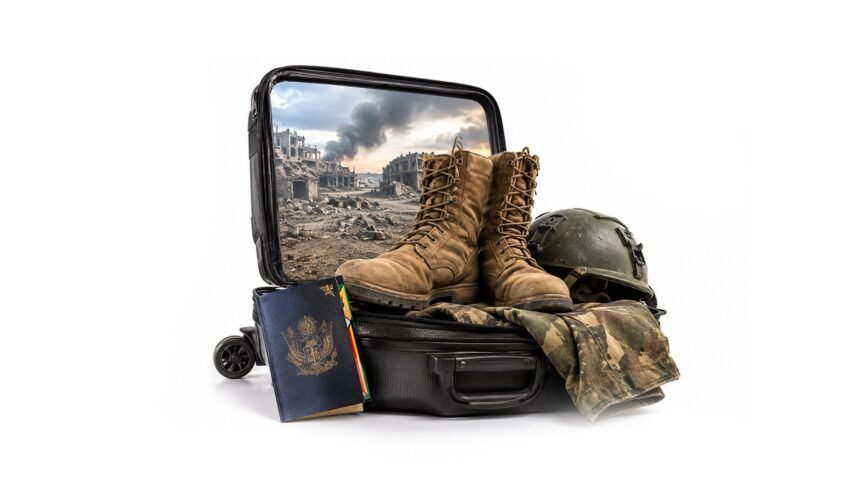
Eleven months ago, South African police arrested five people, a journalist among them, on suspicion of recruiting South Africans to fight in the war between Russia and Ukraine. In February, Pretoria secured the return of 17 of its citizens who had allegedly been tricked into joining that war. On Sunday evening, the issue returned to Johannesburg in a new form, as nine Zimbabweans aged between 20 and 26 were arrested while, according to the police, preparing to board flights out of the country to join the conflict.
Five were detained at OR Tambo International Airport, the country’s busiest, and four at a hotel in Bruma, east of Johannesburg. The operation was carried out by a multidisciplinary team that included Interpol. All nine have appeared in court, prosecutors said, charged under South Africa’s Regulation of Foreign Military Assistance Act, which outlaws mercenary activity without government permission.
The case shows how the war in Ukraine has reached deep into southern Africa, turning the region’s main air hub into a point of departure for young men from a neighboring country.
What Is Known and What Is Not
Much remains unclear. The authorities have not said whether the group intended to fight for Russia or for Ukraine, what their final destination was, or which organizations, if any, arranged their travel. Those gaps matter: they will decide whether the case is treated as an isolated attempt by a handful of individuals or as part of a recruitment network.
The police said the involvement of Interpol and other international law enforcement agencies indicated that the suspects had also allegedly broken laws in their home countries, which had prompted cooperation with South Africa. That suggests the investigation extends beyond South Africa’s borders, although no details of charges elsewhere have been published. It also means the outcome may matter to more than one government.
A Continent-Wide Recruitment Problem
Citizens of several African countries, including Kenya, Ghana and South Africa, have gone to fight for Russia in Ukraine, and some have said they were deceived about where they were going. A Ukrainian intelligence assessment earlier this year estimated that more than 1,700 people from 36 African countries had been recruited to fight for Russia. That is Ukraine’s figure, from a party to the war, and it has not been independently confirmed.
Ukraine has also recruited foreign nationals, including Africans, so the flow of fighters is not in one direction only. Kenya estimated at one point that 252 of its citizens had been illegally conscripted in Russia; its foreign minister, Musalia Mudavadi, traveled to Moscow in March and said an agreement had been reached to stop the recruitment of Kenyans.
Zimbabwe’s Own Losses
For Zimbabwe, the issue is personal. In March, the government said 15 of its nationals had been killed after being recruited to fight for Russia, and that more than 60 were still trapped on the front lines. The nine arrested in Johannesburg are all in their early or mid-twenties, the same young age group that recruiters across the continent have targeted with offers of work abroad.
South Africa is a major destination for Zimbabweans seeking work, and its airports give access to the rest of the world. That combination makes it a natural transit point, and it places a burden on South African law enforcement to police departures that are, in the end, driven by conditions elsewhere.
The Law and Its Limits
South Africa’s Foreign Military Assistance Act gives the state a specific legal tool against mercenary activity, and this case will test how it applies to foreign nationals passing through the country. Arrests at the boarding gate can stop individuals, but they do not address why young people are willing to take the risk, or who profits from moving them.
Prosecutors will also have to prove intent, given that the destination and the side the group meant to join have not been made public. The outcome will be watched closely by families in Zimbabwe and elsewhere who have lost relatives to recruiters, and by governments trying to judge whether prosecution at the point of departure can work at all. How the courts treat these cases will shape whether the law works as a deterrent or simply as a final checkpoint.
Keeping Young Africans Out of Foreign Wars
The broader issue is one of sovereignty in its most human sense: the ability of African states to protect their citizens from being drawn into wars that are not their own. Each case of recruitment, whether by Russia, Ukraine, or intermediaries, shows how economic hardship can be turned into a supply of fighters for distant conflicts. Kenya has already negotiated directly with Moscow. Coordinated action across the Southern African Development Community, sharing intelligence and closing recruitment routes, would give the region a stronger hand than country-by-country arrests. Until jobs at home become a better bet than a contract on a foreign front line, the departures will continue, and the airports of southern Africa will keep being the place where they are caught, or missed.