


A Vote Promised Since Independence
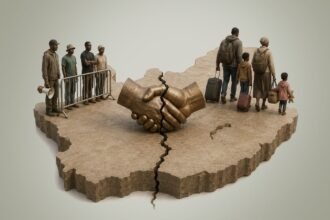
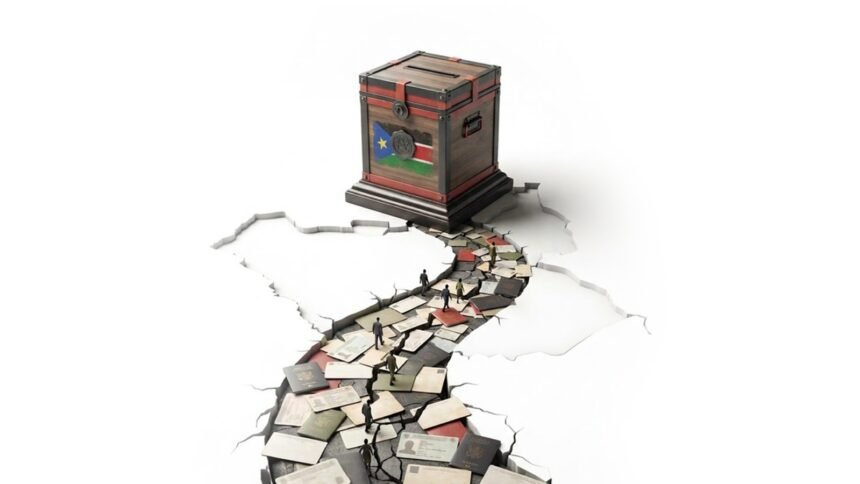
Nine in ten. That, according to the World Bank, is the share of South Sudan’s roughly 15 million people with no state-recognized identification. It is the number that hangs over the voter registration drive that opened on Saturday 14 November, the first step towards the country’s first general election since it won independence from Sudan in 2011.
The drive opened under a new timetable. The National Elections Commission announced the same day that polling would be held on 11 February 2027 instead of 22 December this year. It gave no reason for the change. Registration runs until 28 November, a 45-day campaign is set for 27 December to 9 February, and a single day of campaign silence will precede the vote.
The postponement is the latest in a long series. The general election was first due in 2015, and the date has slipped repeatedly since, with the transitional period extended several times. Counts of the formal postponements differ depending on the starting point: one tally gives two earlier postponements, another at least three since 2022 was set as the election year.
The Machinery on Paper
Gabriel Bol Deng Majok, chairman of the National Elections Commission, set out the scale of the operation at a news conference on Friday. “The exercise shall be conducted throughout the 10 states and three administrative areas at all 3,161 registration centers,” he said, adding that more than 22,000 staff had been recruited.
He said registration equipment had reached the ten state capitals and the three administrative areas. Still, it is expected to take several more days to reach some outlying centers, shortening the registration window in those places. Deng urged election committees, security agencies, political parties, civil society organizations, community leaders and the media to “support public awareness and facilitate an inclusive registration exercise”, and called on eligible citizens to “demonstrate their democratic right to register and vote”.
After registration closes, the commission plans to publish a preliminary register showing how many people are eligible to vote.
Chiefs as the Civil Registry
The identification gap means the commission is relying on a workaround. People without documents, especially in villages, can be identified by paramount chiefs and other community leaders and issued an identification form that allows them to register. “If someone does not have an ID, especially in villages, paramount chiefs and other community chiefs can identify that person. We also have identification forms for this purpose,” Deng said.
The approach is practical in a country where the state’s paperwork rarely reaches rural areas. It also places a great deal of weight on local authorities in a period of political and ethnic tension. Whether such identification is applied evenly across communities, and how disputes over eligibility will be settled, will shape whether the final register is trusted.
A Transition Rewritten in September
The political ground under the vote shifted in September, when President Salva Kiir dissolved the transitional unity government and appointed a caretaker administration. That step allowed the country to move towards elections without first completing a permanent constitution and a census, two processes that had been tied to the transition.
Analysts and watchdogs warned that the move dismantled a central power-sharing arrangement and concentrated power in Kiir’s hands, raising the risk of renewed large-scale conflict. “This amounts to a constitutional coup through legislative reforms,” said Yasmin Sooka, chair of the UN Commission on Human Rights in South Sudan, in October. “Whether elections take place or not, South Sudan will still need an inclusive political settlement, protection for civilians and institutions capable of preventing further violence,” she added.
Machar Under House Arrest, Violence in the Field
The main opposition figure cannot campaign freely. Former vice-president Riek Machar, Kiir’s chief rival, has been under house arrest since March 2025, accused of crimes against humanity. The civil war fought between forces loyal to the two men from 2013 to 2018 killed at least 400,000 people, and a 2018 peace deal ended it without ending the violence.
In recent months, government forces and Machar’s followers have been involved in escalating deadly confrontations, while ethnic tensions and cattle-raiding battles add further layers of insecurity. Regional and international partners have voiced concern over whether the country is ready to hold a credible vote amid the fighting and political tension.
A Ballot That Belongs to Citizens
For a country that has never chosen its leaders at the ballot box, the registration drive is a real milestone, and the willingness of thousands of staff to carry it out matters. But self-rule is not secured by a date on a calendar. It depends on a register that citizens trust, on opposition leaders able to stand and campaign, and on security forces that protect voters rather than intimidate them.
The new date gives South Sudan about three months to show that this time is different. If it is used to widen the political space, release or try detained leaders through fair process and calm the violence in the regions, February could mark a genuine transfer of authority to the people. If not, a fourth postponement or a contested result would leave the world’s youngest country still waiting for the vote its independence promised.