






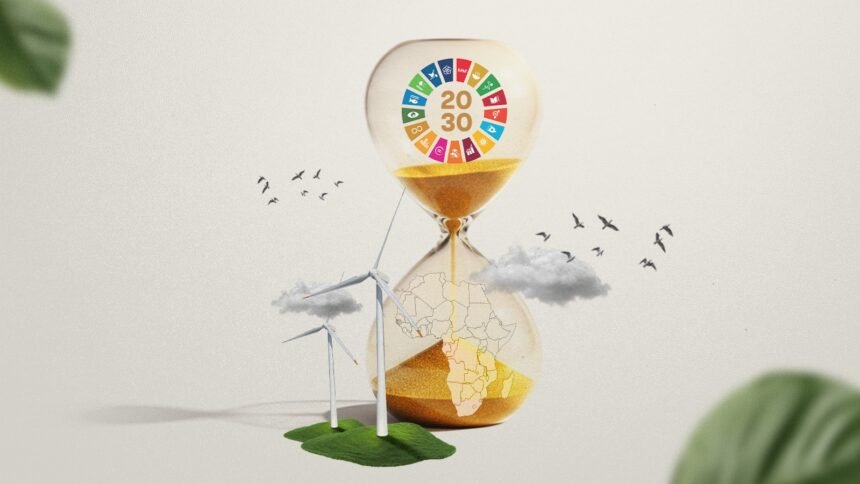
With just 5 years left, the world is marking the midpoint of the 2030 Agenda for Sustainable Development, the time is ticking louder than ever for Africa, the continent stands at the frontline facing the challenges of development, the African Union is a continental Organization founded in 2002 to promote unity, and foster sustainable development, economic growth, and good governance across Africa.
Accelerate Africa`s Future toward Inclusive Sustainable Development:
The African continent is a source of natural resources and a demographic dividend. It possesses numerous resources and capabilities that qualify it to achieve sustainable development and leverage its resources and strategic location. In recent years, the continent has witnessed growing awareness of sustainable development, leading to conferences and workshops to introduce it and integrate it into national strategic plans. Many countries have developed actionable plans and policies to be implemented by 2030.
African leaders have sought to reformulate the implementation of the Sustainable Development Goals (SDGs) in Africa to align with the continent’s specific nature, conditions, and environment, as embodied in the African Union’s Agenda 2063. Youth awareness of the SDG concept has increased, and youth activities have grown through youth organizations, initiatives, conferences, and workshops. UN agencies, the African Union, and partners have contributed to training stakeholders on the implementation mechanisms of the SDGs.
Technical and technological support has been provided to develop mechanisms for writing SDG projects and reporting on progress in various development sectors. Despite ongoing increases in awareness, decision-makers’ technical capacity to achieve the SDGs remains limited. Sustainable development, not just the continuity and sustainability of projects, faces significant challenges. Funding and weak infrastructure are among the obstacles, and other countries face political and security instability, which hinders the implementation of strategic plans and significantly affects the sustainability of projects.
Development challenges in Africa:
Many countries on the continent face challenges that hinder their pursuit of development goals. Common challenges include data scarcity, financial constraints, and inadequate infrastructure, all of which require billions of dollars in investment. These challenges are among the main obstacles impeding efforts in health, education, and the environment.
In his opening remarks at the African climate week, Ethiopian Prime Minister Abiy Ahmed said: “We are not here to negotiate our survival; we are here to build the future climate world. Africa can be the first continent to develop its industries without destroying its ecosystems.” He added that Ethiopia has achieved significant milestones, such as the Green Legacy Campaign, which planted 48 billion trees, and the Great Swarm project, which will generate 5,000 megawatts of renewable energy. He also called for the establishment of an African “era of solutions” that will drive innovation in the energy, agriculture, and water sectors.
Africa needs joint action and coordination centred on a continental vision and international cooperation. During African Climate Week 2025, held in Addis Ababa, African leaders gathered to strengthen cooperation on climate and development. The dialogue focused on the importance of the continent being a driver of climate solutions, rather than being viewed solely as a continent facing development and climate challenges.
The importance of unifying positions and strengthening commitment to implementing the African Union Agenda 2030 and the Sustainable Development Goals was highlighted.
Raising awareness and fostering community participation are essential for achieving the SDGs and realising the vision of the Africa we want, as outlined in Agenda 2063. For me, working closely with local communities for more than 5 years has shown me that their knowledge and engagement are vital to creating sustainable and creative solutions while also taking Conflict Sensitivity into account.
Working closely with local communities has shown me that their knowledge and engagement are vital to creating sustainable and lasting development solutions.
The lack of infrastructure in many African countries hinders their ability to utilize technology, particularly in developing data systems and investing in data collection. This impedes the provision of information that empowers decision-makers to make evidence-based decisions. This requires regional and international cooperation to attract investment and funding that support the development of systems and technologies for data collection and analysis, ultimately serving development efforts.
Bridging Gaps; Strengthening Institutions and Skills through Strategic Partnerships:
Joint action and the development of partnership and cooperation mechanisms among African countries will enhance their ability to benefit from successful models and projects that support sustainable development efforts. Investment in infrastructure and the agricultural and industrial sectors is essential for the growth of African economies. Improving the quality of education and its institutions, and expanding training and skills development opportunities, are among the most critical factors in promoting sustainable development and creating a productive, innovative workforce. Finally, international events should be used to highlight African issues and discuss ways to support sustainable development by 2030.


