






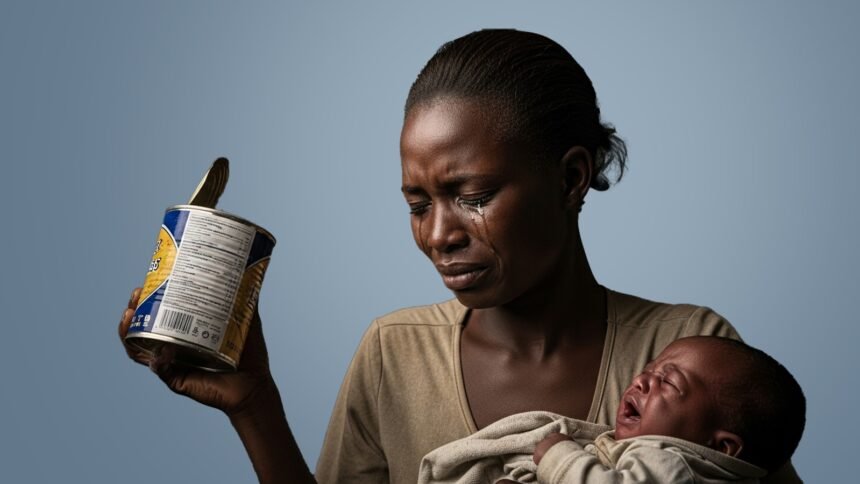
Cradle of Humanity, Grave of Infants: A Pan-African Legacy of Maternal and Child Vulnerability
Africa is the birthplace of humankind, yet it remains the continent where the miracle of birth most frequently turns into tragedy. In 2025, one African woman still dies every two minutes from preventable pregnancy-related causes — a maternal mortality ratio of 533 per 100,000 live births in sub-Saharan Africa, the highest on earth. For every mother who dies, twenty more suffer severe obstetric complications that leave them disabled or chronically ill. Behind these numbers lie stories of teenage girls in rural South Sudan walking 40 kilometres to reach a clinic that has no blood for transfusion, of Nigerian market women bleeding out on mud floors because the nearest caesarean theatre is six hours away, of Malawian mothers infected with puerperal sepsis because the only water available to wash delivery instruments is drawn from a contaminated river.
Children fare little better. Although under-five mortality has fallen from 146 to 68 deaths per 1,000 live births since 1990, Africa still accounts for more than half of all global child deaths. The most perilous window remains the first two years of life: neonatal mortality stands at 27 per 1,000, and one in thirteen African children will not see their fifth birthday. Stunting — the irreversible consequence of chronic malnutrition in the first 1,000 days — affects 59 million African children, or 30.7 percent of the under-five population. In Niger, Madagascar, Burundi, and Eritrea, more than 40 percent of children are stunted, condemned before school age to shorter adult height, lower cognitive capacity, reduced economic productivity, and higher risk of chronic disease.
This is the backdrop against which multinational infant-food corporations continue to operate with near-impunity: a continent whose mothers and children are uniquely vulnerable, whose health systems are chronically underfunded (median government health spending is 5 percent of national budgets, far below the 15 percent Abuja Declaration target), and whose regulatory capacity is overwhelmed by the sophistication of global marketing machines.
The Double Burden: When Hunger and Obesity Share the Same Plate
For decades, the narrative was straightforward — Africa was starving. Today, the reality is far more complex. The continent now faces a devastating double burden of malnutrition: persistent undernutrition coexists with a rapidly rising tide of overweight, obesity, and diet-related non-communicable diseases. Between 2000 and 2023, the prevalence of overweight among African children under five increased by 23 percent. In southern Africa, countries such as South Africa, Botswana, and Eswatini already register childhood overweight rates comparable to those in parts of Europe.
The drivers are multiple: urbanisation, aggressive marketing of ultra-processed foods and beverages, falling prices of vegetable oils and sugar, and the systematic displacement of diverse traditional diets by calorie-dense, nutrient-poor products. In this new landscape, commercial milk formulas and fortified baby cereals are no longer peripheral actors; they have become central vectors in the transition from traditional breastfeeding and locally prepared complementary foods to industrially produced, often sugar-laden substitutes.
Wombs Under Siege: The State of Maternal Health Across the Continent
Every year, approximately 35 million African women become pregnant. Fewer than 60 percent receive the minimum four antenatal visits recommended by WHO. Only 57 percent deliver with a skilled birth attendant. In Chad, Somalia, and South Sudan, institutional delivery rates remain below 25 percent. Anaemia affects 40–60 percent of pregnant women continent-wide, malaria in pregnancy claims tens of thousands of lives annually, and obstetric fistula — the devastating childbirth injury, almost eradicated elsewhere — still ruins the lives of 30,000–50,000 African women each year.
These conditions do not merely threaten mothers; they programme the metabolic future of their children. Maternal undernutrition, anaemia, and micronutrient deficiencies are the primary drivers of low birth weight (affecting 14 percent of African newborns) and intrauterine growth restriction, which in turn increase the lifelong risk of stunting, diabetes, hypertension, and heart disease. When multinational companies aggressively promote formula as “essential” or “superior” in such contexts, they are not filling a nutritional gap — they are exploiting one.
The Sanctity of Breastmilk and the Rights of the African Child
The African Charter on the Rights and Welfare of the Child (1990) and the Convention on the Rights of the Child both recognise adequate nutrition as a fundamental right. The International Code of Marketing of Breast-milk Substitutes (1981), adopted by the World Health Assembly and subsequently endorsed by every African state except Somalia, explicitly prohibits the promotion of infant formula, follow-up formula, and complementary foods before six months of age. Yet in 2025, the Code remains widely violated across the continent.
Breastmilk is uniquely adapted to African realities: it is always available, always at the correct temperature, always sterile, always rich in antibodies against the pathogens that cause the majority of child deaths in Africa (diarrhoea, pneumonia, sepsis). Exclusive breastfeeding for six months reduces infant mortality by up to 19 percent in high-mortality settings. Yet rates remain stubbornly low: only 37 percent of African infants are exclusively breastfed for the recommended period, with countries such as Côte d’Ivoire (5 percent), Chad (3 percent), and Gabon (9 percent) recording among the lowest rates globally.
The reasons are structural and deliberate: separation of mothers from infants due to informal-sector work, aggressive formula marketing in maternity wards, free samples distributed by health workers who receive incentives, and the pervasive myth — actively cultivated by decades of advertising — that formula makes babies “stronger, fatter, cleverer”.
Powdered Promises: The Political Economy of Baby Formula in Africa
The infant-food market in Africa is one of the fastest-growing in the world, projected to reach US$15 billion by 2030. The major players — Nestlé, Danone, Abbott, Mead Johnson (Reckitt), and a handful of regional manufacturers — operate in an environment of extreme information asymmetry. Mothers with low literacy, overburdened health workers, and under-resourced regulatory agencies face multinational corporations with billion-dollar marketing budgets and armies of nutritionists, lobbyists, and lawyers.
Recent investigations have exposed a practice that can only be described as nutritional apartheid: the same multinational brands sell unsweetened or low-sugar baby cereals in Europe, North America, and wealthier Asian markets, yet systematically add sucrose, fructose syrup, or other sweeteners (up to 7.3 g per serving) to the identical products sold in low- and middle-income African countries. The justification offered — that African children “need the extra energy” or “will not accept unsweetened cereals” — collapses under scrutiny. WHO guidelines are unequivocal: no added sugars or sweeteners in any foods for children under three years. The addition is not nutritional; it is commercial. Sweetness drives repeat purchases, brand loyalty, and a lifelong preference for hyperpalatable foods.
In countries where clean water is unavailable to millions, powdered formula must be mixed with water that is often contaminated. The result is predictable: spikes in infant diarrhoea, sepsis, and death. During the 2022–2023 cholera surge across southern and eastern Africa, health authorities repeatedly warned against formula use in emergency settings, yet companies continued to distribute free samples in displacement camps.
From Boycott to Backslide: The Long Shadow of the 1970s Nestlé Scandal
The current crisis is not new. In the 1970s and 1980s, aggressive formula marketing in Africa, Asia, and Latin America triggered what became known as the Nestlé boycott—the most prolonged and widespread consumer boycott in history. Investigative reports documented “milk nurses” in company uniforms infiltrating maternity wards, free samples creating dependency, and the tragic consequences when low-income families diluted formula to make it last longer. The 1981 adoption of the International Code was meant to end these practices. Instead, companies adapted: direct advertising was replaced by “health worker education”, sponsorship of paediatric conferences, and digital marketing that targets mothers through WhatsApp groups, TikTok influencers, and Facebook “mommy pages” — channels that largely escape regulatory oversight.
Accountability Vacuums: Weak Regulation, Collusive Silence, and the Cost of Impunity
Only twelve African countries have fully enacted the International Code into national law. In most others, provisions are partial, poorly enforced, or absent. Health-worker training is frequently funded by the same companies whose products they are meant to scrutinise. Regulatory agencies lack resources, technical capacity, and political independence. When civil-society organisations attempt to monitor violations, they face legal harassment, defamation lawsuits, and threats.
The African Union, through its 2014 Malabo Declaration and the 2022–2030 Nutrition Strategy, has repeatedly committed to ending all forms of malnutrition. Yet continental mechanisms for holding member states — let alone private actors — accountable remain embryonic. The Revised African Union Food Safety Index, launched in 2023, does not yet include specific indicators on breast-milk substitute marketing.
Towards Nutritional Decolonisation: Reclaiming African Feeding Practices
A growing movement across the continent insists that solutions must be rooted in African realities rather than imported powders. Community-based initiatives in Ethiopia, Kenya, Burkina Faso, and Ghana are reviving traditional complementary foods — fortified millet porridges, fermented maize-sorghum blends, moringa-enriched sauces, and baobab smoothies — that are cheaper, safer, culturally acceptable, and nutritionally superior to many commercial cereals.
Midwife-led breastfeeding peer-counsellor networks, solar-powered milk banks in refugee settings, and legislative victories — such as South Africa’s 2023 regulations banning all promotion of foods for infants under 36 months — demonstrate that change is possible when political will aligns with grassroots determination.
A New Dawn, A Fiercer Resolve
The infant-formula crisis in Africa is not a technical issue of micronutrient fortification; it is a political struggle over who controls the most intimate act of survival — the feeding of a child. As long as multinational corporations are allowed to treat African infants as a distinct, lower-tier market segment deserving of sweetened, risk-laden products that are deemed unacceptable elsewhere, the continent’s hard-won gains in child survival will remain fragile.
The path forward demands multiple, simultaneous revolutions: revolutionary investment in maternal health services that keep mothers alive and lactating; revolutionary enforcement of the International Code with independent monitoring and severe penalties; revolutionary reclamation of indigenous African foods as the default first foods of childhood; and revolutionary accountability that ends the era of nutritional colonialism once and for all.
Until African mothers can trust that the products sold to them in the name of “science” and “progress” are the same safe, unsweetened, rigorously regulated products sold to mothers in Zurich or Toronto, the struggle for true nutritional sovereignty — and with it, the full realisation of the continent’s demographic promise — will remain unfinished.
The cradle of humanity must no longer be allowed to become the graveyard of its youngest children.


