



Pan African Visions: Continental Resources in Global Flux
Africa’s uranium narrative spans a century of extraction and aspiration, beginning with colonial-era discoveries that powered the atomic age. The Shinkolobwe mine in the Democratic Republic of Congo supplied ore for the Manhattan Project, marking the continent’s unwitting entry into nuclear history. Post-independence, mining expanded in South Africa, Gabon, and Niger, often under foreign control, fueling Western reactors while leaving local economies with scant benefits. By the 1980s, Africa accounted for a third of global production, but slumps in demand led to mine closures. A resurgence in the 2000s, driven by rising energy needs, positioned the continent as a key supplier once more.
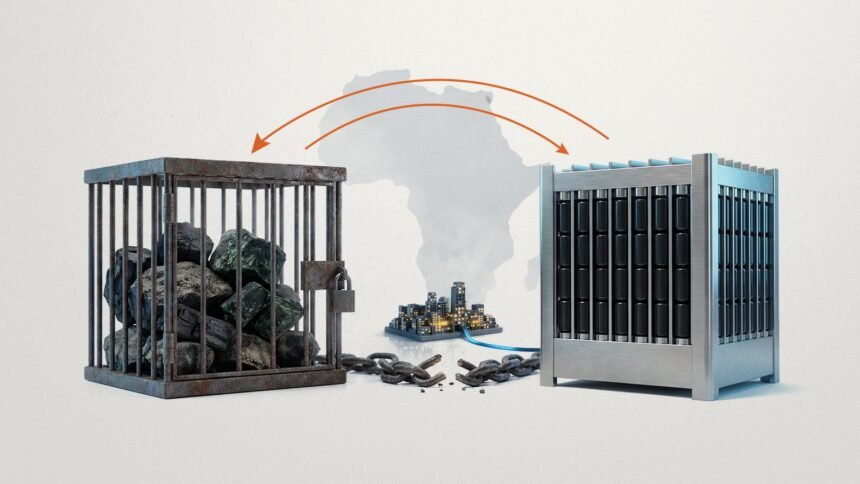
In 2026, uranium mining serves as a bridge to civilian nuclear ambitions, aligning with Pan-African goals of energy sovereignty. The African Union’s Agenda 2063 envisions integrated resource use for sustainable growth, while uranium-rich nations leverage reserves to negotiate technology transfers and infrastructure deals. This shift transforms raw export into strategic bargaining, enabling access to nuclear power for electrification and industrialization. Yet historical inequities persist, with uranium extraction often prioritizing global markets over local needs, underscoring the need for unified continental strategies to harness uranium’s potential without repeating past exploitation.
Uranium Mining Horizons: Pillars and Prospects Across the Continent
Namibia is Africa’s leading uranium producer, producing over 7,000 tonnes annually and ranking third globally. Its flagship operations, Rössing, Husab, and Langer Heinrich, account for most output, with Husab alone producing 4,000 tonnes annually under Chinese stewardship. Niger follows, with the Arlit and Imouraren mines contributing approximately 2,000 tonnes, although political upheavals have curtailed expansion. South Africa’s Vaal River complex, processing tailings from gold operations, adds modest volumes but holds vast untapped potential in the Karoo Basin.
Emerging frontiers include Tanzania’s Mkuju River project, slated for 3,000 tonnes by 2029, and Malawi’s Kayelekera, ramping up to 2,400 tonnes. Zambia’s Mutanga and Mauritania’s Tiris add diversity, with reserves exceeding 100,000 tonnes each. These ventures, often backed by Russian, Chinese, or Australian firms, reflect a multipolar investment landscape. Future horizons gleam with projections of doubled continental production by 2030, fueled by surging prices at $85- $ 90 per pound. Yet, arid environments demand innovative water management, while community relocations and dust control pose ongoing tests.
Civilian Pathways vs. Military Shadows: Harnessing Uranium for Peace
Uranium’s dual nature, fuel for reactors or feedstock for weapons, casts long shadows over Africa’s mining landscape. Historically, exports fed military programs abroad, but contemporary efforts emphasize civilian pathways. South Africa’s Koeberg plant, which generates 1,860 megawatts, exemplifies domestic utilization, supplying 5 percent of the national electricity supply. Egypt’s El Dabaa, under construction, will add 4,800 megawatts by 2028, while Ghana and Kenya explore small modular reactors for grids under 10 gigawatts.
In contrast to military risks, the Pelindaba Treaty establishes Africa as a nuclear-weapon-free zone, binding signatories to the peaceful use of nuclear energy. Uranium mining now leverages access to civilian tech: Niger negotiates reactor deals with Russia, Namibia eyes desalination via nuclear steam. Medical isotopes from South Africa’s SAFARI reactor treat cancers across the continent, diverting uranium from shadows to healing. Challenges linger, proliferation fears in unstable Sahel regions, but IAEA safeguards and AU oversight illuminate pathways in which mining revenues fund nuclear training, ensuring that uranium serves development, not destruction.
Integrating Renewables: Nuclear’s Role in Africa’s Energy Mosaic
Africa’s energy mosaic blends solar winds with uranium’s steady glow, where nuclear complements renewables in a low-carbon tapestry. Vast solar potential in the Sahara and hydro potential in the Congo Basin provide intermittent power, whereas nuclear power provides baseload stability for industrial hubs. By 2050, projections indicate nuclear capacity will swell tenfold, integrating with AfCFTA grids to export clean energy.
Uranium mining catalyzes this synergy: Namibia’s reserves power hybrid plants, blending nuclear with wind for 24/7 reliability. Challenges include grid limitations; many nations lack the 10-gigawatt minimum for large reactors, favoring modular designs that pair with solar farms. Environmental imperatives drive innovation, with mining adopting water-recycling tech to preserve arid ecosystems. As renewables scale, nuclear power fills gaps, reducing reliance on fossil fuels and emissions by 180 million tonnes annually. This integration fosters resilience, in which uranium’s leverage secures funding for green transitions, weaving a sustainable mosaic for Pan-African prosperity.
Development Dividends: From Extraction to Empowerment
Uranium mining’s dividends promise empowerment, channeling revenues into infrastructure and skills. In Namibia, the 2025 record of 10,000 tonnes generated billions, funding roads and education. Niger’s extraction supports anti-poverty programs, while South Africa’s tailings reprocessing creates jobs. Future outlooks envision beneficiation, local enrichment plants doubling value, transforming exporters into nuclear fuel suppliers.
Yet, dividends demand equitable distribution: community funds mitigate radiation-related health risks, while AU-UN collaborations build regulatory frameworks. The IAEA’s milestones approach guides infrastructure and training, with thousands trained in safe mining. By 2040, nuclear energy could meet 15 percent of Africa’s electricity demand, lifting millions out of poverty. Leveraging uranium for civilian access accelerates this, with mining pacts including reactor tech transfers. Empowered by strategic autonomy, Africa turns extraction into enduring development, where uranium’s glow illuminates paths to shared prosperity.


