






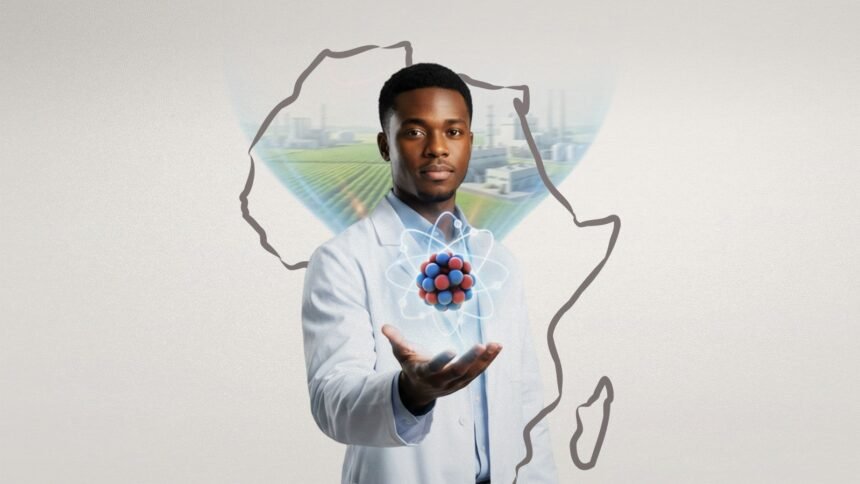
Pan-African Nucleus: Forging Unity in Atomic Ambition
Africa’s energy narrative, long marred by colonial extractivism and post-independence inequities, now pulses with the promise of nuclear power as a unifying force. With over 600 million citizens enduring energy poverty amid a projected tripling of demand by 2040, the continent’s embrace of atomic energy transcends national boundaries, evoking the Pan-African ethos of shared sovereignty. The African Union’s Agenda 2063, which envisions an integrated, prosperous Africa, identifies nuclear energy as a catalytic enabler: a reliable, low-carbon baseload that could illuminate factories from Lagos to Kigali, irrigate farmlands in the Sahel, and power digital hubs in Nairobi. Recent milestones—Ghana’s multi-vendor pacts, Rwanda’s small modular reactor initiatives, Nigeria’s renewed vigor—signal not isolated pursuits but a continental convergence, bolstered by the International Atomic Energy Agency (IAEA) frameworks and regional forums such as the Africa Nuclear Business Platform.
This nucleus forms amid global flux. As climate imperatives demand decarbonization and great-power rivalries reshape alliances, Africa’s uranium endowments—in Niger, Namibia, and South Africa—position it as a pivotal player. The Pelindaba Treaty’s non-proliferation commitments endure, yet evolving interpretations allow civilian programs with dual-use potential, fostering deterrence against resource predation. Pan-African institutions, from the AU’s proposed nuclear agency to subregional power pools, could harmonize regulations, pool expertise, and collectively negotiate technology transfers. Ghana’s ambassadorial advocacy at IAEA boards exemplifies this: not mere diplomacy, but a blueprint for equitable access, ensuring that atomic fire—once monopolized by the Global North—ignites endogenous growth. By 2030, coordinated efforts could install 15 gigawatts, displacing diesel imports and averting billions in subsidies, while cultivating a cadre of 100,000 nuclear professionals through shared academies in Cairo and Pretoria.
Yet, unity demands reckoning with fractures. Debt-laden economies grapple with upfront costs, while public wariness, rooted in Chernobyl’s shadow and apartheid’s arsenal, tempers enthusiasm. A Pan-African nucleus thrives on transparency: joint safety protocols, community vetoes on siting, and profit-sharing models that reinvest royalties into social funds. In this forge, nuclear becomes more than megawatts—it is the alloy binding Africa’s 1.4 billion souls toward collective resilience.
Nuclear Innovations: Modular Marvels and Next-Gen Leaps
At the vanguard of Africa’s atomic renaissance stand innovations such as small modular reactors (SMRs), factory-assembled units that defy traditional barriers to scale and cost. Ghana’s trilateral engagements—with U.S.-based NuScale for SMRs deployable by the early 2030s, China’s CNNC for the Hualong One behemoth, and France’s EDF for EPR1200 variants—illustrate this pragmatic pluralism. These reactors, scalable from 50 to 300 megawatts, mitigate grid vulnerabilities by powering isolated mines or urban clusters, with passive safety features that minimize meltdown risk. Rwanda, undeterred by land constraints, signs accords with Nano Nuclear Energy and Dual Fluid Energy for micro-SMRs, aiming for 2030 operationalization to electrify its volcanic highlands and nascent EV assembly lines.
Nigeria, Africa’s demographic dynamo, recalibrates following the pause in its Rosatom-led Geregu venture, pivoting to SMR feasibility studies that could yield 4,800 megawatts by mid-century. Complementing these are advanced designs: thorium-fueled prototypes in South Africa’s Necsa labs and floating reactors for coastal Namibia, harnessing ocean cooling for desalination synergies. Such innovations overturn outdated assumptions—new Bayesian Energy modeling, commissioned by philanthropic foundations, projects nuclear land efficiency surpassing solar sprawl, with costs plummeting by 40 percent through serial production. In East Africa’s rift valleys, hybrid nuclear-geothermal arrays promise uninterrupted supply, whereas West African uranium hubs, such as Niger’s Arlit fields, fuel closed-loop cycles, reducing waste and imports.
These technological leaps are not imported miracles but adapted imperatives. Local content mandates—Ghana’s 40 percent localization requirement for reactor builds—nurture supply chains from alloy forging in Johannesburg to control-rod fabrication in Accra. By 2040, SMR fleets could dot the continent, from Ethiopia’s highlands to Senegal’s coasts, embodying the nuclear industry’s modular ethos: flexible, resilient, and quintessentially African in its ingenuity.
Energy Empowerment: Baseload Backbone for Continental Vitality
Nuclear power’s true alchemy lies in empowerment, transforming erratic blackouts into ceaseless vitality that underpins every facet of life. Unlike solar’s diurnal dance or hydro’s hydrological whims, atomic stations deliver unwavering baseload—Koeberg’s 1,800 megawatts sustaining South Africa’s aluminum crucibles for four decades attest to this endurance. In Africa, where fossil fuels account for 80 percent of generation yet import bills exceed $50 billion annually, nuclear power reduces vulnerabilities: Rwanda’s envisioned 24 percent nuclear mix by 2050 could halve its diesel reliance, fueling agritech revolutions in terraced rice paddies.
Empowerment cascades sectorally. In Nigeria’s oil-saturated delta, reactors desalinate brackish waters for irrigation, averting salinity crises that displace millions. Ghana’s coastal SMRs could energize green hydrogen electrolysis, exporting molecules to Europe’s decarbonizing grids and recouping investments threefold. Across the Sahel, micro-reactors power cold chains for vaccines, bridging the 40 percent spoilage rate that hampers immunization drives. This baseload backbone extends to mobility: nuclear-charged fast lanes for EV fleets in Kigali, where Rwanda’s 2030 targets align with continental aspirations for 30 million electric vehicles.
Yet, empowerment hinges on equity. Off-grid SMRs illuminate informal economies—from shea butter processors in Burkina Faso to textile weavers in Mali—by boosting incomes by 25 percent through extended operating hours. Gender dynamics shift as reliable power frees women from biomass drudgery, channeling labor into education and entrepreneurship. In a continent where energy access correlates with a 2 percent GDP uplift per 10 percent penetration, nuclear power’s steady hum democratizes opportunity, weaving a tapestry of vitality from Cairo to Cape Town.
Developmental Synergies: Atomic Fuel for Human and Industrial Flourishing
Developmental synergies propel nuclear beyond kilowatts into the realm of human flourishing, where atomic energy ignites industrial phoenixes from underpowered ashes. Modeling forecasts Ghana, Nigeria, and South Africa’s nuclear shares reaching 30 percent by 2050, catalyzing value addition: cobalt refineries in the DRC humming sans blackouts, lithium processors in Zimbabwe yielding batteries rather than raw ore. Rwanda’s SMR odyssey targets not just lights but laboratories—nuclear-derived isotopes revolutionizing oncology in Kigali’s teaching hospitals, where cancer diagnoses outpace treatments by a factor of three.
These synergies manifest in multipliers: each gigawatt generates 5,000 construction jobs, 500 permanent roles, and ancillary industries, ranging from uranium milling to robotics maintenance. Uganda’s 1,000-megawatt blueprint integrates nuclear with agro-industrial parks, tripling yields in coffee and vanilla belts through electrified processing. In North Africa’s Maghreb, Algerian reactors desalinate water for solar-greenhouse megafarms, combating desertification while exporting surplus organic matter. Broader horizons emerge: data centers in Kenya’s “Silicon Savannah,” cooled by nuclear waste heat, position Africa as the continental crucible for AI.
Challenges temper this flourish—regulatory silos and skilled-labor gaps demand Pan-African remedies, such as mobile training academies rotating from Addis Ababa to Abuja. Yet, the synergies are profound: nuclear not only powers development but also redefines it—from extractive peripheries to innovation cores—ensuring that Africa’s youth—their most extraordinary dividend—inherit engines of equitable ascent.
Investment Catalysts: Mobilizing Capital for Fissile Futures
Unlocking nuclear’s promise demands catalytic investments, a $105 billion odyssey by 2035 that tests Africa’s fiscal ingenuity against entrenched barriers. Ghana’s debt restructuring curtails public outlays, yet hybrid models beckon: Rockefeller-backed guarantees de-risk private bonds, while Nigeria’s sovereign wealth fund eyes 20 percent equity in SMR consortia. Rwanda’s nimble diplomacy secures concessional loans from BRICS banks, blending Russian Rosatom blueprints with Korean KEPCO financing for 1,000-megawatt fleets.
Catalysts proliferate. IAEA’s FIRST program fortifies supply chains, channeling $2 billion in U.S. grants to Ghana’s NuScale pathway, while China’s Belt and Road morphs into atomic arteries, funding CNNC’s Hualong deployments with off-take guarantees. The African Development Bank’s green nuclear window—$10 billion pledged at the 2025 summits—prioritizes localization, mandating 50 percent of procurement to be sourced from Africa to stem capital flight. Public-private synergies are evident in South Africa’s Necsa-KEPCO pact, which exports isotope technology to fund domestic expansion.
Risks loom—financing’s 15-year payback period clashes with electoral cycles, and currency volatility inflates costs. Mitigation lies in innovation: carbon credit linkages at COP forums monetize nuclear’s emissions avoidance, potentially yielding $5 billion annually. Blended finance, where philanthropies absorb first-loss tranches, lures pension giants from Lagos to London. By 2030, these catalysts could triple capacity, not as donor largesse but African-led alchemy: investments that compound into sovereignty, illuminating a future where fissile bonds forge unbreakable chains of prosperity.


