





On any given day in Lagos, container trucks crawl along the clogged roads leading to the Lagos Port Complex at Apapa and nearby Tin Can Island Port, two aging gateways that handle most of Nigeria’s seaborne trade.
Long queues, delays, and congestion have become a defining feature of life and business around the ports, where importers, truckers, and residents all feel the strain.
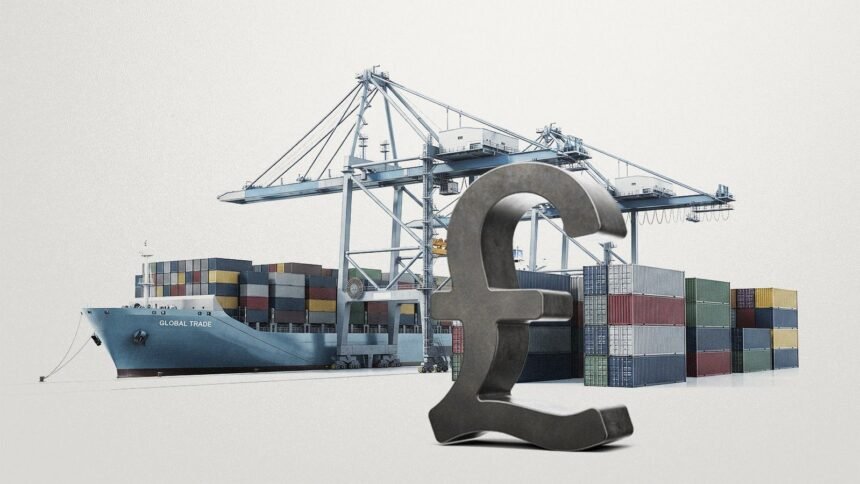
Now, Britain and Nigeria say they are ready to turn that page. In March, the two governments announced a £746 million exportfinance deal to redevelop the Lagos Port Complex (Apapa Quays) and the Tin Can Island Port Complex, in what officials on both sides have described as a landmark upgrade and one of the most significant port investments in Nigeria in decades.
Background and Stakes
The agreement, signed betweenUK Export Finance (UKEF), Nigeria’s Federal Ministry of Finance, and the Nigerian Ports Authority, will use a UKEFguaranteed buyer credit facility arranged by Citibank’s London branch to fund the modernisation works.
UKEF has guaranteed the full £746 million facility, and at least £236 million in supplier contracts are expected to flow to British companies, including a record £70 million order for British Steel to supply 120,000 tonnes of steel billets to Nigerian contractors Hitech Nigeria and ITB Nigeria.
According to Nigeria’s minister of marine and blue economy, Adegboyega Oyetola, the financing will support a comprehensive modernisation of port infrastructure in Lagos, including upgraded quays, expanded capacity, new cargohandling equipment, and digital systems designed to streamline clearance and reduce paperwork.
Together, Apapa and Tin Can handle more than 70 percent of Nigeria’s imports and exports and serve as “the central arteries of the nation’s maritime trade,” he has said in an official statement.
Oyetola has called the agreement a “defining moment” for Nigeria’s maritime sector and framed the project as “a comprehensive transformation that will bring our ports into alignment with international best practice.”
Modern infrastructure supported by digitalised and automated processes, he argues, should sharply reduce vessel turnaround times and cargo dwell times, cut demurrage and logistics costs for businesses, and generate more predictable, transparent cargo movements.
For the United Kingdom, the project is also a test of its post-Brexit strategy to deepen trade and investment links with fastgrowing economies.
Tim Reid, chief executive of UKEF, called the deal “a milestone for UKNigeria trade relations” and evidence of the agency’s capacity “to unlock transformational opportunities for British businesses, while supporting sustainable economic growth in key markets.”
Human Impact on the Ground
Around Apapa and Tin Can, the pressure is visible in everyday routines. Nigerian media have documented how trucks often wait for hours or days to access terminals, clogging surrounding roads and spilling into residential and commercial areas.
Businesses complain that delays and informal costs at the ports feed directly into higher prices for imported goods and unreliable delivery schedules for manufacturers that rely on imported inputs.
Successive governments in Abuja have launched initiatives to ease gridlock, including truck callup systems, ad hoc task forces, and efforts to divert more cargo to inland dry ports.
While some of these measures have produced temporary relief, analysts and industry groups say the underlying problems, ageing infrastructure, fragmented oversight, and manual, paperheavy procedures, have remained largely in place.
By committing to largescale physical upgrades and digitalisation, Nigeria’s government argues that this latest effort can address more of the structural issues that have accumulated over decades.
Officials have also linked the port overhaul to broader ambitions under the African Continental Free Trade Area, presenting efficient logistics as essential if Nigerian industries are to compete across the region and if Lagos is to consolidate its role as a maritime gateway for West and Central Africa.
Debt, Policy Debate, and Expert Concerns
The financing structure places the deal squarely in a wider debate about how African countries should build and upgrade infrastructure without compromising financial stability.
The £746 million package is a loan, backed by UKEF’s guarantee to lenders, not a grant; Nigeria will be responsible for servicing it in foreign currency over time.
Commentators and civil society voices have already stressed that, while the project may be economically justified, it still adds to Nigeria’s external debt burden and must be carefully managed in light of the naira’s weakness and fiscal pressures.
Supporters argue that the UKEF buyercredit model has several advantages over less transparent lending arrangements. The facility is tied to specific projects, with clear documentation, and backed by the UK government.
A substantial portion of the value flows through a defined network of British and Nigerian suppliers. UK and Nigerian officials say this should help ensure higher standards in procurement and implementation, and keep ownership of the port assets with the Nigerian state.
Skeptics, however, warn that physical upgrades alone will not fix longstanding issues such as customs bottlenecks, overlapping mandates, and weak enforcement of traffic management rules.
Analysts note that unless reforms extend to hinterland transport links, including rail and access roads, and to the regulatory environment within ports, efficiency gains could fall short of the ambitious projections in official statements.
There is also debate over who stands to benefit most. UK officials highlight the thousands of jobs they expect to support in British manufacturing and services, as well as opportunities for Nigerian workers and contractors.
Critics on Nigerian social media have framed the deal as heavily tilted towards UK suppliers and questioned whether the country is securing the best possible financial terms in an already tight debt environment.
What Comes Next
Alongside the ports deal, the UK and Nigeria have signed a memorandum of understanding that sets out a pipeline of priority projects seeking potential UKEF backing in sectors such as transport, energy, and industry, signaling that both governments see this as the start of a broader infrastructure partnership.
But on the ground in Lagos, the decisive phase will be implementation. How work is sequenced, how traffic is managed during construction, and whether promised digital reforms are delivered and maintained over time.
If the project proceeds broadly as officials intend, Apapa and Tin Can could emerge as more efficient hubs in West and Central Africa, helping to lower trade costs and bolster Nigeria’s reputation as a reliable gateway.
If delays, cost overruns, or partial reforms prevail, the £746 million investment risks becoming another reminder of how difficult it is to translate bigticket financing into daytoday improvements for traders, workers, and residents who still inch forward in traffic outside the port gates.