






Africalix Exclusive Interview
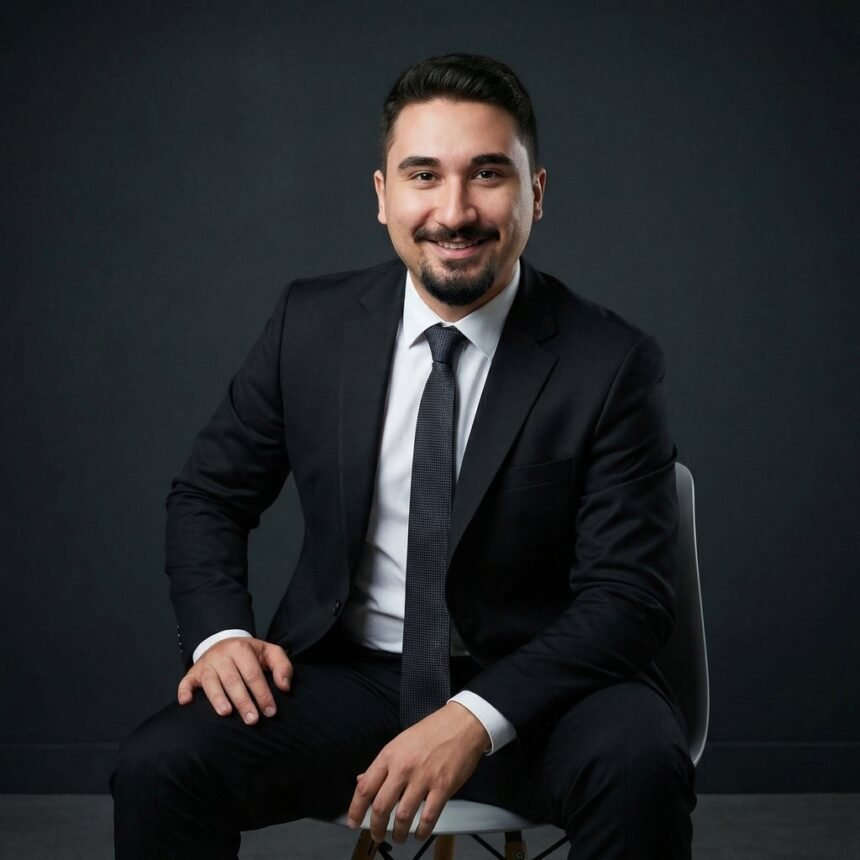
Arda Kılınçkını, Co-Founder of Agripoli and Founder of Yeşil Dönüşüm Girişimcileri Türkiye
As Türkiye prepares to host COP31 in Antalya, the country stands at a critical juncture where its geographic position as a bridge between Europe, the Middle East, Central Asia, and Africa could translate into meaningful climate leadership.
Arda Kılınçkını, co-founder of Agripoli and founder of Yeşil Dönüşüm Girişimcileri Türkiye (Green Transformation Entrepreneurs Türkiye), is working to ensure that entrepreneurship and innovation become central to the country’s climate response.
Through developing bio-polymers from agricultural and industrial waste and building collaborative ecosystems that connect startups with industry, he embodies a vision of green transformation driven not by large corporations alone but by integrated partnerships across the entire business spectrum.
In this exclusive interview with Africalix, Arda discusses Türkiye’s role in global climate diplomacy, the critical challenge of integrating SMEs into the green transition, and his call for cross-border collaboration between Turkish innovators and climate leaders across the Global South.
From Waste Streams to Bio-Polymers
Arda’s entrepreneurial journey has consistently focused on ventures that create environmental and social impact. His first step was co-founding Greend, a company developing sustainable materials for daily consumption.
After meeting his co-founder, Ebru Baripoğlu, they decided to focus specifically on transforming industrial and agricultural waste into high-value materials.
At Agripoli, they develop bio-polymers from tea waste, furniture-industry residues, and eggshells using a “natural customization method,” turning waste streams into tailored, sustainable raw materials for industry. This approach addresses both waste management and material sustainability simultaneously, creating value from what would otherwise be environmental burdens.
Alongside his entrepreneurial work, Arda actively engages with Türkiye’s industrial and business ecosystem. He is a member of several leading organizations, including MÜSİAD, TÜSİAD BGİV, and TOBB Young Entrepreneurs Council, where he contributes to sustainability, innovation, and green transition initiatives.

Türkiye as a Climate Bridge
As Türkiye prepares to host COP31, Arda identifies the country’s unique position as both an opportunity and a responsibility.
Türkiye has strong industrial partners, an emerging climate-tech ecosystem, and a growing number of sustainability-focused startups. Its geographic and economic position allows it to act as a bridge between Europe, the Middle East, Central Asia, and Africa.
“This gives it a unique opportunity to connect different regions and approaches within global climate diplomacy,” Arda explains. “In the coming years, the global economy will be reshaped by climate policies, carbon regulations, and new sustainability standards.
Türkiye has the potential to help align both Western and Southern markets, acting as a binding force that supports cooperation, technology transfer, and sustainable trade.”
However, he identifies significant challenges that must be confronted. The most urgent priority is integrating small and medium-sized enterprises (SMEs) into the green transition. While large corporations may have the resources to adapt, SMEs often struggle with financing, access to technology, and regulatory complexity.
Supporting SME transformation will be critical for achieving national climate goals. In Türkiye, approximately 3.2 million SMEs account for 99.8% of all companies, making SME transformation essential for a national green transition.
Arda views mechanisms such as the EU’s Carbon Border Adjustment Mechanism (CBAM) as a strong driver that will push industries to decarbonize and adopt sustainable production methods.
“Türkiye must see this not only as a regulatory pressure but also as an opportunity to modernize its industry, strengthen competitiveness, and accelerate the green transition across the entire value chain,” he argues.
Building Collaborative Green Ecosystems
The mission of Yeşil Dönüşüm Girişimcileri (Green Transformation Entrepreneurs Türkiye) is to build a strong, collaborative ecosystem that can accelerate the country’s green industrial transformation.
Arda believes that entrepreneurs, startups, and innovators have the power to revolutionize industry by developing solutions for carbon reduction, sustainable logistics, circular materials, and cleaner production systems.
However, green transformation cannot happen in isolation. Companies are actively seeking ways to reduce their carbon emissions and integrate more sustainable practices into their operations, but they often lack access to the right technologies, partners, and expertise.
“Before establishing this platform, I realized that if startups, SMEs, corporates, academics, and investors do not act together, the transformation process may become dominated by only a few large players,” Arda notes. “To create a fair, inclusive, and competitive green economy, collaboration is necessary.”
The platform is built on the spirit of SDG 17, Partnerships for the Goals. Arda emphasizes that the green transition is not only about reducing carbon emissions but also about creating fairer business models, sustainable workplaces, responsible production systems, and long-term social and environmental impact.
By bringing different stakeholders together, Yeşil Dönüşüm Girişimcileri aims to turn sustainability from a concept into real, scalable action across industries.
Integrated Solutions Across the Green Spectrum
Arda sees all areas of sustainability, from sustainable software tools and carbon management platforms to clean energy, circular materials, waste management, and sustainable agriculture, as interconnected. A strong green community can only be built by integrating solutions across the entire spectrum.
Within the Yeşil Dönüşüm Girişimcileri ecosystem, about 32% of the community focuses on next-generation sustainable materials, which Arda identifies as a key driver of the industry’s future. The rest of the community comprises startups working in clean energy, carbon management, sustainable logistics, and other green technologies.
“Our main goal is to create real opportunities for these startups by connecting them with industrial partners, investors, and decision-makers,” he explains.
“We focus on building strong partnerships between innovative entrepreneurs and established companies so that new technologies can move beyond the pilot stage and scale into real industrial applications.”
This emphasis on moving from pilots to scale addresses a common challenge: innovative solutions remain confined to demonstration projects, without achieving the market penetration necessary for meaningful climate impact.
Youth as Necessity-Driven Innovators
Arda identifies young people and youth-led initiatives as bringing one of the most important values to the climate and sustainability agenda: the determination to build a green future as a necessity, not an option.
“For the younger generation, sustainability is not a nice-to-have concept—it is a must,” he emphasizes. “They are shaping their careers, businesses, and technologies around the idea of a net-zero and circular economy.
If we truly aim to reach net-zero targets, we must redesign production, logistics, materials, and energy systems from the ground up, and young entrepreneurs are at the center of that transformation.”
He describes the coming period as TR-2030 | CODE: Transition, representing both a timeline and a mindset. Türkiye must be ready for the structural changes expected by 2030, and the new generation is already preparing for this transition by building climate-focused startups, technologies, and collaborative platforms.
However, major barriers remain. Many SMEs still lack clarity on how to decarbonize, access green finance, and comply with new regulations. Although Türkiye has taken steps, such as introducing climate legislation, many frameworks remain in early or voluntary stages.
Stronger, clearer, and more structured regulations, especially for medium-sized enterprises, will be essential to accelerate the transition.
On the ecosystem side, green entrepreneurs and startup communities are already preparing for COP31 by building partnerships and engaging with public institutions.
Arda notes that they are in contact with key stakeholders, including the Ministry of Environment and the Zero Waste Foundation, but public institutions are naturally highly focused on COP31 preparations.
“That is exactly why entrepreneurs must also have a seat at the table,” he argues. “If the startup and innovation ecosystem is not actively involved, it will be much harder to achieve real industrial transformation.
COP31 should not only be a diplomatic or governmental process—it should also become a platform where entrepreneurs, innovators, and industry leaders come together to shape the future of Türkiye’s green economy.”
Digital Tools for Just Transition
In today’s world, Arda sees digital transformation playing a critical role in the climate transition. Technologies such as artificial intelligence are already accelerating research and development in sustainable materials, energy systems, and climate solutions.
AI and advanced analytics can significantly accelerate academic research, product development, and industrial optimization, helping companies achieve decarbonization targets faster.
Digital tools are also essential for carbon measurement, supply chain transparency, and sustainability reporting. Many companies still struggle to understand their exact environmental impact. Data-driven platforms can make this process clearer and more accessible, especially for SMEs that lack internal sustainability teams.
Beyond measurement and optimization, Arda emphasizes that digital communication and marketing are key parts of the transition. Consumers must understand innovative solutions to achieve adoption.
“We may develop innovative solutions, such as plant-based foods or new sustainable materials, but if people do not understand them, adoption becomes difficult,” he notes. “Through effective digital storytelling, education, and transparent communication, we can build trust and accelerate adoption of sustainable solutions.”
A Call for Global South Collaboration
As Arda looks toward collaboration with climate leaders, startups, and organizations across Africa and the wider Global South, its message is direct and hopeful.
“We are all building the future together. Do not give up. Strengthen your partnerships, share knowledge, and connect your value chains,” he urges.
“In Türkiye, we are preparing to integrate green industries, sustainable material supply chains, and digital climate solutions. There are many promising startups across different regions, and by connecting these ecosystems, we can create real impact.”
He emphasizes that reaching net-zero goals requires breaking out of isolation. Stakeholders must integrate each other’s solutions, build cross-border collaborations, and create a truly global green innovation network.
This vision positions COP31 not merely as a diplomatic gathering but as a potential catalyst for South-South cooperation and technology transfer.
As Türkiye prepares to host COP31, Arda Kılınçkını’s work demonstrates how entrepreneurship, ecosystem-building, and inclusive collaboration can drive green transformation beyond what large corporations or governments can achieve alone.
His emphasis on integrating SMEs, empowering youth-led innovation, and building bridges between regions offers valuable lessons for climate action globally.
By positioning Türkiye as a connector rather than merely a host, and by insisting that entrepreneurs have a seat at the table alongside diplomats and policymakers, he articulates a vision of climate governance that could make COP31 a turning point not just for Türkiye but for collaborative climate action across the Global South.
• • •
Arda Kılınçkını is the Co-Founder of Agripoli, a company developing bio-polymers from agricultural and industrial waste, including tea waste, furniture residues, and eggshells, and the Founder of Yeşil Dönüşüm Girişimcileri (Green Transformation Entrepreneurs Türkiye), a platform connecting entrepreneurs, companies, academics, and investors to accelerate the country’s green industrial transformation.
He is a member of MÜSİAD, TÜSİAD BGİV, and TOBB Young Entrepreneurs Council, contributing to sustainability, innovation, and green transition initiatives across Türkiye’s business ecosystem.


