





The Pan-African Paradigm of Resource Sovereignty and Structural Self-Reliance
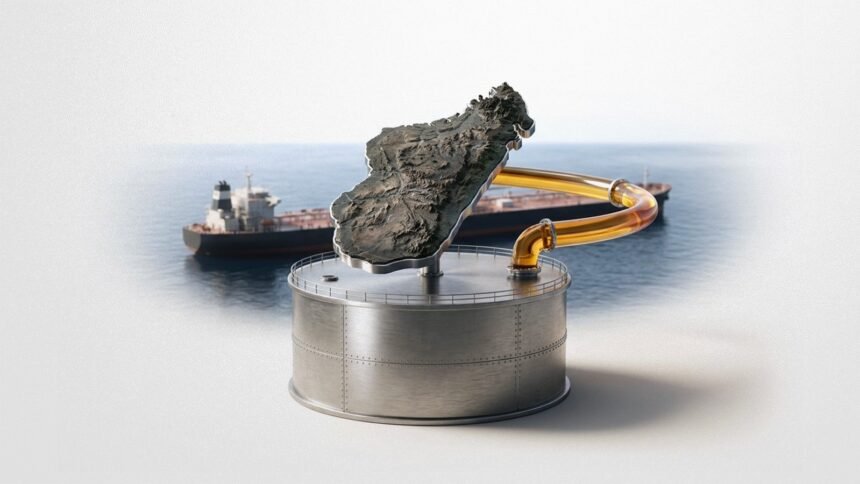
Across the African landscape, the question of who controls the physical infrastructure of energy import and distribution has become as consequential as the question of who controls the resources themselves, and Madagascar’s emergency diesel shipment this week is a compact case study in that structural contest. Facing an energy crisis triggered by disruptions linked to the war in the Middle East, Madagascar’s government bypassed the private operators that have historically managed fuel imports and instead negotiated directly for a 63,000-cubic-meter diesel cargo through a newly nationalized state procurement system. The maneuver, while narrowly framed as an emergency response, sits atop a much larger structural transformation: a National Assembly law that reforms the country’s downstream petroleum sector and shifts control of fuel imports from a consortium of private operators, including units of TotalEnergies and Vitol, to direct state authority. This is the broader continental pattern in miniature: a government asserting that genuine resource sovereignty requires control not merely of the resource itself but of the entire supply chain that delivers it to citizens, even at the cost of friction with established international commercial partners. Whether Madagascar’s nationalization experiment ultimately strengthens or destabilizes its energy security will offer an instructive test case for other African states weighing similar structural interventions.
A 63,000-Cubic-Metre Emergency Response
The State Procurement entity negotiated the diesel cargo that arrived in Madagascar this week with Nigeria’s Sahara Group and drew fuel sourced from Asia aboard a vessel positioned closest to Madagascar’s ports at the moment of crisis. Guillot Ramilison, chief executive of Madagascar’s state fuel procurement body, described the deal in explicitly emergency terms: “We were facing an emergency, so the company negotiated with the vessel that was closest and could be quickly rerouted to Madagascar.” That improvisational urgency reflects the acute severity of the shortage the shipment was meant to address, one significant enough that President Michael Randrianirina credited the cargo with ensuring the national power and water utility, Jirama, should face no further fuel constraints for the next six months. The six-month horizon Randrianirina cited is itself telling: it frames the shipment not as a one-off patch but as a bridge intended to carry the country’s essential utility infrastructure through the most acute phase of an emergency that began, formally, with April’s declaration of a nationwide state of emergency over fuel shortages.
Nationalizing the Downstream: Legislative Architecture Behind the Crisis
The diesel shipment cannot be understood outside the legislative transformation that made it possible: Madagascar’s National Assembly passed a law reforming the downstream petroleum sector and nationalizing fuel imports, displacing a system in which private operators had long managed the country’s supply chain. That structural shift represents a significant assertion of state authority over what had previously been a market functioning substantially outside direct government control, a move consistent with a broader pattern across resource-dependent African economies of governments seeking to reclaim strategic control over essential supply chains rather than relying on private intermediaries whose commercial incentives may not align with national emergency priorities. The timing, arriving amid an externally triggered energy shock rather than during a period of calm, means the reform is being stress-tested under precisely the conditions that would most severely expose any structural weaknesses in the new state-led system. Early evidence suggests that the government’s direct negotiating capacity, as illustrated by its ability to secure and reroute the Sahara Group cargo quickly, offers some validation of the nationalization thesis. However, a single successful emergency shipment does not yet constitute proof of durable, sustained institutional capacity.
TotalEnergies, Vitol, and the Friction of Displaced Incumbents
The private operators displaced by Madagascar’s new import framework, including units of TotalEnergies and global commodities trader Vitol, have registered concrete objections to how the nationalization has been implemented, alleging that the government requisitioned an oil-storage facility at the port of Toamasina in a manner that prevented them from unloading a separately arranged tanker carrying diesel, unleaded fuel, and kerosene. This friction illustrates the practical complications inherent in any rapid transition from private to state-controlled distribution: existing commercial infrastructure, storage capacity, port access, and logistics networks were built around the prior arrangement, and its abrupt reallocation inevitably generates disputes over who retains the right to use it during the transition period. TotalEnergies and Vitol’s grievance is not framed as opposition to Madagascar’s underlying sovereignty claim over its energy sector, a claim consistent with international norms around resource control, but as a specific complaint about the operational mechanics of the state’s requisition. How Madagascar’s government resolves this friction, whether through compensation, negotiated transition timelines, or continued unilateral requisition, will shape whether the private sector views future cooperation with the nationalized system as viable or adversarial.
Regional Ripple: Import-Dependent Economies and the Iran War’s Reach
Madagascar’s fuel emergency is a localized manifestation of a much wider vulnerability shared by import-dependent African economies now absorbing the secondary shocks of the war in the Middle East, a conflict thousands of kilometers away whose disruption to shipping routes and energy markets has cascaded directly into household and utility-level fuel access on the island. Countries without domestic refining capacity or diversified energy sourcing remain structurally exposed to precisely this kind of externally triggered emergency, regardless of how sound their fiscal management might otherwise be. Madagascar’s April state of emergency declaration was itself an acknowledgment that the shock had outpaced the existing private-sector-managed import system’s capacity to absorb it smoothly, which is part of what motivated the subsequent nationalization push. Other import-dependent African states watching the ripple effects of the Middle East conflict on energy markets will face similar structural choices in the months ahead: whether to reinforce existing private supply relationships with stronger contingency planning, or to pursue more direct state control, as Madagascar has now attempted. Neither path eliminates the underlying exposure to shipping and pricing disruptions from a distant war, but each carries distinct trade-offs in cost, speed, and institutional capacity.
Reclaiming the Supply Chain: Madagascar’s Energy Sovereignty as a Continental Signal
Madagascar’s diesel shipment, modest in isolation, carries outsized significance as a signal of how African governments are increasingly willing to restructure the physical architecture of resource distribution rather than simply negotiating harder within existing private frameworks. The approach carries real risk: nationalized systems require sustained institutional capacity, financing, and logistics expertise that private multinational operators had accumulated over years of operation, and Madagascar’s government will need to demonstrate that its state procurement entity can sustain the kind of rapid, effective response it managed this week on an ongoing basis, not merely as a one-time emergency maneuver. Yet the underlying impulse, that genuine sovereignty over strategic resources requires control over the mechanisms of their delivery, not merely their extraction or taxation, resonates far beyond Madagascar’s borders. As the Iran-linked energy shock continues to ripple through import-dependent African economies, other governments will be watching closely to see whether Madagascar’s gambit becomes a durable model of reclaimed energy self-determination or a cautionary illustration of the operational costs that accompany rapid structural nationalization.