




The Pan-African Paradigm of Security Sovereignty and Institutional Resilience
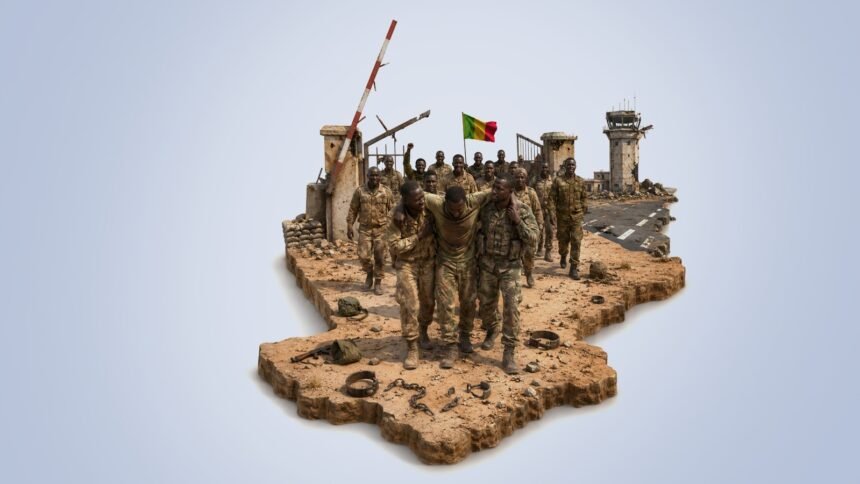
Across the African landscape, the Sahel has emerged as the sharpest test case for whether post-coup military governments can deliver on the security promises that justified their seizure of power in the first place. Mali’s announcement that 82 soldiers held prisoner since April have now been freed offers a rare note of operational success in a conflict that has otherwise ground on with grim persistence since the country’s army first confronted jihadist insurgency in 2012. But the recovery also illuminates the deeper structural bargain Mali’s junta has made since 2020 and 2021: the expulsion of roughly 15,000 French and United Nations troops in favor of Russian mercenary support, a wager that domestic and allied capability could substitute for the departed Western security architecture. The competing accounts offered by Mali’s army and the rebel Azawad Liberation Front over precisely when and how the soldiers were captured are themselves a small but telling illustration of how contested the facts of this war remain, even in its moments of apparent resolution. This is the broader continental pattern: security sovereignty asserted through the rejection of external tutelage, tested continuously against an insurgency that shows no sign of structural exhaustion. Reclaiming genuine control over Malian territory will require more than successful prisoner recoveries; it will require a security architecture capable of preventing captures in the first place.
The April Attacks and the Coalition Behind Them
The soldiers freed this week had been held since coordinated nationwide attacks on April 25, claimed jointly by the regional al-Qaeda affiliate Jama’at Nusrat al-Islam wal Muslimin, known as JNIM, and the Tuareg-led Azawad Liberation Front, or FLA. Those attacks struck Mali’s main airport and killed the country’s defense minister, a strike at the heart of the state’s security apparatus that underscored the insurgency’s capacity to reach beyond its traditional rural strongholds into the symbolic core of national authority. The same JNIM-FLA coalition claimed responsibility for a further wave of attacks on army positions across the country on July 4. This sustained campaign suggests a level of coordination between the jihadist and separatist factions that Malian authorities have historically sought to keep analytically and operationally distinct. The coalition’s willingness to strike simultaneously at national infrastructure and dispersed military positions reflects a maturing insurgent architecture, one capable of sustaining pressure across multiple fronts rather than concentrating force in a single theater. For a government whose legitimacy rests substantially on its security performance, the April and July attacks represented a direct challenge to the core premise of the post-coup order.
Discrepant Accounts and the Fog of Sahel Diplomacy
The Malian army’s statement framed Thursday’s release as the product of “rigorous planning and the coordinated mobilization of the capabilities required to carry out this type of operation,” language that positions the recovery as a vindication of the junta’s post-French security posture. Yet the FLA’s own statement told a materially different story, describing the release of 82 Malian soldiers captured across clashes spanning 2023 to 2026, a considerably broader timeframe than the army’s account, which ties the captives specifically to the April 25 attacks. Neither side has offered a public explanation for this discrepancy. This gap speaks to the broader opacity characterizing negotiations, if any occurred, and operational details in Mali’s fragmented conflict landscape. Whether the soldiers were freed through a negotiated exchange, a unilateral gesture by the FLA, or a genuine military operation as the army’s statement implies, remains unresolved in the public record, a structural information asymmetry that itself reflects how difficult it has become to independently verify claims from any of the war’s principal actors, state or insurgent alike.
JNIM’s Ascendance and the Limits of the Russian Security Bet
JNIM, founded in 2017 as an umbrella grouping of several existing jihadist factions, has steadily gained strength in the years since Mali’s military rulers pivoted away from Western security partnerships toward Russian mercenary support, a realignment initially justified as a path to more decisive counterinsurgency outcomes. That the group could still mount an attack capable of striking Mali’s main airport and killing a sitting cabinet minister in April, more than three years into this security realignment, raises pointed structural questions about whether the substitution of one set of external security partners for another has meaningfully altered the insurgency’s trajectory. This is not a uniquely Malian dilemma; it echoes across the broader Sahelian arc, where successive juntas in Burkina Faso and Niger have made comparable wagers on alternative security architectures, with similarly contested results on the ground. The prisoner release, whatever its true operational origin, does not resolve this deeper question of strategic efficacy; it merely provides the junta with a tangible, humanitarian success story to set against a security record that remains, by most independent measures, unresolved.
The Human Ledger: Families, Uncertainty, and the Politics of Waiting
Behind the competing institutional accounts of how and when the 82 soldiers were captured lies a simpler, more human ledger: months during which families in communities across Mali had no confirmed information about whether their sons, husbands, and brothers were alive, wounded, or already lost. That uncertainty, extending from the April 25 attacks through Thursday’s release, represents its own form of structural violence, one rarely captured in official statements focused on operational credit and strategic framing. The soldiers’ return offers those families a resolution that thousands of others across the Sahel’s various conflicts continue to be denied, a reminder that behind every statistic of captures, releases, and casualties sits an individual household’s prolonged uncertainty. Mali’s government has emphasized the planning and coordination behind the release, but the more immediate reality for the affected families was simply the end of an agonizing wait. That human dimension, easily lost within the geopolitical framing of security, sovereignty, and Sahelian realignment, remains the most immediate stake of this war for ordinary Malians.
Reclaiming the Sahel: Sovereignty as an Unfinished Security Project
The freeing of 82 Malian soldiers is, in the most immediate sense, a moment of relief for the families who had waited months without confirmation of their loved ones’ fate, and it deserves recognition on those human terms alone. But set against the broader arc of Mali’s war, now well into its second decade, the episode is a reminder that security sovereignty reclaimed on paper, through the expulsion of foreign troops and the assertion of independent counterinsurgency capacity, must eventually be proven on the ground through the prevention of attacks like those of April 25, not merely the recovery of their captives afterward. The structural test facing Mali’s government, and by extension the broader Sahelian bloc pursuing similar security realignments, is whether genuine institutional capacity can be built to match the sovereignty rhetoric accompanying the region’s break with its former Western partners. Until that capacity materializes in a durable reduction of JNIM and FLA operational reach, episodes like this week’s release will remain welcome but partial victories, humanitarian relief within a security architecture still very much under construction.