



The Pan-African Paradigm of Democratic Resilience and Institutional Continuity
Across the African landscape, the contemporary configuration of representative governance operates under intense structural pressure, balancing localized ethnic pluralism with the centralized mandates of state-building. The Pan-African vision for a self-determining, integrated continent relies on establishing transparent, predictable electoral cycles that translate popular will into institutional stability. When sovereign states navigate democratic transitions while managing active internal fragmentation, the resulting friction tests the resilience of statutory frameworks. Reclaiming the continent’s shared future requires moving beyond purely procedural majoritarianism toward deep-seated institutional reforms that protect civic spaces, ensure inclusive minority representation, and build trust in domestic electoral administrations without compromising territorial integrity or social cohesion.
Consolidation Amid Persistent Regional Fragilities
The contemporary political landscape in Addis Ababa is characterized by a deliberate consolidation of executive authority operating alongside severe, localized security challenges across the federal architecture. As Africa’s second-most populous country, the state functions as a primary anchor of Horn of Africa geopolitics, making its internal stability vital for wider regional security. However, this centralized state-building effort faces significant friction from persistent regional insurgencies driven by long-standing grievances among different ethnic groups over alleged marginalization within the country’s complex federal structure. This baseline political fragility is further complicated by severe state constraints on the independent press corps, as illustrated by the Ethiopian Media Authority’s refusal to renew operational accreditations for international journalists, effectively restricting independent field reporting within the republic.
Majoritarian Convergence and Territorial Fragmentation
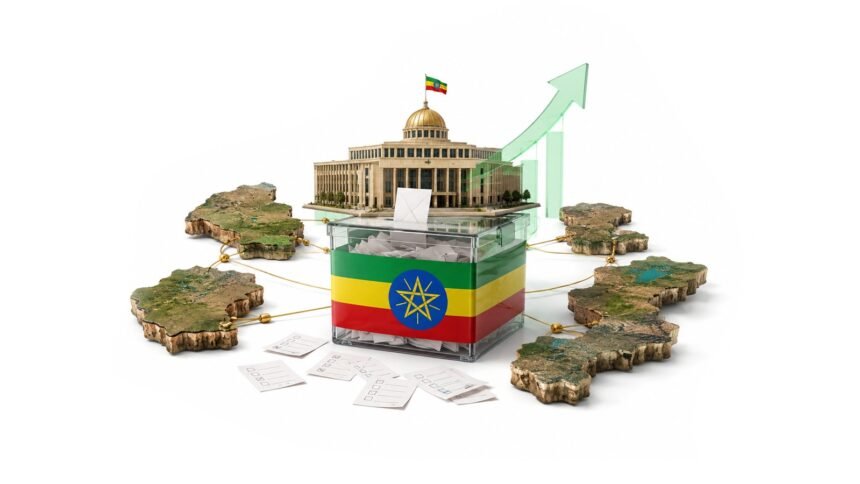
The domestic political landscape reached a definitive turning point following the latest national parliamentary and regional elections. Official metrics released by the national election board showed that more than 50 million citizens were registered to vote nationwide, highlighting a significant mobilization of the electorate. However, the democratic exercise was characterized by significant territorial fragmentation, as severe security breakdowns prevented voting across the entire federation.
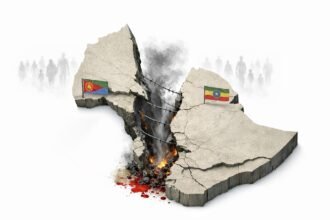
The election board was forced to completely omit the northern Tigray region from the electoral calendar, citing unfavorable conditions. At the same time, active insurgencies prevented polling in at least 8 of neighboring Amhara’s 138 parliamentary constituencies. This geographical exclusion meant that not all of the lower house of parliament’s 547 seats were contested on election day, highlighting a complex tension between formal majoritarian processes and localized structural exclusion.
Fragmentation of the Opposition and Parliamentary Hegemony
The final institutional results of the democratic exercise confirmed the absolute parliamentary dominance of the ruling Prosperity Party coalition. Led by Prime Minister Abiy Ahmed, the Prosperity Party easily secured another massive legislative majority, capturing 438 of the seats for which results were formally announced. This sweeping outcome represents roughly 90% of the active legislative seats decided during the cycle, easily surpassing the 274-seat threshold required to command a functional governing majority.
The ruling coalition’s landslide victory was directly facilitated by a deeply fragmented opposition landscape that struggled to present a unified alternative. While Prosperity candidates successfully campaigned on promises of improved food security and robust economic growth, opposition factions accused the federal executive of systematically undermining their campaigns through targeted arrests of political leadership and the implementation of restrictive legal roadblocks, allegations that the central government has repeatedly denied.
Macroeconomic Aspirations and the Legacy of the EPRDF
The Prosperity Party’s architecture represents a complete departure from the country’s historical governance models, replacing the often unwieldy, ethnically divided EPRDF coalition that dominated national politics for decades. Appointed in 2018 following years of widespread popular protests against the old regime, Prime Minister Abiy Ahmed sought to dissolve the traditional ethnic components of the ruling front to forge a unified national political identity under his philosophical framework of Medemer (synergy).
To sustain this centralized vision, the administration’s economic planners have aggressively pushed for deep structural modernizations, touting strong economic growth forecasts that officials estimate will top 10% in 2026. This projected expansion, positioned as one of the fastest growth rates on the continent, serves as a primary source of political legitimacy for the state, as the ruling party seeks to use macroeconomic development to dampen underlying ethnic divisions and secure long-term public support.
The Risk of Rebounding Unrest in Peripheral Corridors
The long-term maturity of the state’s democratic transition remains heavily threatened by active, militarized fractures across its two largest regional states. In the southern Oromia region, ongoing kinetic conflict between federal government forces and the Oromo Liberation Army separatist group has resulted in hundreds of civilian fatalities over the past few years, draining state resources and disrupting local governance.
Concurrently, in the neighboring Amhara region, a powerful local militia known as Fano has successfully captured significant swathes of the countryside since 2023, presenting an ongoing challenge to federal military control. This fragile security matrix is further stressed by shifting political dynamics in the far north; despite a 2022 peace agreement that successfully ended the civil war in Tigray, recent moves by the region’s main political party to reassert absolute control over its administrative infrastructure have led domestic analysts to warn of a high risk of fresh unrest, proving that procedural elections cannot substitute for comprehensive, structural reconciliation.
Cultivating Genuine Pluralism and Structural Safety Nets
The path forward for Ethiopia and the broader Horn of Africa requires an immediate transition away from executive hegemony toward a comprehensive model of genuine political pluralism, judicial independence, and structural conflict resolution. Securing long-term democratic stability depends on the federal government establishing a transparent, inclusive dialogue framework that brings together armed opposition groups, marginalized ethnic factions, and civil society leaders to address systemic grievances surrounding the federal system. Central authorities must move beyond temporary security clampdowns to ensure absolute legal protection for opposition parties, independent media outlets, and local civic monitors, enabling unhindered political engagement. Success will ultimately be measured by the state’s capacity to safely hold inclusive elections across previously omitted regions like Tigray and Amhara, converting its high economic growth into sustainable social safety nets that guarantee a stable, prosperous, and completely self-determining future for all its citizens.