
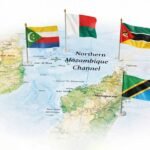




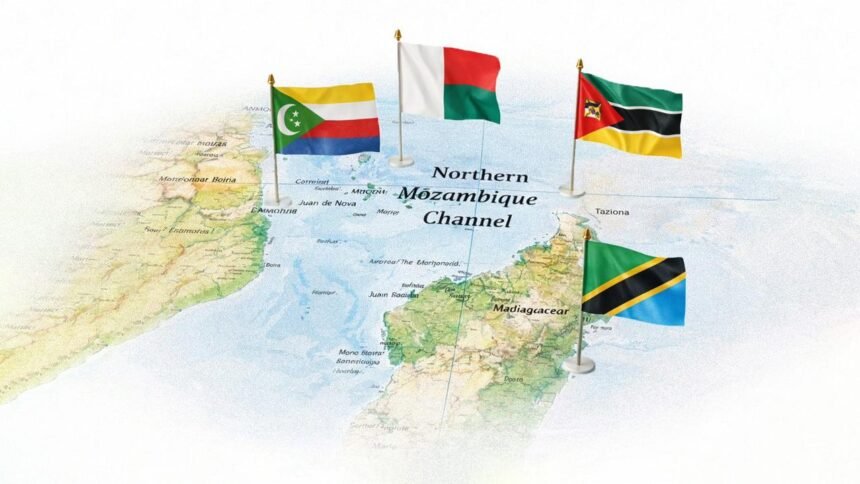
Four East African nations have been honored by the United Nations for an unusually ambitious bid to rescue one of the planet’s most important marine nurseries: the Northern Mozambique Channel.
Comoros, Madagascar, Mozambique, and Tanzania have been jointly recognized as a World Restoration Flagship for their work to manage, protect, and revive nearly 87,200 hectares of interconnected land and seascapes in this coral-rich stretch of the western Indian Ocean, often described as the “seedbed and nursery” of the entire basin.
The designation, awarded on June 11, 2025, during the third United Nations Ocean Conference in Nice, France, places the initiative among a small group of large-scale restoration efforts showcased under the UN Decade on Ecosystem Restoration, which runs from 2021 to 2030.
A Nursery for the Indian Ocean
The Northern Mozambique Channel lies between Madagascar and the African mainland, with the Comoros archipelago at its center, and contains roughly 35 percent of the Indian Ocean’s coral reefs.
Those reefs support rich marine biodiversity and underpin coastal fisheries, while mangrove forests and seagrass meadows buffer communities from storms, stabilize shorelines, and store significant amounts of carbon.
Agricultural runoff, overfishing, rapid coastal development, and the impacts of climate change have degraded parts of this ecologically and economically vital region. Warmer waters have fueled coral bleaching, and eroding coasts have left villages more exposed to waves and storm surges.
“The climate crisis, unsustainable exploitation practices, and the shrinking of natural resources are affecting our blue ecosystems, harming marine life, and threatening the livelihoods of dependent communities,” QU Dongyu, Director-General of the UN Food and Agriculture Organization, said as the new flagships were announced.
“These new World Restoration Flagships show that halting and reversing degradation is not only possible, but also beneficial to planet and people.”
Restoring “Blue” and “Green” Forests
In response, the four countries, working with the UN Environment Programme, the Nairobi Convention, the World Wide Fund for Nature, Wetlands International, the Wildlife Conservation Society, and other partners, have launched a coordinated push to repair what has been lost and protect what remains.
Local communities are already restoring “blue forests” such as mangroves and seagrass, alongside “green” forests on land, to rebuild the links between terrestrial and marine habitats.
On the coast and offshore, residents and conservation groups are replanting mangroves, nurturing seagrass meadows, rehabilitating coral reefs, and tightening fisheries management to allow fish populations to rebound. These habitats act as nurseries for fish and natural seawalls for villages, while locking away carbon in their soils and root systems.
On land, authorities and community organizations are restoring forests and establishing ecological corridors so wildlife can move and ecosystems can better withstand climate and human pressures.
At selected sites, turtle nesting beaches are being shielded from encroachment and disturbance, seaweed-based livelihoods are being developed, and fishers are adopting more sustainable practices.
The initiative builds on years of regional cooperation under the Nairobi Convention, which coordinates protection of the Western Indian Ocean, and the African Forest Landscape Restoration Initiative. What is new is the scale and the deliberate effort to knit scattered projects into a single, transboundary seascape plan.
“In the past, we treated the ocean as infinite,” Inger Andersen, Executive Director of the UN Environment Programme, said. “After decades of taking the ocean for granted, we are witnessing a great shift towards restoration.
But the challenge ahead of us is significant, and we need everyone to play their part. These World Restoration Flagships show how biodiversity protection, climate action, and economic development are deeply interconnected.”
Climate Stakes Measured in Millions of Tons
The climate stakes are immense. Madagascar’s mangrove forests alone store more than 300 million tons of carbon dioxide equivalent, according to research cited by restoration agencies, roughly comparable to the annual electricity use of more than 62 million homes in the United States.
Losing these systems would release large quantities of greenhouse gases and strip coastal communities of natural defenses against cyclones and erosion.
Across the Western Indian Ocean, mangroves, seagrass beds, and salt marshes, often grouped as “blue carbon” ecosystems, store a substantial fraction of the region’s yearly fossil fuel emissions and are central to national climate pledges.
By protecting existing mangroves and expanding them in suitable areas, the four countries hope to strengthen both their defenses against climate impacts and their case for international climate and biodiversity finance.
The Northern Mozambique Channel initiative currently accounts for tens of thousands of hectares under active or assisted restoration. It aims to scale that effort up dramatically to about 4.85 million hectares by 2030.
Reaching that goal will depend on sustained funding, robust science and monitoring, and enduring support from the coastal communities whose lives are most directly affected.
Promises of Jobs and Higher Incomes
UN agencies and their partners present the flagship not only as an environmental effort but also as an economic strategy for some of East Africa’s poorest coastal regions.
With adequate financing, they project that restoration and improved management could increase household incomes by about 30 percent in targeted communities, create more than 2,000 jobs, and seed at least a dozen community-based enterprises by the end of the decade.
Those jobs are expected to range from mangrove nursery workers and reef monitors to eco-tourism guides, seaweed farmers, and small-scale processors of marine products.
At several sites, women’s cooperatives are emerging around activities such as seaweed drying and the production of value-added coastal products, helping diversify incomes and reduce pressure on overfished stocks.
Project leaders say restoration plans are being drawn up with coastal communities rather than imposed on them. Indigenous and local knowledge, including traditional seasonal fishing closures, customary marine tenure, and taboos protecting sacred groves, is being incorporated into formal management strategies.
The UN argues that the flagship status will help attract the technical support and financing needed to turn these projections into reality.
A Template for a Crowded, Warming Ocean
Beyond East Africa, the Northern Mozambique Channel is seen as a test of whether large marine ecosystems can be jointly managed amid climate stress and competing ocean uses.
The region overlaps with busy shipping routes, offshore gas developments, and expanding coastal cities, making it a microcosm of the trade-offs now playing out in seas from the Caribbean to the South China Sea.
By linking coral reef rehabilitation with mangrove restoration, fisheries reform, and new livelihood options, the four-country effort aims to show that protecting biodiversity can underpin a more resilient form of economic growth.
The flagship joins a growing list of restoration projects recognized under the UN Decade, including initiatives in Mexico and Spain announced alongside it in 2025.
To succeed, the Northern Mozambique Channel Initiative will have to sustain political will across four governments, manage powerful commercial interests, and keep coastal communities at its center.
If it does, this nursery of the Indian Ocean could become a proof of concept that restoring damaged seas is not just environmental repair, but a way to secure livelihoods and futures along one of the world’s most vulnerable coasts.


