





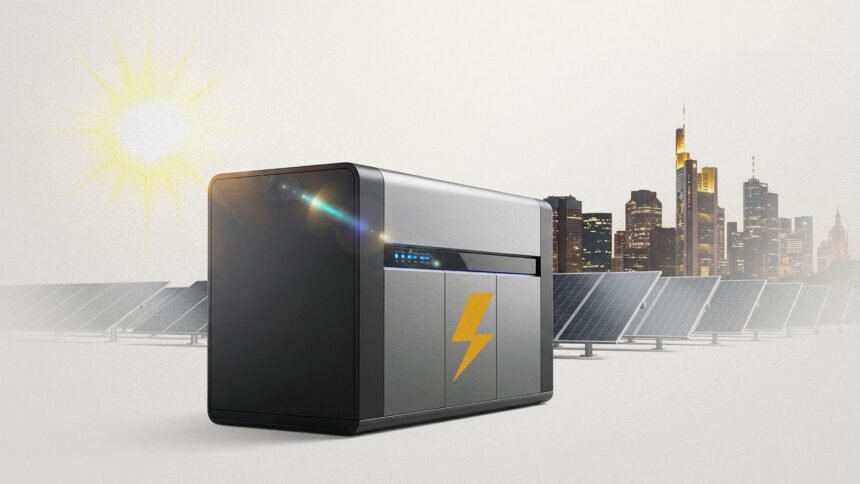
Battery and energy storage turned into a traveling roadshow for South Africa’s power sector this March. In Strand, a coastal town in the Western Cape, engineers and entrepreneurs gathered at Battery andEnergy Storage for Africa 2026, a two‑day conference focused on how to store electricity cheaply and safely.
As the final sessions wound down on March 26, some speakers were already planning their next stop: Johannesburg’sGallagher Convention Center in Midrand, where Solar & Storage Live Africa was due to open the following morning for three days of exhibitions and panels billed as the continent’s largest solar and storage show.
This story matters now because South Africa’s scramble to pair solar with storage sits at a pivotal moment in Africa’s wider struggle to turn rolling blackouts and climate pressure into a platform for home‑grown clean‑energy industries. Together, the two events sketched a professional snapshot rather than a marketing slogan:
South Africa and its neighbors are trying to turn chronic power shortages and intensifying climate risks into an opportunity to build a different kind of energy system, centered on rooftop solar, utility‑scale projects, and a fast‑growing fleet of batteries designed to keep electricity flowing after sunset.
Background and Stakes
Battery and Energy Storage for Africa 2026, often referred to by its platformBEASFA, is a niche but fast‑growing event.
Organizers describe it as “the only conference in Africa dedicated exclusively to the lithium‑ion battery industry and its value chain,” designed to connect manufacturers, integrators, installers, financiers, and researchers. The 2026 edition was held on March 25–26 at the Ocean Breeze Hotel and Conference Center in Strand.
Its program material emphasizes that the high energy density of lithiumion batteries has become “a cornerstone in contemporary portable and stationary electrical energy storage,” while warning that this “paradigm shift demands a fresh set of skills and a multidisciplinary approach,” encompassing thermalrunaway management and system integration.
In South Africa, organizers note, adoption of lithium‑ion systems is already “gaining momentum on both residential and commercial fronts,” as households and businesses install backup systems to cope with outages and protect revenues.
Roughly 1,400 kilometers north by road, Solar & Storage Live Africa ran from March 27 to 29 at Gallagher Convention Center in Midrand, part of the Johannesburg metropolitan area. T
he 2026 show was billed as Africa’s largest renewable‑energy exhibition, drawing more than20,000 attendees, over 650 exhibitors, and around 200 speakers, with sessions spanning residential, commercial, and industrial, and utility‑scale solar and storage projects, as well as electric vehicles and the wider energy transition.
Terrapinn, the organizer, describes it as a free‑to‑attend expo and conference showcasing “the technologies at the forefront of the transition to a greener, smarter, more decentralized energy system.”
The stakes reach far beyond the conference halls. South Africa’s power system has been battered by years of load‑shedding, the rolling blackouts caused by an aging coal fleet, under‑investment, and governance failures, with small and medium‑sized firms reporting severe losses and rising backup‑power costs.
At the same time, the government has pledged deeper emissions cuts under its updated climate commitments and is pursuing a multibillion‑dollar Just Energy Transition Investment Plan with international partners for the period 2023–2027.
How quickly it can deploy solar and storage at scale will shape not only its economic competitiveness and coal phase‑down, but also whether the next phase of investment is anchored in local industry or imported hardware.
Ground‑Level Realities
Inside the Strand venue, the sessions were steeped in chemistry and standards but grounded in ordinary frustrations. Installers compared notes on clients who had cycled through multiple generations of backup:
first small inverters and lead‑acid batteries, then larger lithium‑ion systems that could keep a small factory, clinic, or supermarket running through stage‑six load‑shedding. For many, the battery stack sitting in a storeroom had become as critical an infrastructure component as the grid connection itself.
One engineer described a shift in demand that reached well beyond affluent suburbs along the False Bay coastline. Orders were now coming from small shops in townships and from rural clinics, often financed through microloans or community savings schemes rather than bank credit.
For those customers, he suggested, storage was no longer a lifestyle choice; it was the line between closing early and staying open when the voltage sagged, and the lights went out.
The BEASFA program highlighted both opportunities and risks, with sessions on cell chemistry, safety standards, recycling, and local manufacturing prospects.
Organizers stressed that South Africa’s “proactive stance positions it to lead the charge in advancing this technology throughout the African continent,” while warning that new skills will be needed to prevent fires, handle end‑of‑life batteries, and integrate storage into often fragile local grids.
A flagship report from the South African Energy Storage Association reaches similar conclusions, arguing that training for installers, recyclers, and grid operators is now as important as adding new gigawatt‑hours.
In Midrand, the mood at Solar & Storage Live Africa was closer to a trade fair. Chinese, European, and South African brands lined the halls with panels, inverters, battery racks, smart meters, and software dashboards. At the same time, crowds drifted between utility‑scale storage containers and roof‑mount displays.
A start‑up from Cape Town pitched a modular battery unit designed for shipping‑container clinics; a multinational displayed a grid‑scale storage system intended to stabilize large solar farms as more variable generation comes online.
On stage, speakers moved from high‑level strategy to engineering details, debating grid codes, wheeling agreements, project finance structures, and the politics of community benefit‑sharing.
For developers from Kenya, Nigeria, Zambia, and beyond, the Johannesburg show doubled as a classroom and a marketplace. Some were looking for off‑the‑shelf solutions they could adapt to mini‑grids in informal settlements; others wanted partners for utility‑scale tenders or corporate power‑purchase agreements. Between sessions, conversations turned to permitting delays, foreign‑exchange risk, and the difficulty of setting tariffs that recover costs in markets where many end‑users can barely afford current bills. In corridors of bright banners and neat demo units, the deeper reality was that access to capital and policy certainty still matter as much as any new piece of hardware.
Policy Fault Lines
The Strand and Midrand gatherings crystallized several fault lines in how South Africa —and much of the continent —will pursue its clean‑energy transition—one concerns who benefits from the rapid spread of distributed solar and storage.
Wealthier households and businesses have been quickest to install rooftop systems and battery banks, effectively creating a two‑tier power system in which those with means rely less on the public grid.
At the same time, poorer customers are left more exposed to outages and future tariff hikes. Regulators are only beginning to grapple with how to manage that shift without hollowing out utilities’ revenue base or deepening energy inequality in cities already marked by sharp spatial divides.
Another debate centers on localization. At BEASFA, panelists asked whether South Africa could move beyond importing battery cells and packs to assembling and, eventually, manufacturing key components locally.
They pointed to the country’s existing automotive and metals industries and its reserves of manganese and vanadium as potential anchors for a battery‑value‑chain strategy, echoing a World Bank assessment that South Africa could play a significant role in global storage markets by 2030.
Yet speakers also acknowledged intense global competition, the capital-intensive nature of gigafactories, and the risk that Africa ends up supplying minerals while value is added elsewhere.
In Midrand, similar questions surfaced around solar panels, inverters, and mounting systems. Some industry voices argued that the priority should be rapid deployment, even if most hardware is imported, to cut emissions and ease load‑shedding as quickly as possible.
Others pushed for stronger industrial policy and regional coordination to capture a greater share of the value chain, pointing to emerging efforts in countries like Morocco and Egypt to build local manufacturing capacity for renewables.
Grid stability formed a third line of tension. Engineers at both events stressed that large‑scale adoption of variable renewables and distributed storage changes how power systems operate, and that without updated grid codes, better data, and substantial investment in transmission and distribution, a surge in rooftop solar and batteries could complicate an already fragile network.
Similar concerns are now emerging in Kenya and Ghana as behind‑the‑meter solar spreads, underlining that integrating new technology into old grids is as much an institutional challenge as a technical one.
Despite the unresolved debates, the direction of travel appears set. A decade ago, it would have been hard to imagine Africa hosting a conference dedicated solely to batteries in Strand and a mega‑expo on solar and storage in Midrand in the same week. The question is no longer whether solar and storage will be part of the energy mix, but how quickly they can scale, how affordable they will be, and who will control and benefit from the new systems that emerge.
As delegates packed up banners and demo units at the end of the week, South Africa’s grid problems were far from solved. Still, the scenes from Strand’s battery‑focused panels and Midrand’s crowded exhibition halls suggested that the rules of the region’s power game are beginning to shift, one panel, one inverter, and one battery pack at a time.