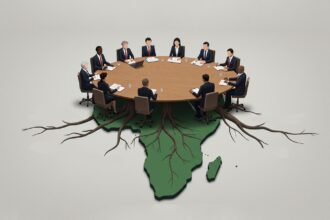




On the last day of March, with storm clouds building over Abuja’s central district, delegations from across Africa filed into a conference room at the African Union’s host venue in Nigeria’s capital.
meplates in front of them carried titles that rarely make headlines, commissioner of revenue authority, director of tax policy, head of financial intelligence unit. Still, the agenda was unusually broad: how to pay for the continent’s development largely with its own money.
For three days, from March 31 to April 2, the Fifth Session of the Sub‑Committee on Tax and Illicit Financial Flows has brought together tax officials, finance experts, and civil‑society observers under a telling theme: “Building the Africa We Want Through Tax and Fiscal Policy Reforms to Support Economic Growth and Domestic Resource Mobilization.”
Convened by the African Union’s Economic Development, Tourism, Trade, Industry and Minerals Department, in collaboration with the Nigeria Revenue Service and partners such as the African Tax Administration Forum and the United Nations Economic Commission for Africa, the meeting is a dense policy dialogue on a single question:
can African countries reform their tax systems and clamp down on illicit financial flows fast enough to fund their own priorities, from roads and power grids to health systems and climate resilience, without sliding deeper into debt?
This story matters now because African governments are trying to turn years of political talk about “domestic resource mobilization” into concrete tax rules and enforcement mechanisms amid rising debt costs and tighter global scrutiny of illicit flows.
Why Africa’s Tax Moment Matters Now
The Sub‑Committee on Tax and Illicit Financial Flows sits under the African Union’s Specialized Technical Committee on Finance, Monetary Affairs, Economic Planning and Integration, which brings together finance ministers and central‑bank governors to steer economic policy.
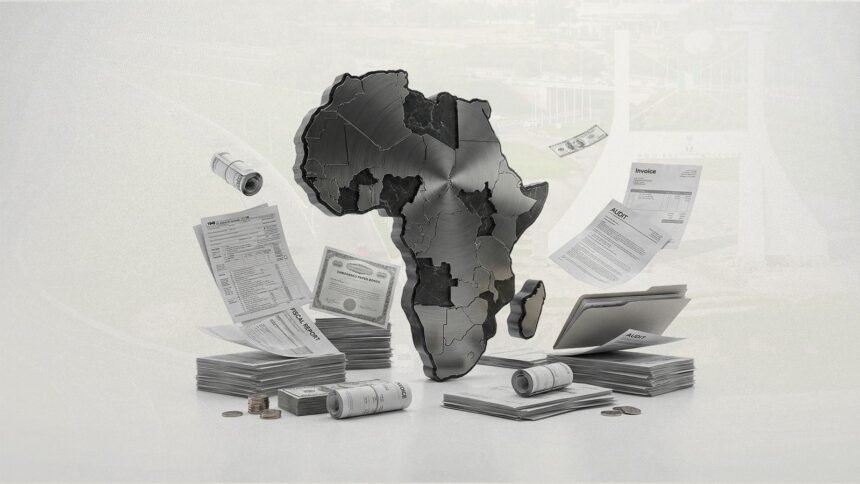
It was created in the wake of the High Level Panel on Illicit Financial Flows from Africa, chaired by former South African president Thabo Mbeki, whose 2015 report estimated that the continent loses at least 50 billion dollars a year through tax evasion, trade misinvoicing, corruption and other illicit channels, a figure that some later analyses suggest may understate the scale of the problem.
The Fifth Session in Abuja builds on recommendations from previous meetings of the Specialized Technical Committee and earlier sittings of the Sub‑Committee, which have pushed tax and illicit‑flow issues higher up ministerial agendas.
According to the official concept note, this week’s meeting is being convened “in direct response to the mandate of African Ministers of Finance and Central Bank Governors to elevate tax policy and fiscal reforms as strategic levers for financing Agenda 2063 and securing Africa’s economic future.
Behind the formal language is a familiar set of pressures. Many African governments are servicing high or rising levels of public debt after years of overlapping shocks, including the pandemic, commodity price swings, and tighter global monetary conditions.
At the same time, they face obligations to invest in infrastructure, social protection, and climate adaptation, with external financing more expensive and less predictable than a decade ago. Domestic resource mobilization has become a refrain in African Union communiqués and national budget speeches, but turning that refrain into reliable revenue has proved difficult.
The agenda in Abuja is both broad and concrete. Delegates are expected to take stock of progress in implementing earlier commitments, advance coordinated continental responses to combat illicit financial flows and base erosion and profit shifting, and drive reforms in tax administration, digitalization, and legislation to improve efficiency and compliance.
They are also tasked with helping consolidate Africa’s position in global tax negotiations, including ongoing United Nations talks on a new framework for international tax cooperation, so that the continent enters those forums with clearer priorities and a more unified voice.
Ground‑Level Realities
Although the meeting is framed in terms of strategies and frameworks, the issues on the table have direct consequences for budgets and citizens. In the corridors outside the plenary, a delegate from a small coastal state describes how a recent audit of transfer pricing in the mining sector uncovered systematic profit shifting by a multinational company, which had been moving earnings into a low‑tax jurisdiction through intra‑group transactions.
“We are talking about tens of millions of dollars that could have gone to our budget,” he says, noting that his administration received technical help from bodies such as the African Tax Administration Forum to challenge the arrangements and issue new tax assessments.
Others point to the persistence of trade misinvoicing — understating or overstating the value of goods on customs declarations to move money illicitly. The High-Level Panel and subsequent studies have long flagged mispricing in sectors such as oil, minerals, and agriculture as a major channel for capital flight from Africa.
For customs and tax officials in Abuja, discussions about data sharing, risk‑based audits, and digital tools are not abstract; they are about whether their agencies will have the capacity to spot red flags in real time rather than years later, when the money is gone.
Civil‑society representatives at the session add another layer. Tax Justice Network Africa, which co‑developed an Anti‑Illicit Financial Flows Policy Tracker with the AU Commission and ATAF, has documented the slow pace of implementation of anti‑IFF commitments in several countries and the gap between high‑level rhetoric and day‑to‑day enforcement.
“We see good strategies on paper,” one advocate says on the sidelines, “but without strong institutions and political will, the money continues to leak out.” The tracker itself, now endorsed by AU ministers, is meant to turn that critique into a monitoring tool for both officials and watchdogs.
At the same time, there are signs of progress. ATAF has reported that its technical assistance on transfer pricing and tax investigations has helped African countries assess billions of dollars in additional tax liabilities and collect a significant share of that in revenue across a group of member states over recent years.
In absolute terms, those amounts are modest relative to broader estimates of illicit outflows, but in budget terms, they can translate into new classrooms, health‑worker salaries, or grid upgrades. In a city like Abuja, where new flyovers coexist with under‑resourced clinics and schools on the outskirts, the stakes are visible in everyday infrastructure gaps as much as in spreadsheets.
Policy Fault Lines
Inside the plenary, presentations and draft decisions reflect several tensions in the continent’s tax agenda. One is the balance between national sovereignty and continental coordination. In Abuja, officials are expected to discuss two key strategies: an African Union Strategy on Tax and an AU Strategy on Fighting Illicit Financial Flows, designed to align national reforms with a shared continental vision without dictating one‑size‑fits‑all laws.
Advocates argue that without some convergence, for example, on how to tax digital services, negotiate treaties, or exchange information, African countries risk being played off against one another by multinational companies and powerful trading partners.
Another debate concerns global tax governance. In recent years, African states and allies have successfully pushed for the United Nations to establish a process toward a Framework Convention on International Tax Cooperation, challenging the long‑standing dominance of the OECD in setting global tax rules.
The Abuja meeting is framed, in part, around the goal of “consolidating Africa’s unified position in global tax negotiations,” so that the continent’s interests in issues like minimum corporate taxes, allocation of taxing rights, and digital taxation are not sidelined in technical drafting rooms far from Lagos, Nairobi, or Accra. For many in the room, the underlying question is whether Africa can help write new rules, rather than merely adjust to them after the fact.
Illicit financial flows remain a third pillar of the conversation. While the headlines often focus on spectacular scandals, the Sub‑Committee’s background notes emphasize systemic fixes: strengthening beneficial‑ownership registries, improving coordination among tax administrations, financial‑intelligence units, and prosecutors, and using digital systems to track high‑risk transactions without overburdening compliant taxpayers.
The Anti‑IFFs Policy Tracker is cited as one tool to monitor whether national institutions are actually closing loopholes or simply producing new policy documents. In this sense, the technical details of data fields and inter‑agency protocols are where high‑level commitments either become real or dissolve.
The session’s expected outcomes, according to AU materials, include stronger capacity in member states to implement effective tax reforms, more coordinated African positions in global forums, and practical measures to curb illicit flows and boost domestic resource mobilization in line with Agenda 2063.
Whether those promises translate into tangible change will be measured over the years through budget lines, tax‑to‑GDP ratios, and enforcement statistics, rather than in closing communiqués.
For now, the scene in Abuja, a roomful of tax specialists debating treaty clauses and data systems, illustrates a quieter side of Africa’s development story, in which the politics of who pays for “the Africa we want” is worked out through tax codes and information‑sharing agreements.
In a continent where estimates of illicit financial outflows still run to tens of billions of dollars a year, the success or failure of gatherings like the Fifth Session of the Sub‑Committee on Tax and Illicit Financial Flows will help determine whether Africa’s next wave of development is financed primarily from within or once again hinges on external creditors and conditional support.
The unanswered question, as delegates leave Abuja for the capitals of Dakar to Dar es Salaam, is whether the momentum on display in conference halls can survive domestic politics, vested interests, and the daily pressures of governing.