




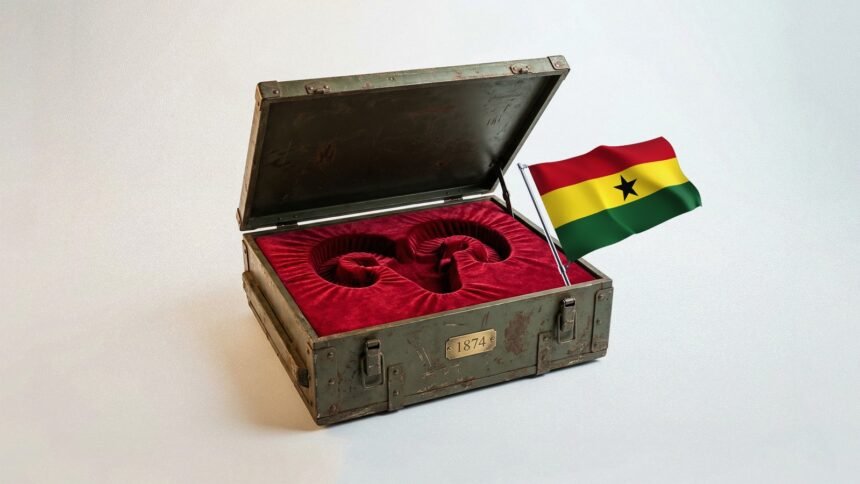
In the shadowed confines of Wiltshire’s Larkhill barracks, a gilded ram’s head, looted from Kumasi’s royal palace in 1874, embodies the enduring scars of empire, its spiraling horns a silent testament to Asante craftsmanship and resilience. As Ghana presses for repatriation from institutions such as the British Museum, this artifact’s seclusion sparks calls for transparency, weaving personal heritage into broader narratives of restitution and renewal.
Pan African Resonance: Treasures Binding Continents
The ram’s head resonates within Pan-African dialogues on looted heritage, linking Ghana’s Asante legacy to continent-wide efforts to reclaim it. Echoing the DRC’s archival battles with Belgium’s Tervuren Museum or Nigeria’s quest for the Benin Bronzes, these artifacts underscore shared colonial wounds. Ghana’s 2024 receipt of 32 loaned pieces from British institutions highlights a growing momentum, in which Asante gold, symbols of royal authority, mirrors Nubian relics in Egypt’s Grand Egyptian Museum. This resonance fosters unity, as African nations collaborate on digital archives and exhibitions, transforming isolated treasures into bridges for cultural exchange and collective pride.
Ghana-Ashanti Legacy: Crafted Symbols of Sovereignty
Ghana’s Asante heritage pulses through artifacts like the ram’s head, a masterwork of gold casting that once adorned Kumasi’s palace, embodying spiritual and political might. Forged in the 19th century, its intricate form, nineteen centimeters wide, with elegant spirals, reflects Asante metallurgists’ prowess, akin to Akan gold weights that symbolize proverbs and power. Looted amid Anglo-Asante conflicts, it joins over 200 regalia pieces dispersed globally, many of which are held in British collections. Ghana’s Manhyia Palace Museum, bolstered by recent loans, reclaims these symbols, honoring ancestors while educating youth on Asante’s empire-building era.
British Colonization & Looted Treasures: Echoes of Imperial Plunder
The shadow of British colonization looms over looted Asante treasures, with the ram’s head exemplifying the 1874 sacking of Kumasi by forces including the Royal Artillery. Amid flames and dynamite, soldiers seized regalia, gold swords, ceremonial caps, and badges, and sold the spoils to fund campaigns. The ram, deemed the “best trophy” in contemporary reports, landed in the regiment’s mess, its seclusion for “security reasons” drawing irony and ire. This mirrors broader plunder, as seen in the British Museum’s holdings from 1896 expeditions, where artifacts were auctioned and archived, perpetuating unequal access and historical erasure.
Enduring Legacy: Artifacts Shaping Modern Identities
The ram’s head’s legacy endures, shaping Ghanaian identities amid debates over global restitution. As institutions like the Victoria and Albert Museum loan pieces, including peace pipes and soul-cleansing discs, Asante communities reclaim narratives of resistance. This legacy parallels Kenya’s library revivals or South Africa’s Wild Coast eco-tourism, where heritage fuels empowerment. In Ghana, these treasures inspire contemporary artisans, blending traditional casting with modern designs, ensuring Asante ingenuity influences Africa’s cultural renaissance.
Tourism Horizons: Luring Visitors Through Repatriated Riches
Tourism horizons brighten with repatriated Asante riches, drawing pilgrims to Manhyia Palace, where loaned artifacts ignite cultural voyages. The ram’s head, if accessible, could amplify this, echoing Egypt’s Red Sea developments or Nigeria’s Detty December festivities. Ghana envisions heritage trails linking Kumasi’s palaces to coastal forts, blending history with eco-adventures, boosting economies while educating on colonial legacies.
National Pride: Reclaiming Symbols for Sovereign Futures
National pride swells as Ghana reclaims Asante symbols, with the ram’s head a focal point in the narrative of sovereignty. Amid refusals like the Royal Artillery’s, Ghana’s diplomatic gains, and permanent returns from the Fowler Museum, affirm resilience. This pride fuels youth engagement, mirroring Manchester’s crowdsourced histories, positioning artifacts as emblems of unity and forward vision.