




As traditional development finance retreats, the UAE and Saudi Arabia are emerging as pivotal backers of Africa’s clean energy ambitions. Whether they can help deliver the extra $133 billion a year the continent needs remains an open question.
Africa’s clean energy future may hinge as much on decisions taken in Abu Dhabi and Riyadh as on those taken in Abuja or Nairobi. As traditional development finance recedes and public debt burdens mount, Gulf countries, led by the United Arab Emirates and Saudi Arabia, are stepping forward as major funders of solar, wind, and hydrogen projects across the continent, raising hopes that they could help plug a vast investment gap.
The International Energy Agency’s 2024 report “Clean Energy Investment for Development in Africa” finds that total annual energy investment on the continent must rise to almost 240 billion dollars by 2030, with around three‑quarters flowing into clean energy to align with development and climate goals.
Within that, Africa will need an estimated 133 billion dollars each year, specifically for clean energy technologies — from renewables and grids to access solutions and emerging industries — to achieve universal access and meet national climate pledges. Today, actual clean energy spending is only a fraction of that level, and roughly 600 million Africans still lack access to electricity.
Background and Stakes
Despite being home to nearly one‑fifth of the world’s population, Africa attracts only about 2 percent of global clean energy investment, the IEA notes. Its Sustainable Africa Scenario, first set out in the 2022 Africa Energy Outlook and updated in the 2024 clean energy investment report, describes a pathway in which Africa achieves universal access to modern energy by 2030 and fulfills its announced climate pledges, but only if investment more than doubles this decade and shifts decisively toward clean energy and local demand.
Multilateral development banks and climate funds have pledged to scale up support. Yet disbursements remain far below needs, and concessional finance alone cannot mobilize the trillions of dollars in private capital required. That has created an opening for Gulf institutions, from sovereign wealth funds to national utilities and private conglomerates, to position themselves as long‑term partners in Africa’s energy transition.
A February 2026 report from the Clean Air Task Force, “The Role of Middle East Leadership in Clean Energy Infrastructure Funding,” concludes that government and semi‑government entities from the UAE and Saudi Arabia have announced more than 175 billion dollars in clean energy investments and commitments in Africa since 2010, with the vast majority announced after 2022. Much of this capital is structured as direct project investment rather than sovereign lending, potentially reducing debt burdens while enabling larger, faster‑moving infrastructure projects.
“As traditional sources of development finance retreat, countries in the Middle East are emerging as some of the most influential actors shaping Africa’s clean energy and industrial future,” the CATF report states. It argues that if Gulf capital is deployed with a long‑term, system‑wide approach, it “could help close Africa’s power gaps, support economic development, and advance global climate goals.”
Human Stories and Real‑World Examples
In Egypt’s desert, Saudi‑backed ACWA Power has partnered with local authorities to develop large solar and wind complexes that feed into the national grid and underpin early green hydrogen projects aimed at export markets, according to the CATF analysis. In Morocco and South Africa, Gulf capital is helping finance utility‑scale renewables to stabilize domestic supply while anchoring new industrial ventures, from green steel to fertilizer production.
Farther south and east, Emirati entities such as Masdar and the Abu Dhabi Fund for Development have invested in solar, wind, geothermal, and green hydrogen projects across North, East, and Southern Africa.
Supporters say these deals, when designed with strong local participation, can reduce reliance on diesel generators, create construction and maintenance jobs, and lower power costs for households and small businesses.
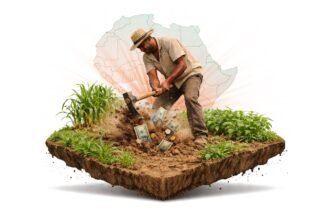
Yet the benefits are unevenly distributed. Much of the Gulf‑backed investment has flowed to a handful of better‑capitalized markets, including Egypt, Morocco, and South Africa, while countries with the deepest electricity access gaps, particularly in parts of West and Central Africa, remain largely left behind
. Analysts quoted in regional coverage of the CATF report warn that without a deliberate effort to diversify, Gulf capital risks “reinforcing existing inequalities in Africa’s energy landscape” even as it accelerates clean energy in more established markets.
Policy, Debate, and Expert Views
The CATF report identifies four priority areas where Middle Eastern leadership could be most transformative: transmission and grid infrastructure to integrate renewables and improve reliability; “clean firm” power such as geothermal and potentially nuclear to stabilize grids and support industry; system‑level investments that link new generation to demand from sectors like manufacturing and data centers; and climate‑smart investment in methane abatement and critical minerals.
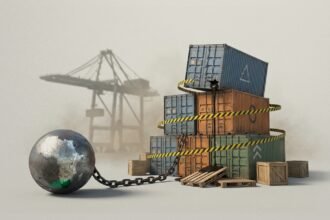
But the same analysis underscores that financial conditions remain a major barrier. African energy projects face an average cost of capital of about 15.6 percent, more than three times higher than in some advanced economies, making many otherwise viable projects uneconomic.
Even if the UAE and Saudi Arabia dramatically scale up their commitments, IEA and OECD studies suggest they cannot, on their own, close the entire 133‑billion‑dollar annual funding gap; instead, their role is likely to be catalytic, de‑risking projects and crowding in institutional investors.
Civil society groups and some African policymakers raise additional concerns. They question whether certain long‑term power‑purchase agreements could limit policy space or prioritize export‑oriented projects, for example, green hydrogen or ammonia destined for Europe and Asia, over domestic energy access.
Others warn that a focus on large, centralized plants may sideline smaller, distributed solutions like mini‑grids and rooftop solar, which IEA and African energy experts see as essential for reaching rural communities.
Those debates echo a broader question: what should a “just energy transition” look like for Africa? Should the continent primarily serve as a low‑cost platform for global clean‑energy supply chains, or should external capital be explicitly directed toward expanding affordable electricity access and building local industries? Advocates of the latter argue that Gulf funding, if aligned with African‑led strategies and backed by robust social and environmental safeguards, could advance both objectives simultaneously.
What Comes Next
For now, the numbers remain stark. Africa is still receiving only a sliver of the clean energy investment it needs, and the infrastructure built in this decade will lock in development paths and emissions profiles for generations.
Whether Gulf countries can, and will, move from billions in announced deals to tens of billions in annual, long‑term capital will depend on decisions being made in ministries, boardrooms, and multilateral forums over the next few years.
What is clear, energy economists and policy analysts say, is that without a surge of affordable, long‑tenor finance, the promise of a green energy boom in Africa may remain out of reach.
With their deep pockets, growing green‑finance pipelines, and strategic interest in new energy partnerships, the UAE and Saudi Arabia are now positioned to shape that outcome, not only for African countries seeking power and prosperity, but for a world counting on the continent’s transition to help meet global climate goals.
As traditional development finance retreats, the UAE and Saudi Arabia are emerging as pivotal backers of Africa’s clean energy ambitions. Whether they can help deliver the extra $133 billion a year the continent needs remains an open question.
Africa’s clean energy future may hinge as much on decisions taken in Abu Dhabi and Riyadh as on those taken in Abuja or Nairobi. As traditional development finance recedes and public debt burdens mount, Gulf countries, led by the United Arab Emirates and Saudi Arabia, are stepping forward as major funders of solar, wind, and hydrogen projects across the continent, raising hopes that they could help plug a vast investment gap.
The International Energy Agency’s 2024 report “Clean Energy Investment for Development in Africa” finds that total annual energy investment on the continent must rise to almost 240 billion dollars by 2030, with around three‑quarters flowing into clean energy to align with development and climate goals.
Within that, Africa will need an estimated 133 billion dollars each year, specifically for clean energy technologies — from renewables and grids to access solutions and emerging industries — to achieve universal access and meet national climate pledges. Today, actual clean energy spending is only a fraction of that level, and roughly 600 million Africans still lack access to electricity.
Background and Stakes
Despite being home to nearly one‑fifth of the world’s population, Africa attracts only about 2 percent of global clean energy investment, the IEA notes. Its Sustainable Africa Scenario, first set out in the 2022 Africa Energy Outlook and updated in the 2024 clean energy investment report, describes a pathway in which Africa achieves universal access to modern energy by 2030 and fulfills its announced climate pledges, but only if investment more than doubles this decade and shifts decisively toward clean energy and local demand.
Multilateral development banks and climate funds have pledged to scale up support. Yet disbursements remain far below needs, and concessional finance alone cannot mobilize the trillions of dollars in private capital required. That has created an opening for Gulf institutions, from sovereign wealth funds to national utilities and private conglomerates, to position themselves as long‑term partners in Africa’s energy transition.
A February 2026 report from the Clean Air Task Force, “The Role of Middle East Leadership in Clean Energy Infrastructure Funding,” concludes that government and semi‑government entities from the UAE and Saudi Arabia have announced more than 175 billion dollars in clean energy investments and commitments in Africa since 2010, with the vast majority announced after 2022.
Much of this capital is structured as direct project investment rather than sovereign lending, potentially reducing debt burdens while enabling larger, faster‑moving infrastructure projects.
“As traditional sources of development finance retreat, countries in the Middle East are emerging as some of the most influential actors shaping Africa’s clean energy and industrial future,” the CATF report states. It argues that if Gulf capital is deployed with a long‑term, system‑wide approach, it “could help close Africa’s power gaps, support economic development, and advance global climate goals.”
Human Stories and Real‑World Examples
In Egypt’s desert, Saudi‑backed ACWA Power has partnered with local authorities to develop large solar and wind complexes that feed into the national grid and underpin early green hydrogen projects aimed at export markets, according to the CATF analysis. In Morocco and South Africa, Gulf capital is helping finance utility‑scale renewables to stabilize domestic supply while anchoring new industrial ventures, from green steel to fertilizer production.
Farther south and east, Emirati entities such as Masdar and the Abu Dhabi Fund for Development have invested in solar, wind, geothermal, and green hydrogen projects across North, East, and Southern Africa.
Supporters say these deals, when designed with strong local participation, can reduce reliance on diesel generators, create construction and maintenance jobs, and lower power costs for households and small businesses.
Yet the benefits are unevenly distributed. Much of the Gulf‑backed investment has flowed to a handful of better‑capitalized markets, including Egypt, Morocco, and South Africa, while countries with the deepest electricity access gaps, particularly in parts of West and Central Africa, remain largely left behind
. Analysts quoted in regional coverage of the CATF report warn that without a deliberate effort to diversify, Gulf capital risks “reinforcing existing inequalities in Africa’s energy landscape” even as it accelerates clean energy in more established markets.
Policy, Debate, and Expert Views
The CATF report identifies four priority areas where Middle Eastern leadership could be most transformative: transmission and grid infrastructure to integrate renewables and improve reliability; “clean firm” power such as geothermal and potentially nuclear to stabilize grids and support industry; system‑level investments that link new generation to demand from sectors like manufacturing and data centers; and climate‑smart investment in methane abatement and critical minerals.
But the same analysis underscores that financial conditions remain a major barrier. African energy projects face an average cost of capital of about 15.6 percent, more than three times higher than in some advanced economies, making many otherwise viable projects uneconomic.
Even if the UAE and Saudi Arabia dramatically scale up their commitments, IEA and OECD studies suggest they cannot, on their own, close the entire 133‑billion‑dollar annual funding gap; instead, their role is likely to be catalytic, de‑risking projects and crowding in institutional investors.
Civil society groups and some African policymakers raise additional concerns. They question whether certain long‑term power‑purchase agreements could limit policy space or prioritize export‑oriented projects, for example, green hydrogen or ammonia destined for Europe and Asia, over domestic energy access.
Others warn that a focus on large, centralized plants may sideline smaller, distributed solutions like mini‑grids and rooftop solar, which IEA and African energy experts see as essential for reaching rural communities.
Those debates echo a broader question: what should a “just energy transition” look like for Africa? Should the continent primarily serve as a low‑cost platform for global clean‑energy supply chains, or should external capital be explicitly directed toward expanding affordable electricity access and building local industries? Advocates of the latter argue that Gulf funding, if aligned with African‑led strategies and backed by robust social and environmental safeguards, could advance both objectives simultaneously.
What Comes Next
For now, the numbers remain stark. Africa is still receiving only a sliver of the clean energy investment it needs, and the infrastructure built in this decade will lock in development paths and emissions profiles for generations.
Whether Gulf countries can, and will, move from billions in announced deals to tens of billions in annual, long‑term capital will depend on decisions being made in ministries, boardrooms, and multilateral forums over the next few years.
What is clear, energy economists and policy analysts say, is that without a surge of affordable, long‑tenor finance, the promise of a green energy boom in Africa may remain out of reach.
With their deep pockets, growing green‑finance pipelines, and strategic interest in new energy partnerships, the UAE and Saudi Arabia are now positioned to shape that outcome, not only for African countries seeking power and prosperity, but for a world counting on the continent’s transition to help meet global climate goals.