





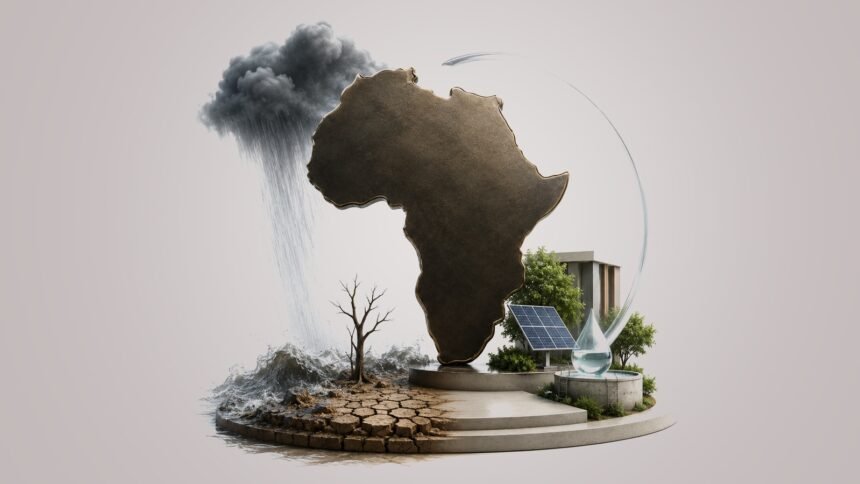
The Pan-African Paradigm of Fiscal Adaptation and Ecological Sovereignty
Across the African landscape, the contemporary configuration of international climate finance places intense pressure on developing nations to balance macroeconomic stability with structural environmental defense. The Pan-African vision for a resilient and self-determining continent is deeply challenged by shifting atmospheric patterns that disregard statutory borders and erode domestic productivity. When sub-Saharan states remain dependent on external capital allocations to mitigate environmental degradation, their sovereign policy options are constrained. Reclaiming the continent’s economic future requires a decisive transition away from debt-driven recovery models toward unified frameworks of resource sovereignty, ensuring that international capital transfers enhance local adaptation capacities, safeguard territorial resources, and protect vulnerable ecosystems without creating unsustainable financial dependencies.
Asymmetric Volatility and the Geography of Risk
The contemporary environmental profile of the African continent is defined by widespread, severe climate-related hazards that threaten to reverse long-term development gains. Although sub-Saharan societies have historically contributed the least to cumulative global greenhouse gas emissions, the region suffers an extraordinarily high concentration of atmospheric shocks. Peripheral economies face accelerating risks from intensifying tropical storms, persistent multi-year droughts, unpredictable riverine flooding, and rapid desertification. This geographic vulnerability undermines baseline agricultural cycles, compromises freshwater reservoirs, and causes sudden community displacements. Because these climate hazards compound existing infrastructure deficits, national planning ministries operate under constant fiscal strain, forced to manage recurring environmental crises with constrained public buffers.
Transatlantic Capital Flows and the Adaptation Gap
The mobilization of international development capital to address sub-Saharan ecological vulnerability centers on a complex web of concessional loan facilities, multilateral grants, and structural adjustment mechanisms. Global financial institutions are increasingly under pressure to realign their lending portfolios to account for high-consequence environmental shocks. While international donor nations routinely pledge billions of dollars to bridge the adaptation gap in developing states, the practical delivery of these resources is frequently blocked by intense bureaucratic procedures and stringent conditionality frameworks. Consequently, frontline societies are often left without predictable, long-term funding streams, forcing them to navigate high-velocity environmental degradation with fragmented, ad hoc financial instruments.
Institutional Interventions and Structural Liquidity Injections
The intersection of macro-environmental policy and structural climate funding achieved definitive prominence through a major multilateral financial agreement finalized in mid-June 2026. The International Monetary Fund approved a comprehensive new arrangement for the West African Republic of Sierra Leone valued at approximately $211.5 million. This targeted financial intervention is specifically structured to strengthen the coastal nation’s institutional capacity to withstand severe climate shocks, fortify public infrastructure, and manage environmental volatility.
Concurrently, the global lender completed the third review of its existing Extended Credit Facility for the country. The successful completion of this review enabled an immediate, high-velocity disbursement of about $31.7 million to the national treasury. This immediate liquidity injection is intended to stabilize the state’s short-term balance-of-payments position, providing the necessary fiscal space for the central government to maintain administrative continuity and implement baseline fiscal adjustments amid ongoing regional economic pressures.
The Geopolitical Economy of Historical Restitution
The broader conversation surrounding international climate allocations is heavily driven by intense diplomatic pressure from African states to operationalize robust Loss and Damage frameworks. Continental policymakers argue that traditional concessional credit facilities are insufficient to address the permanent destruction caused by global atmospheric shifts. True generational and economic justice requires industrial economies to establish non-debt-creating financial mechanisms that deliver direct restitution for destroyed municipal infrastructure, degraded agricultural lands, and permanently lost economic output. By demanding a structural shift away from standard interest-bearing loans toward transparent compensation regimes, developing nations are seeking to insulate their sovereign fiscal spaces from the compounding debt cycles often exacerbated by climate recovery efforts.
Restructuring Domestic Regulatory Architectures
The practical efficacy of external climate funding depends heavily on the execution of strict domestic regulatory reforms and transparent public policy enforcement. To satisfy international transparency standards and maximize the utility of the $211.5 million arrangement, Sierra Leone’s Ministry of Finance and environmental agencies are updating their monitoring architectures. This structural policy overhaul focuses on integrating climate risk assessments directly into national budgetary planning, enforcing stricter building codes in flood-prone coastal zones, and monitoring the distribution of ecological funds. By building strong public accountability frameworks, the state aims to verify that international capital injections are efficiently directed toward high-impact adaptation infrastructure rather than consumed by administrative friction or fragmented local distribution networks.
Multilateral Integration and Shared Boundary Negotiations
Addressing sub-Saharan environmental vulnerability requires highly synchronized coordination between regional bodies and global climate governance networks. The African Union, working in close alignment with the United Nations Framework Convention on Climate Change (UNFCCC), aggressively advocates for a unified African position during international climate negotiations. These joint multilateral efforts aim to challenge the systemic biases embedded in global financial systems, calling on international lenders to lower borrowing costs for vulnerable nations and simplify access to green capital. By presenting a unified diplomatic front, continental institutions leverage their collective geopolitical weight to secure equitable funding mechanisms, ensuring that global climate accords respect the sovereign developmental priorities of individual member states.
Reengineering Long-Term Resilience and Self-Determining Horizons
The long-term path toward sustainable environmental safety requires a permanent transition away from short-term crisis management toward a structurally secure model of child-centered adaptation and technological integration. Future efforts must focus on utilizing international funding arrangements to build highly resilient municipal water grids, decentralized solar energy systems, and blast-resistant educational and medical facilities capable of withstanding extreme weather events. Furthermore, state planners must invest heavily in local human capital, equipping youth with advanced technical and green competencies to lead emerging clean economies. By combining disciplined fiscal management with an unyielding commitment to environmental integrity and social equity, African republics can move past systemic environmental vulnerability to secure a prosperous, stable, and completely self-determining future.