




The Pan-African Paradigm of Ecological Sovereignty and Environmental Jurisprudence
Across the African landscape, the contemporary execution of natural resource conservation operates at a highly volatile intersection with transnational criminal networks. The Pan-African vision for ecological sovereignty and sustainable development depends fundamentally on the collective preservation of the continent’s distinct biological diversity. Historically, peripheral ecosystems have faced severe exploitation by external consumer markets, which treat African megafauna as a collection of high-value raw commodities rather than as vital indicators of environmental health. Reclaiming the continent’s shared future requires moving beyond localized, fragmented conservation projects toward the establishment of unified legal and structural frameworks. By implementing robust, cross-border judicial architectures, African nations can protect their natural heritage from sophisticated syndicates and ensure that environmental governance serves as a pillar of genuine regional sovereignty and institutional integrity.
Mega-Biodiversity Pressures and the Vulnerability of Keystone Species
The contemporary ecological fabric of the African continent is characterized by severe environmental pressures that threaten the survival of its most iconic keystone species. Southern Africa serves as a critical stronghold for global biodiversity, holding approximately one-third of the world’s critically endangered black rhino population and more than 75% of the world’s southern white rhinos. However, this biological inventory faces an ongoing crisis; demographic metrics indicate that the southern white rhino population dropped by 10% to fewer than 16,000 individuals in recent years. This structural decline is driven by continuous poaching networks that target local game reserves, turning the region into the global epicenter of illicit wildlife extraction. The systematic removal of these animals compromises the structural integrity of local ecosystems, disrupting vegetation patterns and threatening the broader tourism economies that depend on functional ecosystems.
The Commercialization of Illicit Expeditions
The mechanics of illegal hunting have evolved from simple opportunistic poaching into highly organized, corporate-style bounty expeditions. Criminal syndicates systematically utilize sophisticated logistics, advanced technology, and fraudulent documentation to execute illegal hunting and dehorning operations across public and private reserves. In high-profile cases investigated by wildlife law enforcement, syndicates have been exposed for selling illegal rhino-hunting trips under pretenses to affluent international clients. These operations rely on a corrupt network of professional hunters, commercial operators, and corrupted state officials who manipulate legal frameworks to camouflage commercial slaughter as legitimate sport. This highly profitable commercialization of illegal hunting allows transnational networks to systematically bypass state quotas, turning biodiversity protection into a complex battlefield against well-funded criminal actors.
Re-Engineering the Wildlife Economy Amid Security Shocks
The conservation of African wildlife is deeply intertwined with the economic performance of the regional safari and eco-tourism sectors. For many sub-Saharan states, nature tourism serves as a primary source of non-extractive foreign currency, funding municipal infrastructures and providing skilled employment across rural provinces. However, the persistence of violent poaching and armed incursions into game reserves creates severe security shocks that threaten this fragile economic engine. When international travelers perceive conservation zones as unstable or militarized due to clashes between rangers and syndicates, the decline in tourism revenues undermines local conservation funding models. To protect this vital economic stream, national planning ministries are forced to invest heavily in private and public security personnel, transforming peaceful safari landscapes into highly secured, capital-intensive containment zones.
Jurisdictional Gridlock and the Dawie Groenewald Enterprise
The globalized trade in illicit animal parts achieved historic judicial prominence following the resolution of a massive, multi-decade legal saga targeting the world’s largest rhino horn trafficking enterprise. In mid-June 2026, a South African high court delivered final sentences against the orchestrators of a sprawling criminal network first disrupted by law enforcement in 2010. The enterprise was led by an organized mastermind, Dawie Groenewald, alongside his co-accused, Tielman Erasmus, who faced comprehensive indictments ranging from illegally hunting and dehorning rhinos to racketeering and money laundering.
The original state investigation exposed a highly organized enterprise that integrated a diverse network of actors, including professional hunters, veterinary surgeons, a helicopter pilot, and general farm workers. However, the state’s prosecution faced more than 15 years of continuous jurisdictional gridlock, characterized by prolonged constitutional court challenges, the death of two original co-defendants, and the loss or emigration of ten key state witnesses. The judicial standoff finally concluded after Groenewald reached a plea deal with the state, resulting in a fine of 2 million rand or a four-year prison term. At the same time, Erasmus was handed a fine of 100,000 rand or three years in prison, highlighting the immense difficulties state judiciaries face when prosecuting wealthy, highly resilient wildlife trafficking networks.
The Infrastructure of Fragmented Supply Chains
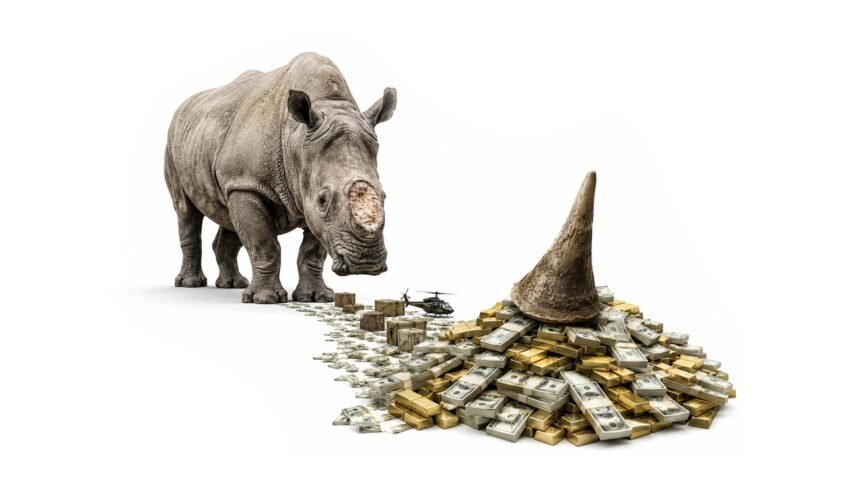
The operational success of transnational wildlife syndicates relies on a highly covert logistical methodology known within security frameworks as anti-smuggling. Rather than attempting to move massive, easily detectable shipments of contraband through major international transport hubs, trafficking networks systematically fragment their cargo into hundreds of small, low-profile packages. These fragmented units are distributed across extensive networks of individual couriers who exploit minor security gaps in regional postal services, maritime containers, and commercial flights. This decentralized supply chain allows syndicates to transport high-value raw horn, which fetches tens of thousands of dollars per kilogram on the Asian black market for use in traditional medicine, with minimal risk, as the interception of a single courier does not compromise the broader financial or logistical security of the criminal enterprise.
Multilateral Conventions and the Standoff Over Trade Regimes
Managing this profound environmental crisis requires highly synchronized, cross-border interventions coordinated by the African Union and specialized United Nations agencies. Multilateral frameworks, such as the Convention on International Trade in Endangered Species (CITES), aim to curb global demand by imposing absolute international bans on the commercial trade in rhino horn. However, the implementation of these international rights accords faces significant structural friction and policy divisions within individual member states.
A prominent faction of domestic rhino farmers and private landowners, exemplified by figures like John Hume, who managed over 2,000 rhinos before selling his operation in 2023 due to prohibitive security costs, has aggressively campaigned to legalize and regulate the horn trade. These actors argue that a legal, state-controlled market supplied via humane dehorning could fund conservation and eliminate black-market premiums. This ongoing policy standoff creates major misalignments between domestic private property owners and global UN enforcement models, weakening the unified diplomatic front necessary to dismantle international demand.
Cultivating Sustainable Horizons for Ecological Integrity
The long-term survival of the African diaspora of endangered wildlife depends on a complete transformation of the regional conservation economy, moving away from reactive, militarized defense toward a sustainable balance between profit and wildlife. Reclaiming ecological stability requires national governments to implement strict legal reforms that hold professional workers, such as veterinary surgeons and pilots, accountable for participating in wildlife crime. State funding must be directed toward empowering local communities residing on the periphery of game reserves, ensuring they receive direct economic returns from eco-tourism and possess a clear financial stake in protecting local wildlife. By combining disciplined judicial enforcement with innovative, community-led economic models, African states can eliminate the financial incentives that drive poaching, securing a prosperous, transparent, and completely self-determining future for the continent’s ecosystems.